If You Have Lines on Your Nails, It Means You Have Ca… Here’s What You Need to Know
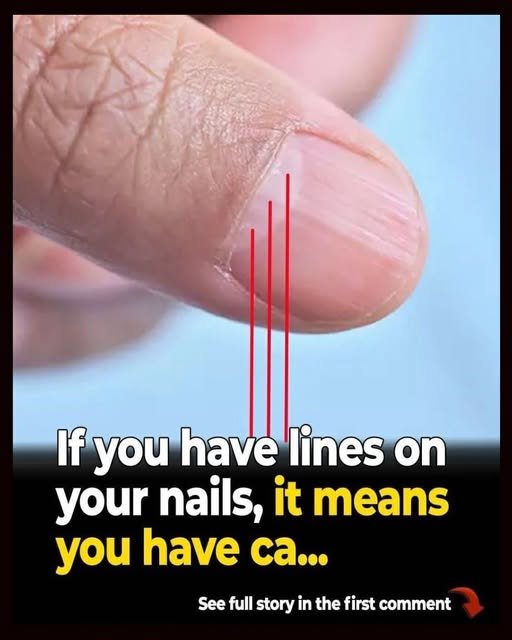
You’ve seen the viral posts: a close-up of a fingernail with fine vertical lines, and a headline that cuts off with “it means you have ca…” — leaving you to wonder if it’s cancer, calcium deficiency, or something else entirely.
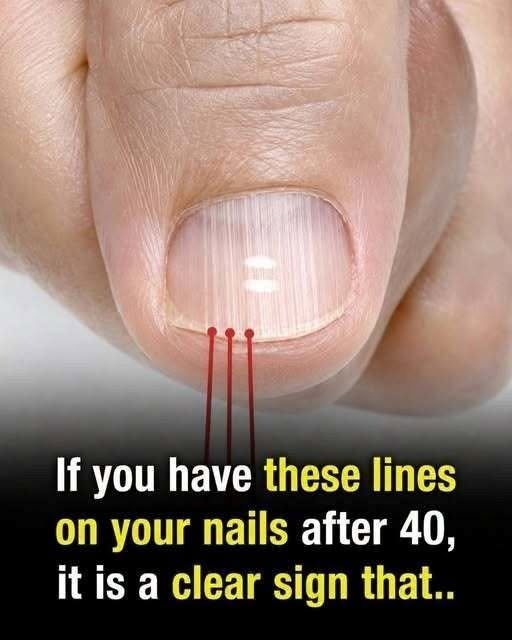
The truth is more nuanced. Those vertical lines are called onychorrhexis (longitudinal ridging), and in most cases, they are completely harmless. Here’s what you need to know. 👇
Disclaimer: This post is for informational purposes only and is not a substitute for professional medical advice. If you notice persistent changes in your nails, consult a dermatologist or healthcare provider.
🔬 What Are Vertical Nail Ridges?
Vertical ridges are fine, raised lines that run from the cuticle to the tip of the nail. They are extremely common, especially as we age.
Why they happen:
Normal aging: As we get older, the nail bed’s ability to retain moisture decreases, and the nails become more prone to developing ridges. This is a normal part of aging, like getting wrinkles on your skin.
Genetics: Some people are simply prone to ridged nails due to their genetics.
Dryness or nutritional deficiencies: Lack of moisture, vitamins, or minerals can contribute. Deficiencies in iron, zinc, or B vitamins may play a role.
Underlying health conditions: Less commonly, vertical ridges can be associated with iron deficiency anemia, rheumatoid arthritis, peripheral vascular disease, or hypothyroidism.
Trauma or injury: Repeated trauma to the nail can also cause ridges to form.
Important: A single vertical line that is dark or changing could be a sign of a more serious condition and should be evaluated by a dermatologist.
💡 What You Can Do About It
Moisturize: Keep your nails and cuticles hydrated with a good hand cream or cuticle oil.
Avoid harsh chemicals: Limit exposure to harsh soaps, detergents, and nail polish removers.
Eat a balanced diet: Ensure you’re getting enough vitamins and minerals.
Don’t over-file: Excessive filing can weaken the nails and make ridges more visible.
Use a ridge-filling base coat: If you want a smooth look, a ridge-filling base coat can help even out the surface before applying polish.
See a doctor: If the ridges are accompanied by other symptoms (fatigue, joint pain, changes in weight), or if a single line is dark and changing, see a doctor.
❓ Frequently Asked Questions
Are vertical ridges on nails dangerous? In most cases, no. They are usually a normal part of aging. However, a single dark line that changes over time should be checked by a doctor.
What’s the difference between vertical and horizontal ridges? Vertical ridges (longitudinal ridges) run from cuticle to tip and are usually harmless. Horizontal ridges (Beau’s lines) run side to side and can indicate a past illness, injury, or nutritional deficiency.
When should I see a doctor? If the lines are accompanied by other symptoms, or if a single line is dark, changing, or painful, see a doctor.
Can I fix ridged nails? You can’t reverse aging, but you can improve the appearance with moisturizing, biotin supplements (if deficient), and gentle nail care.
Are these lines a sign of vitamin deficiency? Possible, but not always. Deficiencies in iron, zinc, or B vitamins can contribute. A blood test can confirm.
Do men get these lines too? Yes — nail ridges affect both men and women, though they may be more noticeable in women due to hormonal changes.
Is it a sign of poor circulation? Circulatory issues can affect nail health, but vertical ridges alone are not a reliable sign of poor circulation.
Can I prevent them? You can’t prevent aging, but keeping nails moisturized, eating a balanced diet, and avoiding trauma can help maintain nail health.