Grooming Tools and Everyday Design Explained: The Purpose of the Tiny Hole in Nail Clippers
The Anatomy of the Nail Clipper: A Masterpiece of Simple Physics
To understand why the nail clipper works so well, it helps to break down its components. Every part of the clipper serves a specific function, working together in perfect harmony.
The Lever (Thumb Pad)
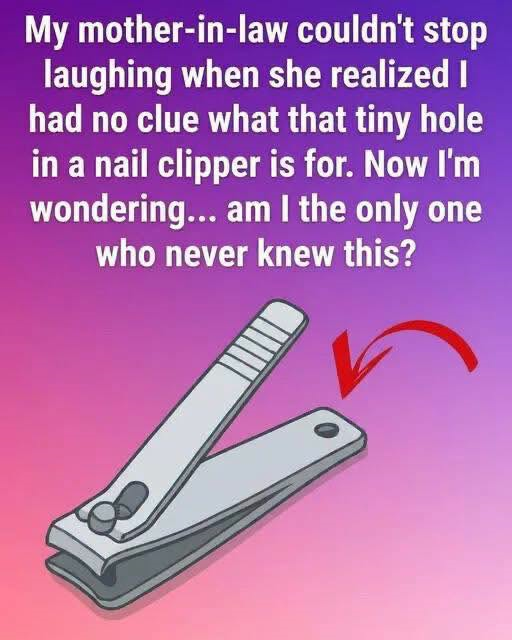
This is the part you press down on. The textured surface provides grip, and the tiny hole allows for catching clippings and anchoring your thumb. The lever acts as the “effort” arm of the compound lever system.
The Pivot Pin (The Rivet)
This small metal pin connects the lever to the base. It acts as the fulcrum, the point on which the lever pivots. A well-made clipper will have a smooth, tightly fitted pin, ensuring the cutting action is clean and not wobbly.
The Cutting Jaw (The Blades)
This is the business end of the clipper. The blades are typically curved to match the natural shape of the fingernail or toenail. The top blade is attached to the lever, while the bottom blade is part of the base. When the lever is pressed, the top blade descends to meet the bottom blade, shearing the nail.
The Catcher (The Tiny Hole)
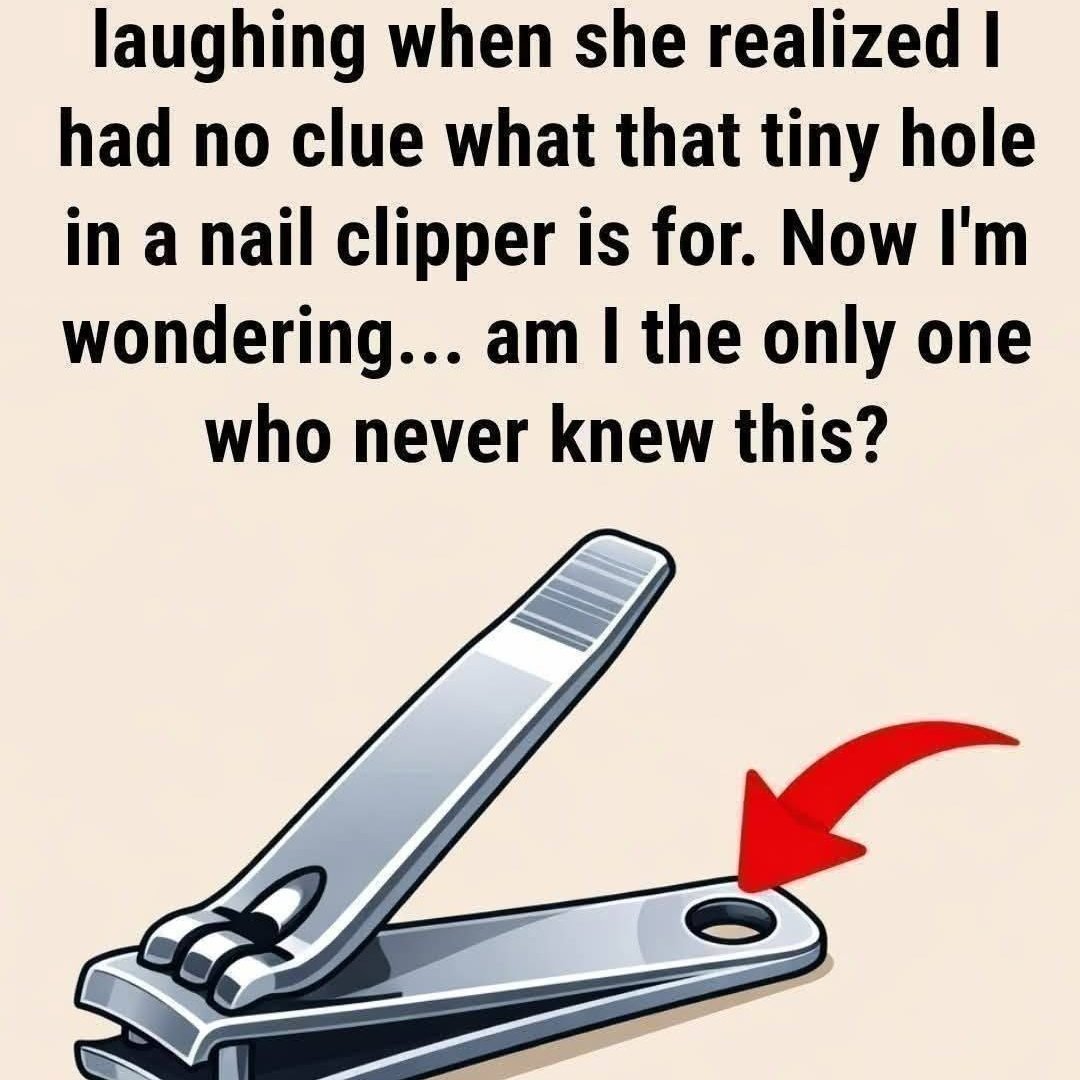
As discussed, the hole serves as a receptacle for the clippings, preventing them from flying away.
The File
Most standard clippers include a small, textured file on the top of the lever. After cutting, you use this to smooth the rough edges of the nail, preventing snags and tears.
Alternative Uses and Hacks for the Tiny Hole
Beyond catching clippings and providing grip, the ingenious design of the hole has led to a few other creative uses.
1. The Keychain Carry
If you are a minimalist traveler or someone who likes to be prepared, the hole is the perfect size to slip onto a standard keyring. This is incredibly useful for travelers who need to keep their nails trimmed on long trips or for hikers who need a compact grooming tool.
2. The Improvised Screwdriver
While this is definitely not a recommended use, some people have discovered that the tip of the lever (with the hole) can be used to turn small, flat-head screws in a pinch. The hole provides a bit of leverage. However, this can easily damage the clipper and strip the screw, so use this hack with caution.
3. The Craftsman’s Tool
In crafting and DIY projects, nail clippers are frequently used for precision cutting. The hole allows you to thread a piece of wire or string through, making it easier to hold small components or to create a makeshift clamp while glue dries.
The Psychology of Everyday Objects: Why We Miss the Obvious
The viral story of the mother-in-law laughing at the person who didn’t know the hole’s purpose highlights a fascinating psychological phenomenon known as functional fixedness.
Functional Fixedness
Functional fixedness is a cognitive bias that limits a person to using an object only in the way it is traditionally used. We look at a nail clipper and see a tool for cutting nails. We focus entirely on the blades and the lever. Because the hole is not directly involved in the cutting action, our brain categorizes it as irrelevant background information.
The Illusion of Transparency
We also suffer from the illusion of transparency. We assume that because we use an object every day, we know everything there is to know about it. We never stop to question the design details. This is why we often miss the “Easter eggs” hidden in plain sight by designers—like the tiny holes in pen caps (which prevent choking if swallowed) or the blue ink on erasers (which was originally used to clean paper, not erase ink).
The Safety and Hygiene Angle
The tiny hole also plays a subtle role in the hygiene and safety of using a nail clipper.
Preventing the “Nail Bullet”
Anyone who has clipped a big toenail knows the terrifying speed at which a clipping can fly across the room. When a clipping hits you in the eye, it hurts. The hole prevents the clipping from becoming a projectile, keeping the grooming process clean and contained.
Easy Cleaning
The hole also makes the clipper easier to clean. After use, you can run the clipper under warm water and use a small brush to push any dirt or nail dust through the hole, ensuring the tool remains hygienic for the next use.
Conclusion: A Tiny Hole with a Big History
The next time you reach for a nail clipper, take a moment to look at the tiny hole at the end of the lever. What seems like a random manufacturing flaw is actually a brilliant piece of engineering. It is a built-in receptacle that catches the messy clippings, a tactile anchor that improves the precision of the cut, and a byproduct of the mass-production process.
The viral story of the mother-in-law’s laughter is a reminder that we are surrounded by objects that are far more clever than we give them credit for. The nail clipper is a testament to the power of simple design. It uses the principles of physics to amplify a tiny amount of force into a precise cut, while solving the practical problem of flying debris. So, the next time someone asks you what the hole is for, you can smile, share the knowledge, and pass on the secret of this humble, brilliant tool.
Frequently Asked Questions
What is the tiny hole in a nail clipper actually for?
The primary purpose is to catch the nail clippings. By inserting the nail into the hole, the clipping is trapped inside, preventing it from flying across the room. It also provides a tactile grip for the thumb.
Was the hole intentionally designed for catching clippings?
The hole was originally a byproduct of the manufacturing process, used to hang the metal levers during polishing. However, designers realized its practical benefits for users and retained it as a functional feature.
How do I use the hole to catch clippings?
Simply slide the tip of your nail into the hole before pressing down on the lever. The clipping will be sheared off and trapped within the cavity of the hole. You can then tap the clipper over a trash can to dispose of it.
Does every nail clipper have this hole?
Most standard, mass-produced nail clippers have this hole. However, some high-end or specialty clippers (like those made for infants, or specific ergonomic designs) may have a different lever design without the hole.
Can I hang my nail clipper on a keychain with the hole?
Yes. The hole is generally sized perfectly for a standard keyring. This is a common practice for travelers and campers who want to keep their grooming tools compact and accessible.
Why do we never notice the hole?
This is due to a psychological phenomenon called “functional fixedness.” We focus on the primary function of the object (the blades cutting the nail) and ignore details that don’t seem directly related to that action.
Is it hygienic to use a nail clipper that catches the clippings?
Yes, as long as you clean it regularly. Because the clippings are contained, they don’t scatter bacteria. You should wash the clipper with warm water and soap after each use and dry it thoroughly.
Do nail clippers have any other hidden features?
Yes. The textured surface on the lever is a nail file. The curved shape of the cutting jaws is designed to mimic the natural curve of the nail. Some clippers also have a small notch on the cutting edge for trimming hangnails.