Don’t Let Your Air Conditioner Blow Directly on You While Sleeping: Understanding the Link to Facial Paralysis
In the sweltering heat of summer, few comforts rival the cool, steady breeze of an air conditioner. For millions of people around the world, sleeping with the AC running—and often directing the airflow straight onto their faces—is the only way to achieve a restful night’s sleep. It feels refreshing, immediate, and deeply soothing. However, a persistent and widespread warning suggests that this seemingly innocent habit carries a hidden danger: the risk of facial paralysis.
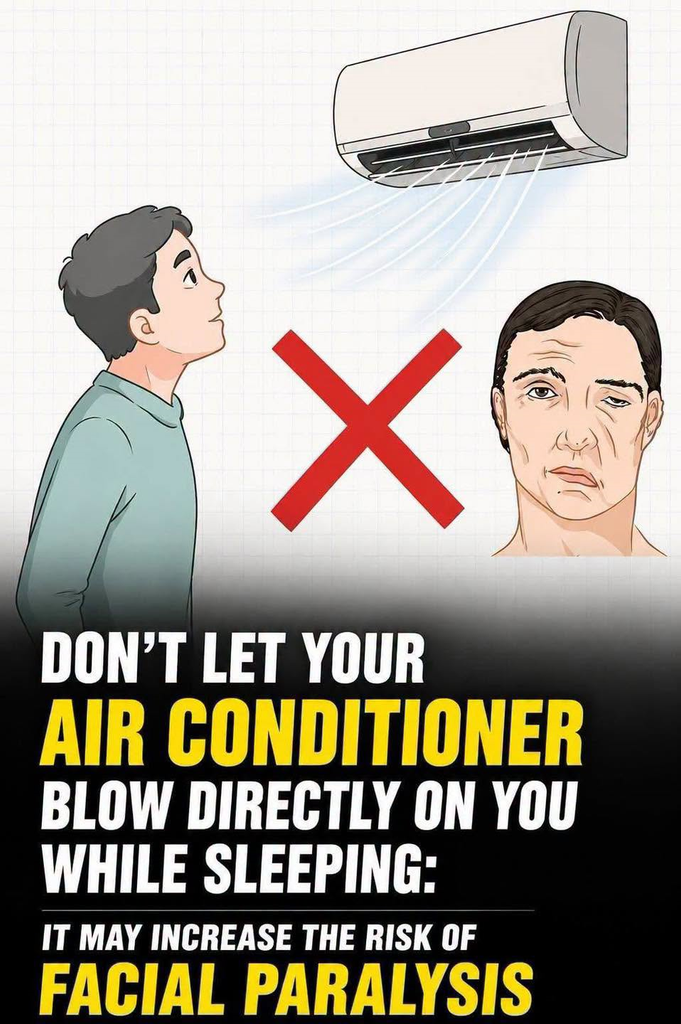
The image accompanying this warning is stark: a person sleeping directly under the blast of an AC unit, paired with a red “X” and a graphic of a face experiencing drooping. The claim is that letting cold air blow directly on you while sleeping may increase the risk of facial paralysis, a condition medically known as Bell’s palsy.
For those who have experienced it or know someone who has, the fear is entirely justified. Waking up to find one side of your face suddenly unresponsive—unable to smile, close an eye, or whistle—is a terrifying experience. But is the AC truly to blame? Or is this simply an old wives’ tale passed down through generations?
The medical reality is complex. While cold air from an air conditioner does not contain a virus or directly “freeze” the nerve, it acts as a powerful physiological trigger. It sets off a cascade of events in the body—specifically in the narrow canals of the skull—that can lead to nerve inflammation and subsequent paralysis, particularly in individuals who are already vulnerable. Understanding the science behind this phenomenon is crucial for protecting your facial health while still enjoying the cool relief of air conditioning.
This comprehensive guide explores the intricate relationship between cold drafts, air conditioning, and facial paralysis. We will delve into the anatomy of the facial nerve, explain exactly how cold exposure triggers Bell’s palsy, explore the symptoms and urgent treatments, and provide practical, evidence-based strategies to keep your room cool without putting your facial nerves at risk.
The Anatomy of the Facial Nerve: A Tight Squeeze
To understand why a cold draft on your face can lead to paralysis, you must first understand the unique anatomy of the facial nerve, also known as the seventh cranial nerve (CN VII). This remarkable nerve is responsible for controlling the muscles of facial expression, as well as transmitting taste sensations from the front of the tongue and regulating the flow of tears and saliva.