Amlodipine Side Effects: 12 Important Things You Need to Know
Meta Description: Amlodipine is commonly prescribed for high blood pressure, but it can cause side effects. Learn about the 12 most important side effects, from swelling to gum problems, and when to contact your doctor.
Introduction
Amlodipine is one of the most widely prescribed medications for high blood pressure (hypertension) and chest pain (angina). As a calcium channel blocker, it works by relaxing blood vessels, allowing blood to flow more easily and reducing the workload on the heart.
While amlodipine is generally well-tolerated and effective, like all medications, it can cause side effects. Some are mild and temporary, while others may require medical attention. Understanding these potential side effects can help you recognize when to contact your healthcare provider.
Here are 12 important side effects of amlodipine that patients should be aware of.
1. Peripheral Edema (Swelling in Legs and Ankles)
This is the most common side effect of amlodipine, affecting up to 10-30% of patients. The medication causes blood vessels to dilate, which can lead to fluid leaking into surrounding tissues. This typically causes noticeable swelling in the feet, ankles, and lower legs. The swelling is usually worse at the end of the day and may improve overnight when legs are elevated.
2. Gum Overgrowth (Gingival Hyperplasia)
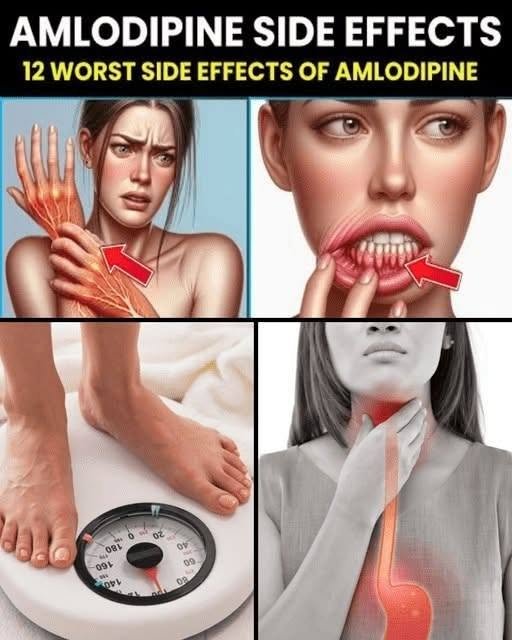
Amlodipine can cause the gums to enlarge or overgrow, a condition known as gingival hyperplasia. This occurs because the medication affects the cells in gum tissue, causing them to multiply excessively. Good oral hygiene and regular dental checkups are essential. In some cases, your dentist may need to perform gum contouring, or your doctor may need to switch you to a different medication.
3. Joint and Muscle Pain
Some patients experience arthralgia (joint pain) or myalgia (muscle pain) while taking amlodipine. This can manifest as aching in the hands, wrists, knees, or other joints. The pain is usually mild but can be bothersome for some individuals. If joint pain becomes severe or persistent, consult your doctor.
4. Weight Gain
The fluid retention caused by amlodipine can lead to rapid weight gain. This is not fat gain but rather water weight from edema. If you notice sudden weight gain of more than 2-3 pounds in a day or 5 pounds in a week, contact your healthcare provider immediately, as this could indicate excessive fluid retention.
5. Flushing and Redness
As blood vessels dilate, some people experience flushing—a warm, red feeling in the face, neck, or chest. This is caused by increased blood flow to the skin’s surface. While usually harmless, it can be uncomfortable or embarrassing for some patients.
6. Dizziness and Lightheadedness
Amlodipine lowers blood pressure, which can sometimes cause it to drop too low, especially when standing up quickly. This can lead to dizziness, lightheadedness, or even fainting. To minimize this risk, rise slowly from sitting or lying positions.
7. Fatigue and Weakness
Some patients report feeling unusually tired or weak when taking amlodipine. This fatigue can affect daily activities and quality of life. If you experience severe or persistent fatigue, talk to your doctor about adjusting your dose or trying an alternative medication.
8. Headaches
Headaches are a common side effect, especially when first starting the medication. They occur because of the changes in blood vessel dilation and blood pressure. These headaches often improve after the first few weeks of treatment as your body adjusts to the medication.
9. Palpitations or Rapid Heartbeat
Some people experience heart palpitations or a sensation of a racing heart while taking amlodipine. This occurs because the medication can sometimes cause a reflex increase in heart rate as blood pressure drops. If you experience chest pain, severe palpitations, or shortness of breath, seek medical attention immediately.
10. Nausea and Stomach Pain
Gastrointestinal side effects like nausea, stomach pain, and indigestion can occur. These symptoms are usually mild and may improve if you take the medication with food. However, persistent digestive issues should be discussed with your healthcare provider.
11. Shortness of Breath
In rare cases, amlodipine can cause difficulty breathing or shortness of breath. This could be a sign of an allergic reaction or fluid buildup in the lungs. If you experience breathing difficulties, especially if accompanied by swelling or chest pain, seek emergency medical care.
12. Skin Rash or Itching
Some patients develop skin reactions, including rash, itching, or hives. While mild skin reactions may not be serious, they can indicate an allergic response. Severe skin reactions, blistering, or peeling require immediate medical attention.
When to Contact Your Doctor
While many side effects are mild and manageable, you should contact your healthcare provider if you experience:
Severe swelling in your legs, ankles, or feet
Rapid weight gain (more than 2-3 pounds per day)
Severe dizziness or fainting
Chest pain or irregular heartbeat
Shortness of breath
Severe stomach pain
Yellowing of the skin or eyes (jaundice)
Severe skin reactions
Important: Don’t Stop Suddenly
Never stop taking amlodipine without consulting your doctor. Suddenly stopping this medication can cause your blood pressure to spike dangerously, increasing your risk of heart attack or stroke. If you’re experiencing bothersome side effects, your doctor can help you:
Adjust your dosage
Switch to a different medication
Add another medication to counteract side effects
Implement lifestyle changes to manage symptoms
Managing Common Side Effects
For Swelling:
Elevate your legs when sitting
Reduce salt intake
Wear compression stockings
Stay active and avoid prolonged standing
For Gum Problems:
Brush and floss regularly
Visit your dentist every 6 months
Use an antibacterial mouthwash
For Dizziness:
Stand up slowly
Stay hydrated
Avoid alcohol
Conclusion
Amlodipine is an effective medication for managing high blood pressure and preventing heart complications. While side effects can occur, many are manageable with lifestyle adjustments or dose modifications. The key is to stay informed, communicate openly with your healthcare provider, and never ignore severe or persistent symptoms.