5 Diabetes Symptoms That Appear at Night: The Crucial Warning Signs Your Body Is Sending
For millions of people around the world, the diagnosis of diabetes arrives as a shock, often triggered by a routine blood test rather than an obvious illness. This is because diabetes, particularly Type 2, is a master of disguise. In its early stages, it develops silently, slowly compromising the body’s systems without producing immediate, dramatic symptoms. However, when the lights go out and the distractions of the day fade away, the body often speaks the loudest.
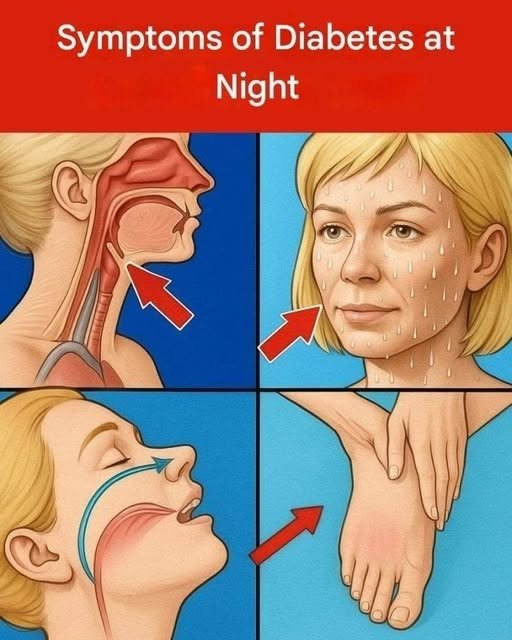
A viral social media image recently captured this phenomenon perfectly, featuring four striking illustrations: a cross-section of a snoring airway, a face dripping with sweat, a person breathing through an open mouth, and a pair of hands holding a tingling foot. The bold text above reads, “Symptoms of Diabetes at Night.” These visual cues highlight a crucial truth: the nighttime hours can be a window into your metabolic health.
When you are asleep, your body’s circadian rhythms shift, your hormone levels fluctuate, and your body’s ability to manage blood glucose can be tested in unique ways. Recognizing the subtle—and sometimes not-so-subtle—signs that occur during sleep can be the key to early detection and the prevention of severe complications.
This comprehensive guide will explore the five primary symptoms of diabetes that manifest at night. We will delve into the physiological reasons why these symptoms occur, explain the biological mechanisms driving them, and provide practical, evidence-based strategies for managing them. By understanding these nighttime warning signs, you can take control of your health and ensure a more restful, vibrant life.
The Biology of Diabetes at Night
To understand why diabetes symptoms often peak at night, you must first understand the complex hormonal dance that regulates your body while you sleep.
The Circadian Rhythm and Blood Sugar
Your body operates on a 24-hour internal clock known as the circadian rhythm. This clock regulates everything from your sleep-wake cycle to your metabolism. During the night, your body releases hormones like melatonin to induce sleep. However, it also releases growth hormone and cortisol in the early morning hours to prepare you for waking up. These hormones naturally increase insulin resistance, meaning your cells become less responsive to insulin. For a person with a healthy pancreas, the body simply produces more insulin to compensate. For someone with prediabetes or undiagnosed diabetes, the pancreas cannot keep up, leading to elevated blood sugar levels overnight.
The Dawn Phenomenon
This natural rise in blood sugar is known as the “dawn phenomenon.” It is a normal physiological process, but in people with diabetes, it can cause blood sugar levels to spike significantly between 4 a.m. and 8 a.m. This sudden surge can trigger a cascade of nighttime and early morning symptoms.
Symptom 1: Frequent Urination (Nocturia)
While the viral image does not explicitly show a bathroom, frequent urination is arguably the most common and disruptive nighttime symptom of diabetes. Waking up multiple times a night to urinate (nocturia) is often the first sign that something is amiss.
The Mechanism: Osmotic Diuresis
To understand why high blood sugar makes you urinate, you must understand the kidneys’ role. The kidneys filter waste products from your blood. Under normal circumstances, they reabsorb all the glucose (sugar) back into the bloodstream. However, there is a limit to how much glucose the kidneys can filter. When blood sugar levels exceed a certain threshold (usually around 180 mg/dL), the kidneys cannot reabsorb it all.
The excess glucose spills into the urine. Because glucose is a large molecule, it acts as an osmotic agent. It pulls water from the surrounding tissues into the urine, a process known as osmotic diuresis. This dramatically increases the volume of urine produced. During the day, you might notice an increased need to urinate, but at night, the constant interruption of sleep makes the symptom glaringly obvious.
The Impact on Sleep
Frequent urination fragments sleep architecture. Waking up one, two, or three times a night prevents the body from entering the deep, restorative stages of sleep required for physical and mental health. This leads to profound fatigue, irritability, and cognitive “brain fog” the following day, creating a vicious cycle of poor health.
Symptom 2: Excessive Thirst and Dry Mouth (Polydipsia and Xerostomia)
The image of the person with their mouth open and a highlighted airway perfectly illustrates the second symptom: waking up with a profoundly dry mouth and a parched, unquenchable thirst.
The Hydration Paradox
This symptom is the direct biological consequence of nocturia. As your blood sugar rises and your kidneys work overtime to flush out excess glucose, you lose massive amounts of water. The body quickly registers this severe dehydration. The brain triggers an intense thirst response, signaling you to drink more water to replace the lost fluids.
This creates a frustrating paradox: you wake up desperate to drink water, but drinking more water only leads to more frequent trips to the bathroom. This cycle of high blood sugar, frequent urination, and excessive thirst is known medically as polydipsia and polyuria.
The Oral Health Connection
Waking up with a sticky, dry mouth (xerostomia) is not just uncomfortable; it has significant health implications. Saliva is a crucial defense mechanism against oral bacteria. When the mouth is dry, bacteria thrive, leading to an increased risk of cavities, gum disease, and oral thrush (a fungal infection). Furthermore, the breath of someone with high blood sugar may have a distinct, fruity, or acetone-like odor, a sign of ketoacidosis.
Symptom 3: Night Sweats
The image of the woman with beads of sweat on her face highlights another common, yet often misunderstood, nighttime symptom. While night sweats can be caused by a variety of issues (like menopause or infections), when combined with other symptoms, they can be a strong indicator of blood sugar fluctuations.
The Two Sides of Blood Sugar
Night sweats in diabetics are primarily driven by the body’s sympathetic nervous system. They can occur due to two distinct scenarios:
Nocturnal Hypoglycemia (Low Blood Sugar): This is the most common cause of night sweats in people taking diabetes medication. If your blood sugar drops too low during the night (below 70 mg/dL), the body perceives this as a medical emergency. It releases a flood of stress hormones, including adrenaline and cortisol, which can cause sweating, a rapid heartbeat, and nightmares.
Hyperglycemia (High Blood Sugar): High blood sugar can also cause sweating. The body has to work incredibly hard to metabolize the excess glucose, which can raise the core body temperature and trigger sweating as a cooling mechanism.
How to Differentiate
For someone with diagnosed diabetes, it is crucial to check blood sugar levels if a night sweat occurs. A continuous glucose monitor (CGM) is highly recommended, as it can alert you if your levels are dropping dangerously low while you sleep.
Symptom 4: Restless Sleep, Snoring, and Sleep Apnea
The first panel in the viral image shows a cross-section of a blocked upper airway. This is a powerful representation of the bidirectional relationship between diabetes and sleep-disordered breathing, specifically Obstructive Sleep Apnea (OSA).
The Link Between Diabetes and Sleep Apnea
Sleep apnea is a condition where the muscles in the back of the throat relax too much during sleep, causing the airway to close. This leads to repeated pauses in breathing, which disrupt sleep and cause a drop in blood oxygen levels.
Research has shown a profound link between Type 2 diabetes and sleep apnea. Excess weight, particularly around the neck and abdomen, is a major risk factor for both conditions. Furthermore, sleep apnea itself worsens insulin resistance. The frequent awakenings and lack of restorative sleep trigger the release of stress hormones, making the body less able to process glucose. In fact, up to 50% of people with Type 2 diabetes also suffer from sleep apnea.