Why You Should Never Hang a Tea Towel on Your Oven Door Handle: The Hidden Dangers Revealed
It is one of the most universally accepted habits in the modern kitchen. You finish washing a few dishes, dry your hands on a tea towel, and casually drape the damp fabric over the gleaming metal handle of the oven door. It is convenient, accessible, and for millions of people, it is simply where the kitchen towel lives. It looks cozy, it keeps the towel within arm’s reach while cooking, and it saves having to install a dedicated towel rack.
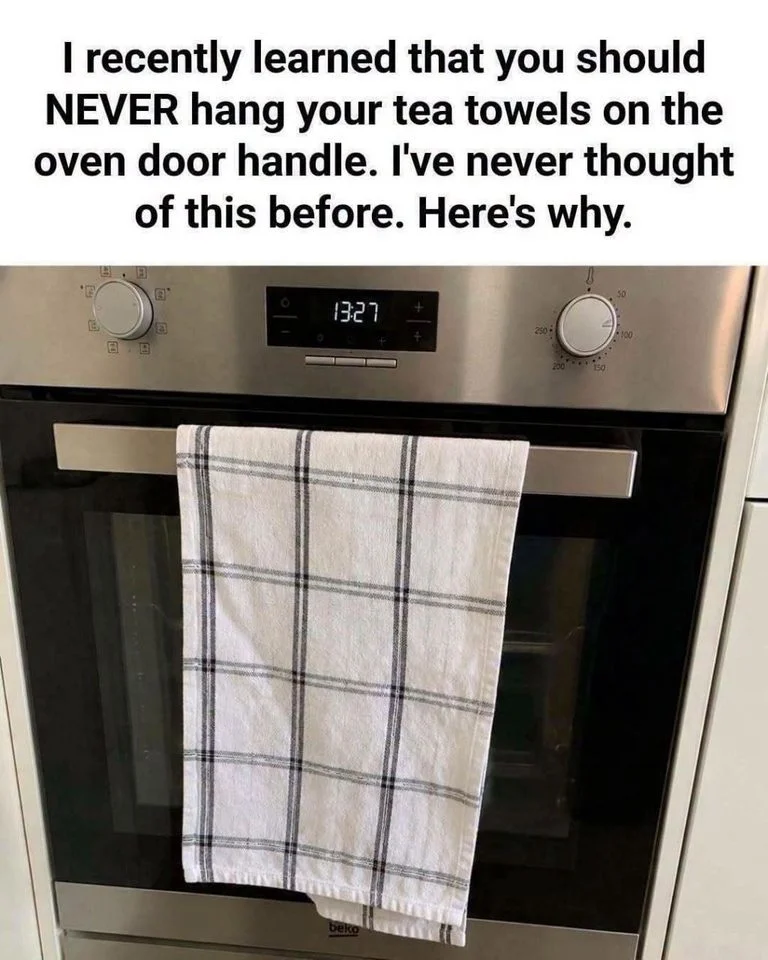
However, a recent viral social media post has challenged this deeply ingrained domestic habit, sending a wave of realization—and perhaps a bit of anxiety—through home cooks everywhere. The post features an image of a checkered tea towel hanging innocently on a Beko oven handle, accompanied by a stark warning: “I recently learned that you should NEVER hang your tea towels on the oven door handle. I’ve never thought of this before. Here’s why.”
The immediate reaction for many is disbelief. After all, our mothers and grandmothers did it, and the house never burned down. But when you examine the physics of ovens, the mechanics of appliance design, the microbiology of kitchen textiles, and the principles of fire safety, the truth becomes glaringly obvious. The oven door handle is arguably the single most dangerous and unhygienic place in the entire kitchen to store a towel.
From the terrifying risk of a flash fire to the slow, silent destruction of your expensive appliance, the reasons to break this habit are compelling and backed by experts. This comprehensive guide will explore exactly why you should stop hanging tea towels on the oven door handle, break down the hidden dangers, and provide safe, practical alternatives for your kitchen textiles.
The Primary Danger: A Severe and Immediate Fire Hazard
The most critical and immediate reason to stop hanging towels on the oven door is the profound risk of fire. The kitchen is already the most common origin point for house fires, and introducing a highly combustible material directly to a heat source drastically increases that risk.
The Flammability of Kitchen Textiles
Tea towels are typically made of cotton, linen, or a blend of synthetic fabrics. These materials are highly absorbent—which is exactly what you want when drying dishes—but that same porous nature makes them highly combustible. Cotton, in particular, has a relatively low ignition temperature. While it doesn’t instantly burst into flames, prolonged exposure to high heat can cause the fabric to scorch, smolder, and eventually ignite.
Even if you are not actively baking at 450 degrees, the exterior of the oven door and its handle can become surprisingly hot due to the radiant heat escaping from the oven. If the oven’s door seal is slightly worn, or if it is an older model, the ambient heat can be significant. Over time, the constant exposure to this heat can dry out the fabric fibers, making them brittle and even more susceptible to catching fire.
The “Opening the Door” Flashover
The greatest and most sudden fire risk occurs the moment you open the oven door. When you pull down the handle to check on a roasting chicken or a batch of cookies, a massive wave of concentrated, superheated air billows outward.
If a towel is hanging on that handle, it immediately flips inward or is engulfed by the sudden rush of hot air. If the towel makes contact with the heating element at the top of the oven, the open flame of a gas stove, or even the intensely hot inner glass, it can ignite in a fraction of a second. A dangling corner of a towel can also easily drag across a hot burner on the stovetop if the oven is situated directly below it.
The Distracted Cook
The danger is compounded by human nature. When you open the oven door, you are usually distracted—focused on the food, wearing oven mitts, and trying not to burn yourself. You might step away for a moment to grab a spice or check a timer, leaving the oven door open and the towel hanging precariously close to the heat source. A momentary lapse in attention can lead to a devastating fire.
The Hidden Appliance Damage: The Physics of the Hinge
Beyond the immediate risk of fire, hanging a towel on the oven door handle is actively damaging your expensive appliance. Appliance repair technicians frequently cite this habit as a leading cause of preventable oven damage.
The Weight of the Towel
An oven door is a heavy, precision-engineered piece of equipment. It is designed to balance perfectly on its hinges, ensuring a tight seal when closed. The hinges contain powerful springs that are calibrated to support the exact weight of the door assembly (the glass, the metal frame, and the handle).
When you hang a wet towel on the handle, you are adding weight to a lever that was not designed to support it. While a single dry towel might not seem heavy, a damp towel used to wipe down counters can weigh a pound or more. Over months and years, this constant, uneven downward pull takes a toll. The hinges can become loose, stripped, or bent.
The Sagging Door and the Broken Seal
As the hinges wear down from the extra weight, the door begins to sag. You might notice that it no longer closes flush or that it takes a little extra effort to push it shut. This sagging door compromises the gasket—the rubber or fiberglass seal that runs around the perimeter of the oven.
When the seal is compromised, heat escapes from the oven. This leads to a cascade of problems:
Uneven Cooking: Your baked goods will suffer as the oven struggles to maintain a consistent temperature.
Wasted Energy: The oven has to work harder and run longer to compensate for the lost heat, driving up your utility bills.
Damage to Cabinetry: The escaping heat can warp or discolor the wooden cabinets adjacent to the oven.
The Metal Fatigue
The handle itself can also suffer. The constant weight of a towel can cause the metal brackets attaching the handle to the door to bend or loosen. The moisture from a damp towel can seep into the small gaps of the handle assembly, leading to rust and corrosion of the internal screws and springs.
The Hygiene Nightmare: A Bacterial Breeding Ground
If the fire risk and mechanical damage weren’t enough, hanging a towel on the oven door handle is also a massive hygiene violation. The kitchen is a battleground for bacteria, and the oven handle is one of the most contested territories.
The Perfect Petri Dish
A tea towel serves many purposes: drying clean hands, wiping up a spill, drying a wet bowl, or grabbing a hot pan. Consequently, it becomes a transporter of bacteria, moisture, and organic matter. When you drape this damp, contaminated cloth over a warm oven door, you are creating the perfect environment for microbial growth.
Bacteria like E. coli, Salmonella, and Staphylococcus aureus thrive in warm, moist environments. The ambient heat radiating from the oven keeps the towel warm, while the moisture from your hands and the dishes keeps it damp. This is the exact formula for rapid bacterial proliferation.
Cross-Contamination at the Touch Point
Think about the journey of a single towel. You use it to wipe down a counter where raw meat was prepared, and then you hang it on the oven handle. The next person who comes into the kitchen grabs that same handle to open the oven, transferring bacteria directly onto their hands. Later, they might use those unwashed hands to chop a salad or grab a piece of bread.
Even if you use separate towels for hands and dishes, the one hanging on the oven is constantly exposed to the splatter of cooking fats, aerosolized food particles, and the general grime of the kitchen. It becomes a biological hazard masquerading as a helpful kitchen accessory.
The Splatter and Stain Problem
The space directly in front of the oven door is in the primary splash zone. When you roast a chicken, sear a steak, or bake a casserole, the heat causes fats and juices to pop and splatter.
A towel hanging on the handle acts as a canvas for grease splatters, tomato sauce stains, and aerosolized oils. Over time, these stains become baked into the fibers of the towel, making them incredibly difficult to wash out.
More importantly, a grease-soaked towel is a massive fire hazard. Cooking oils have a low flash point. A towel that has absorbed a significant amount of cooking grease can catch fire much more easily than a clean towel, turning a minor spark or a brush against a hot burner into a raging kitchen fire.
The Snag and Burn Risk
When a towel is draped over a handle, it creates a large, dangling fabric surface area. This is a significant tripping and snagging hazard in the tight, busy workspace of a kitchen.
As you move around the kitchen, it is incredibly easy to catch your sleeve, your apron, or even the handle of a pan on the hanging towel. If you snag the towel while carrying a pot of boiling water or a heavy tray of food, the sudden pull can cause a catastrophic spill, leading to severe burns.
Furthermore, reaching for the towel while the oven door is open requires you to reach directly over the hot surface of the door. This puts your hands and arms dangerously close to the hot racks and the intense heat radiating from the oven’s interior. It is far too easy to accidentally brush your forearm against a scorching hot element while reaching for the towel.
Safe and Practical Alternatives for Kitchen Towels
If the oven handle is out, where should you put your tea towels? Fortunately, there are several safe, hygienic, and convenient alternatives.
1. Wall-Mounted Hooks or Towel Bars
Installing a simple row of wall-mounted hooks or a small towel rail on the backsplash or a nearby wall is the best solution. It keeps the towels accessible, allows them to air dry fully (preventing bacterial growth), and keeps them completely away from the heat source.
2. Drawer Handles or Cabinet Knobs
Hanging a towel on a drawer handle or a cabinet knob is a much safer alternative than the oven door. These handles are designed to bear weight, and they are located away from direct heat. Ensure the drawer is not opened frequently, as the towel can snag.
3. Under-Sink Storage
For drying dishes or wiping down surfaces, keep a fresh stack of towels neatly folded in a drawer near the sink. Reserve the hanging towels solely for drying hands, and wash them frequently.
4. A Freestanding Towel Stand
For those who love the look of a draped towel but want to eliminate the risk, a freestanding wooden or metal towel stand placed on the countertop is an elegant and safe choice.
5. A Magnetic Towel Bar
There are magnetic towel bars available that attach to the side of the refrigerator or a metal cabinet. This keeps the towel away from the oven heat while keeping it easily accessible.
Best Practices for Kitchen Towel Hygiene
Regardless of where you store your towels, maintaining their cleanliness is paramount to kitchen safety.
Change Them Daily
Kitchen towels should be changed every single day, and more often if you have been cooking raw meat or fish.
Use a Color-Coded System
Invest in a color-coded system. Use one color for drying hands, another for drying dishes, and a third (preferably dark) for wiping up spills on the floor or counters. This prevents cross-contamination.
Wash Them Hot
Wash kitchen towels in the hottest water setting recommended by the fabric care label. Use a heavy-duty laundry detergent and consider adding a laundry sanitizer to kill bacteria.
Keep Hand Towels Separate
Never use the same towel you used to dry your hands to dry a clean dish. Hand towels are often the most contaminated items in the kitchen.
Conclusion: Break the Habit for a Safer, Cleaner Kitchen
The instinct to drape a tea towel over the oven handle is deeply ingrained in our domestic muscle memory. It is a habit born of convenience, but as we have seen, it is a habit fraught with hidden dangers. From the terrifying risk of a flash fire to the insidious growth of harmful bacteria, and the slow, grinding damage to your oven’s hinges, the reasons to stop are overwhelming.
The viral warning is not an overreaction; it is a vital piece of safety advice that every home cook should heed. By simply relocating your tea towels to a wall hook or a drawer handle, you can eliminate a major fire hazard, protect your family from foodborne illness, and extend the lifespan of your oven. A safe kitchen is an organized kitchen, and sometimes, the best change you can make is simply rethinking where you hang your towel.
Frequently Asked Questions
Is it really dangerous to hang a towel on the oven door?
Yes. It poses a significant fire risk. When the oven is on, the door handle can get hot, and opening the door releases intense heat. A dangling towel can easily catch fire if it touches the heating element, an open gas flame, or the hot inner glass.
Can hanging a towel on the oven door damage the oven?
Yes. Over time, the weight of a towel (especially a wet one) can strain the oven door hinges, causing the door to sag and the seal to fail. This leads to uneven cooking, wasted energy, and expensive repairs.
Why is it unhygienic to hang towels on the oven?
The heat from the oven creates a warm, damp environment that is perfect for bacterial growth. If the towel is used to dry hands or wipe counters, it can harbor harmful bacteria like Salmonella and E. coli, which can then spread to the oven handle and the rest of the kitchen.
Where should I hang my tea towels instead?
The safest places to hang tea towels are on wall-mounted hooks, a dedicated towel rail, or on cabinet and drawer handles away from the cooking zone.
How often should I wash my kitchen towels?
Kitchen towels should be washed frequently—ideally every day or every other day, depending on how much cooking you do. If you use a towel on raw meat juices, wash it immediately.
What should I do if a towel catches fire on the oven handle?
Never throw water on a kitchen fire. If a towel catches fire, turn off the heat source if it is safe to do so. If the fire is small, smother it with a metal lid or a fire blanket. If it is spreading, evacuate the house immediately and call emergency services.
Does this apply to gas ovens as well as electric ovens?
Yes, and it is arguably even more dangerous with gas ovens. The open flames on the stovetop or in the oven can easily ignite a dangling towel, leading to a rapid and severe fire.
Are there any safe ways to hang a towel on an oven?
There is no truly safe way to hang a towel directly on the oven door handle while the oven is in use. If the oven is completely turned off and cold, it is less of a fire hazard, but it is still unhygienic and puts unnecessary weight on the hinges. It is best to avoid the habit entirely.