Kidneys Are Failing: The Warning Signs Your Body Is Sending Before It Is Too Late
Your kidneys are silent, unassuming workers. Tucked beneath the lower ribs at the back of your abdomen, these two bean-shaped organs filter every drop of blood in your body multiple times a day, removing waste products, balancing electrolytes, regulating blood pressure, and producing hormones essential for red blood cell production and bone health. When they are healthy, you rarely give them a second thought. When they begin to fail, the warning signs are often subtle, easy to dismiss, and dangerously easy to mistake for the ordinary aches and pains of daily life.
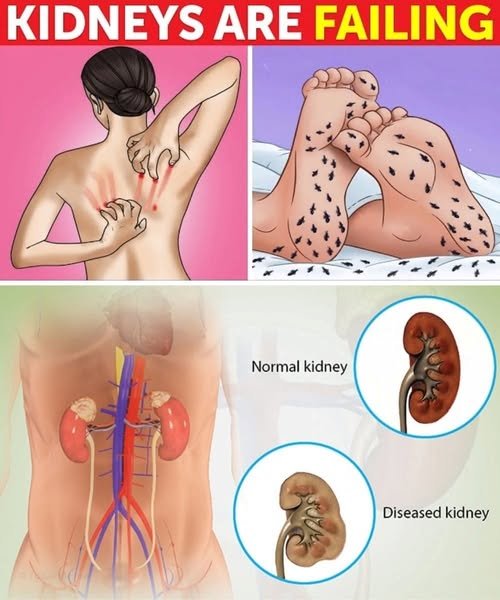
A viral health graphic makes this point vividly. It shows a woman scratching her back, a pair of feet covered in dark marks, and a side-by-side comparison of a healthy kidney versus a diseased, shrunken one. The message is blunt: “Kidneys Are Failing.” The symptoms highlighted—persistent itching and muscle cramps—are not random. They are among the most common and most frequently overlooked signs of advanced kidney disease, manifestations of a body struggling to cope with the buildup of toxins and the disruption of mineral balance that occur when renal function declines.
The challenge is that chronic kidney disease (CKD) is a master of disguise. In its early stages, it produces no symptoms at all. The body compensates remarkably well, and the remaining healthy kidney tissue works harder to pick up the slack. By the time symptoms like itching and cramping become noticeable, significant and often irreversible damage has already occurred. This is why understanding the warning signs is not just helpful—it is potentially life-saving.
This comprehensive guide explores the warning signs of kidney failure, focusing on the mechanisms behind itching and muscle cramps, the other critical symptoms that often accompany them, the underlying causes of kidney disease, how it is diagnosed, and the steps you can take to protect your kidney health. The goal is not to create anxiety, but to replace silent progression with informed vigilance.
The Silent Crisis: Why Kidney Disease Symptoms Appear Late
To understand why kidney failure produces the symptoms it does, it is essential to first grasp the remarkable adaptability of the human kidney. Each kidney contains roughly a million tiny filtering units called nephrons. When some nephrons are damaged, the surviving ones increase their workload to maintain overall filtration. This “renal functional adaptation” means that a person can lose a substantial portion of their kidney function—sometimes more than half—before any noticeable changes occur in blood test results or in how they feel.
The Tipping Point: When Compensation Fails
This compensatory mechanism is a double-edged sword. It protects the body from the immediate consequences of kidney damage, but it also masks the progression of disease. The ability to concentrate urine declines early, followed by a diminished capacity to excrete excess phosphate, acid, and potassium. As the glomerular filtration rate (GFR), the key measure of kidney function, falls below a critical threshold, the body’s ability to maintain homeostasis collapses. Waste products like urea and creatinine begin to accumulate in the blood, a condition known as uremia.
It is at this stage—when the GFR has fallen significantly and the body can no longer compensate—that the symptoms described in the viral graphic begin to manifest. The itching, the cramps, and the fatigue are not early warnings. They are the body’s distress signals, indicating that the kidneys are failing to perform their essential functions.
The Scope of the Problem
The prevalence of chronic kidney disease is staggering. In the United States alone, an estimated 14% of adults have CKD, and the majority are unaware of their condition. Roughly nine in ten adults with CKD do not know they have it. This silent progression makes kidney disease a major public health challenge, one that often only comes to medical attention when it has reached an advanced stage.
The Itch That Won’t Quit: Understanding Uremic Pruritus
The image of a woman scratching her back in the viral graphic is a powerful visual representation of one of the most distressing symptoms of kidney failure: uremic pruritus, also known as chronic kidney disease-associated pruritus (CKD-aP). It is not a minor annoyance. It is a persistent, often agonizing itch that can affect up to 70% of people with end-stage kidney disease, significantly impairing sleep, mood, and overall quality of life.
The Mechanisms Behind the Itch
The pathophysiology of uremic pruritus is complex and not fully understood, but it is known to be multifactorial. It is not simply a matter of dry skin, although dry skin (xerosis) is common in CKD patients due to reduced sweat and sebaceous gland secretions. The itch arises from a combination of systemic and local factors:
Accumulation of Uremic Toxins: As the kidneys fail to clear waste products, substances such as urea, creatinine, and indoxyl sulfate build up in the blood and skin. These toxins are believed to directly stimulate nerve endings, triggering the sensation of itch.
Disturbances in Calcium and Phosphate Homeostasis: The kidneys play a central role in regulating calcium and phosphorus levels. In CKD, phosphorus accumulates because the kidneys cannot excrete it efficiently. This leads to secondary hyperparathyroidism and alterations in calcium levels, which are strongly implicated in the development of pruritus.
Cutaneous Microinflammation: Even in the absence of visible skin lesions, there is evidence of low-grade inflammation in the skin of CKD patients. This inflammation can sensitize nerve endings and contribute to the itch.
Altered Cutaneous Innervation: The nerve supply to the skin may be altered in CKD, leading to abnormal sensations, including itch.
Dysregulation of the Opioid System: The endogenous opioid system, which modulates pain and itch, is imbalanced in CKD. This has led to the development of targeted treatments like difelikefalin, a kappa-opioid receptor agonist that has shown efficacy in reducing CKD-associated pruritus.
The Clinical Impact and Management
Uremic pruritus is often generalized but frequently affects the back, abdomen, head, and arms. It is typically worse at night, disrupting sleep and leading to fatigue and depression. The itch is often described as a deep, crawling sensation that is not relieved by scratching; in fact, scratching can lead to excoriations, secondary infections, and exacerbation of the itch-scratch cycle.
Management follows a stepwise approach. The first line of defense includes general skin care measures: keeping the skin moisturized with emollients, avoiding hot showers and harsh soaps, and using cool compresses. Topical treatments such as pramoxine lotion or capsaicin cream may provide localized relief. For more severe or persistent itch, systemic therapies are considered. Gabapentinoids are commonly used, and the newer agent difelikefalin is specifically approved for CKD-associated pruritus and represents a significant advance in treatment. Optimizing dialysis adequacy in patients on dialysis is also crucial for reducing toxin levels.
The Cramping Muscles: Electrolyte Chaos and Mineral Bone Disorder
The second major symptom highlighted in the viral graphic—muscle cramps—is another classic manifestation of advanced kidney disease. These cramps are not the occasional “charley horse” that many people experience after strenuous exercise. They are frequent, often severe, and can strike at rest or during dialysis sessions. They are a direct consequence of the kidney’s inability to maintain the delicate balance of electrolytes and minerals in the blood.
The Underlying Causes of Renal Cramps
Muscle contraction and relaxation are controlled by the precise movement of electrolytes—calcium, potassium, sodium, and magnesium—across cell membranes. When kidney function declines, this balance is disrupted in several ways:
Hyperphosphatemia and Hypocalcemia: The failing kidneys cannot excrete excess phosphorus, leading to high blood phosphorus levels (hyperphosphatemia). This, in turn, causes a drop in blood calcium levels (hypocalcemia) because phosphorus binds to calcium. Low calcium levels increase neuromuscular excitability, making muscles prone to spontaneous contractions and cramps.
Disruption of Vitamin D Metabolism: The kidneys are responsible for converting vitamin D into its active form, calcitriol. Without sufficient active vitamin D, the body cannot absorb calcium effectively from the diet, further exacerbating hypocalcemia.
Secondary Hyperparathyroidism: The combination of low calcium and high phosphorus stimulates the parathyroid glands to overproduce parathyroid hormone (PTH). This hormone pulls calcium out of the bones in an attempt to raise blood calcium levels, a process that can lead to bone pain, weakness, and an increased risk of fractures.
Other Electrolyte Imbalances: Abnormalities in potassium (both low and high levels), magnesium, and sodium can also contribute to muscle cramps, twitching, and weakness.
Managing Renal Cramps
The management of muscle cramps in CKD requires addressing the underlying mineral and electrolyte imbalances. This often involves dietary restriction of phosphorus, the use of phosphate binders taken with meals to prevent phosphorus absorption, and active vitamin D supplementation. Medications like calcimimetics may be used to control secondary hyperparathyroidism.
For immediate relief, stretching the affected muscle, gentle massage, and applying heat can help. For patients on dialysis, adjusting the dialysis prescription (such as the sodium concentration of the dialysate or the ultrafiltration rate) can reduce the frequency of cramps during treatment. Stretching exercises, particularly before bed, have been shown to be protective.
Beyond Itching and Cramps: The Full Spectrum of Kidney Failure Symptoms
While itching and cramps are prominent, they are part of a constellation of symptoms that emerge as kidney function deteriorates. Recognizing this broader picture is essential for a complete understanding of kidney failure.
Swelling and Fluid Retention
As the kidneys lose their ability to excrete excess fluid and sodium, fluid accumulates in the body’s tissues. This manifests as edema—swelling in the ankles, feet, legs, and sometimes the hands and face. It can also lead to puffiness around the eyes, particularly in the morning. In advanced cases, fluid can accumulate in the lungs, causing shortness of breath.
Fatigue and Weakness
Fatigue is one of the most common and debilitating symptoms of CKD. It has multiple causes. The buildup of uremic toxins directly affects energy levels and mental acuity. Additionally, the kidneys produce erythropoietin, a hormone that stimulates red blood cell production. When kidney function declines, erythropoietin production drops, leading to anemia. Anemia reduces the blood’s oxygen-carrying capacity, resulting in profound tiredness and weakness.
Changes in Urination
The kidneys’ primary function is to produce urine. Changes in urinary habits are often among the first signs of kidney problems, although they can be subtle. These changes include:
Nocturia: Needing to urinate more frequently during the night.
Changes in Urine Appearance: Urine may become dark, cloudy, or foamy. Foamy urine can indicate the presence of protein (proteinuria), a key marker of kidney damage.
Blood in Urine: Hematuria, or blood in the urine, can give it a pink, red, or cola-colored appearance.
Changes in Output: In some cases, urine output may decrease, although in other types of kidney disease, output may remain normal or even increase.
Gastrointestinal Symptoms
Uremia often causes nausea, vomiting, and a loss of appetite. Patients may also experience a metallic taste in the mouth or a bad taste, particularly with red meat, which can further contribute to poor nutrition and weight loss.
Cognitive and Neurological Symptoms
The accumulation of toxins can affect the brain, leading to difficulty concentrating, confusion, and memory problems. Sleep disturbances, including insomnia and restless legs syndrome, are also common. In severe cases, seizures and coma can occur.
What Causes Kidney Failure? The Leading Culprits
Kidney failure does not occur in a vacuum. It is the end result of a process that damages the kidneys over time. The two most common causes of chronic kidney disease in the United States and many other developed nations are diabetes and high blood pressure.
Diabetes and Diabetic Nephropathy
Diabetes, particularly type 2 diabetes, is the leading cause of kidney failure. Chronically high blood sugar levels damage the blood vessels in the kidneys, impairing their filtering ability. This condition is known as diabetic nephropathy. Over time, the damage progresses, leading to scarring and loss of kidney function. The rising prevalence of diabetes worldwide is a major driver of the increasing burden of kidney disease.
Hypertension and Hypertensive Nephropathy
High blood pressure is the second leading cause. Just as high blood pressure damages blood vessels throughout the body, it damages the delicate capillaries in the kidneys. This prevents the kidneys from effectively filtering waste and excess fluid. Furthermore, kidney disease itself can cause high blood pressure, creating a vicious cycle that accelerates kidney damage.
Other Causes and Risk Factors
Beyond diabetes and hypertension, numerous other conditions and factors can lead to kidney disease:
Glomerulonephritis: Inflammation of the kidney’s filtering units, which can be caused by autoimmune diseases like lupus or by infections.
Polycystic Kidney Disease: An inherited disorder characterized by the growth of numerous cysts in the kidneys.
Long-term Use of Certain Medications: Overuse of nonsteroidal anti-inflammatory drugs (NSAIDs) like ibuprofen and naproxen can damage the kidneys, particularly in people with pre-existing kidney disease.
Urinary Tract Obstructions: Conditions such as an enlarged prostate or kidney stones can block the flow of urine and cause kidney damage.
Age: The risk of kidney disease increases with age, particularly after age 60.
Family History: A family history of kidney disease increases an individual’s risk.
Diagnosing Kidney Disease: The Tools of Detection
Because early-stage kidney disease is often asymptomatic, diagnosis relies heavily on laboratory testing. The two key tests used to detect and monitor CKD are the estimated glomerular filtration rate (eGFR) and the urine albumin-to-creatinine ratio (UACR).
The Estimated Glomerular Filtration Rate (eGFR)
The eGFR is a calculated value based on the level of creatinine in the blood, along with factors such as age and sex. Creatinine is a waste product produced by muscle metabolism that is normally filtered out by the kidneys. When kidney function declines, creatinine levels rise. The eGFR estimates how much blood passes through the glomeruli each minute. A normal eGFR is generally considered to be above 90 mL/min/1.73 m². CKD is defined as an eGFR below 60 mL/min/1.73 m² for three months or more, or the presence of kidney damage markers regardless of eGFR.
The Urine Albumin-to-Creatinine Ratio (UACR)
The UACR measures the amount of albumin—a type of protein—in the urine relative to creatinine. Healthy kidneys do not filter albumin into the urine because it is too large. When the glomeruli are damaged, albumin can leak through. An elevated UACR (≥30 mg/g) is a marker of kidney damage and is a strong predictor of progression to kidney failure, even when eGFR is normal.
Additional tests may include imaging studies like ultrasound to visualize the kidneys’ size and structure, and in some cases, a kidney biopsy to determine the specific cause of the damage.
Treating Kidney Failure: From Slowing Progression to Replacement Therapy
There is no cure for chronic kidney disease, but early detection and aggressive management can slow its progression and prevent or delay the need for dialysis or transplantation. Once kidney failure is advanced (Stage 5 CKD, or end-stage renal disease), renal replacement therapy becomes necessary.
Slowing the Progression of CKD
The primary goals of treatment in earlier stages are to control the underlying cause and manage complications:
Blood Pressure Control: Rigorous control of blood pressure is paramount. Angiotensin-converting enzyme (ACE) inhibitors or angiotensin II receptor blockers (ARBs) are often the medications of choice because they also reduce proteinuria and protect the kidneys.
Blood Sugar Control: In diabetic patients, maintaining tight glycemic control is essential.
Dietary Modifications: A kidney-friendly diet typically involves restricting sodium, phosphorus, and potassium, and managing protein intake. A registered dietitian can provide individualized guidance.
Medications: Statins may be used to manage cholesterol. Erythropoiesis-stimulating agents (ESAs) and iron supplements may be needed to treat anemia. Phosphate binders and active vitamin D are used to manage mineral and bone disorder.
Renal Replacement Therapy
When the kidneys can no longer sustain life, two main options exist: dialysis and kidney transplantation.
Dialysis: Dialysis performs the filtering function of the kidneys artificially. There are two main types:
Hemodialysis: Blood is pumped out of the body, filtered through a machine, and returned. It is typically performed several times a week at a dialysis center.
Peritoneal Dialysis: A sterile fluid is introduced into the abdominal cavity, where it absorbs waste products from the blood across the peritoneal membrane. The fluid is then drained out. This can often be done at home.
Kidney Transplantation: A kidney transplant is the best treatment for eligible patients with end-stage renal disease. It offers significant survival benefits and a better quality of life compared to long-term dialysis. A healthy kidney can come from a deceased donor or a living donor. Living donor transplantation is often preferred because it offers better long-term outcomes and can be scheduled before the recipient becomes critically ill.
When to See a Doctor: Listening to Your Body’s Signals
The most important takeaway from the viral graphic and the reality of kidney disease is that symptoms like itching and cramps are not trivial. They are signals that warrant medical attention.
You should see a healthcare provider if you experience:
Persistent, unexplained itching, particularly if it is widespread and not relieved by moisturizers or over-the-counter antihistamines.
Frequent or severe muscle cramps, especially if they occur at rest or during the night.
Swelling in your legs, ankles, or feet that does not resolve.
Persistent fatigue that is not explained by lack of sleep or exertion.
Changes in urination, such as needing to go more often at night, foamy urine, or blood in the urine.
Unexplained loss of appetite or nausea.
Furthermore, if you have risk factors for kidney disease—diabetes, high blood pressure, a family history of kidney failure, or you are over the age of 60—you should discuss kidney health with your doctor and ask whether you should be screened with blood and urine tests. Early detection is the single most powerful tool we have for preventing the progression of kidney disease to failure.
Conclusion: From Silence to Vigilance
The kidneys are remarkable organs, capable of sustaining life even when a significant portion of their function is lost. This resilience, however, is also a vulnerability. It allows chronic kidney disease to progress silently for years, producing no symptoms until the damage is extensive and often irreversible. The viral graphic’s stark warning—”Kidneys Are Failing”—is a reminder that the body does speak, but it often whispers before it shouts.
The persistent itch of uremic pruritus and the agonizing cramps of mineral and bone disorder are not random afflictions. They are the visible manifestations of a complex internal struggle: the buildup of toxins, the disruption of electrolyte balance, and the failure of the body’s filtration system. Recognizing these signs, along with the other symptoms of advanced kidney disease such as swelling, fatigue, and urinary changes, can be the difference between timely intervention and a missed opportunity.
For those with risk factors like diabetes and hypertension, awareness is not enough. Proactive screening with simple blood and urine tests is essential. For everyone, listening to the body’s signals and seeking medical evaluation for persistent, unexplained symptoms is a critical act of self-care. The kidneys may be silent, but they do not have to suffer in silence. By transforming knowledge into action, we can protect these vital organs and preserve the quality of life that depends on them.
Frequently Asked Questions
What are the first warning signs of kidney failure?
Chronic kidney disease often has no symptoms in its early stages. When symptoms do appear, they are often nonspecific and may include fatigue, swelling in the legs and ankles, changes in urination (especially at night), and itchy skin. The symptoms highlighted in the graphic—persistent itching and muscle cramps—are more typical of advanced kidney disease.
Why does kidney failure cause itching?
Kidney failure-associated itching, known as uremic pruritus, is caused by a combination of factors. The failing kidneys cannot remove waste products, leading to a buildup of uremic toxins in the blood and skin that irritate nerve endings. Additionally, imbalances in calcium and phosphorus, inflammation in the skin, and dysregulation of the body’s opioid system all contribute to the sensation of itch.
Why does kidney disease cause muscle cramps?
Muscle cramps in kidney disease are primarily caused by electrolyte imbalances and mineral bone disorder. Failing kidneys cannot excrete excess phosphorus, leading to high phosphate levels and low calcium levels. These imbalances increase neuromuscular excitability, causing muscles to contract involuntarily and cramp. Other electrolyte abnormalities, such as abnormal potassium or magnesium levels, can also contribute.
Are itchy skin and muscle cramps always a sign of kidney failure?
No. Itching and muscle cramps can be caused by many other conditions. Itching can result from dry skin, allergies, or liver disease. Muscle cramps can be caused by dehydration, overexertion, or other electrolyte imbalances. However, if you have these symptoms persistently and also have risk factors for kidney disease, such as diabetes or high blood pressure, they warrant medical evaluation.
How is kidney disease diagnosed?
Kidney disease is diagnosed through blood and urine tests. The two key tests are the estimated glomerular filtration rate (eGFR), which measures how well the kidneys are filtering waste, and the urine albumin-to-creatinine ratio (UACR), which detects protein leaking into the urine. Imaging tests and, in some cases, a kidney biopsy may also be used.
Can kidney failure be reversed?
Chronic kidney disease is generally a progressive and irreversible condition. However, its progression can often be slowed significantly with appropriate treatment, including strict blood pressure and blood sugar control, dietary changes, and medications. Acute kidney injury, a sudden loss of kidney function, is sometimes reversible with prompt treatment.
What is the life expectancy of someone with kidney failure?
Life expectancy varies widely depending on age, overall health, the underlying cause of kidney disease, and the treatment received. For patients with end-stage renal disease, dialysis and kidney transplantation are life-sustaining treatments. A kidney transplant generally offers the best long-term survival and quality of life.