Why Small Skin Tags Appear on the Neck as We Get Older
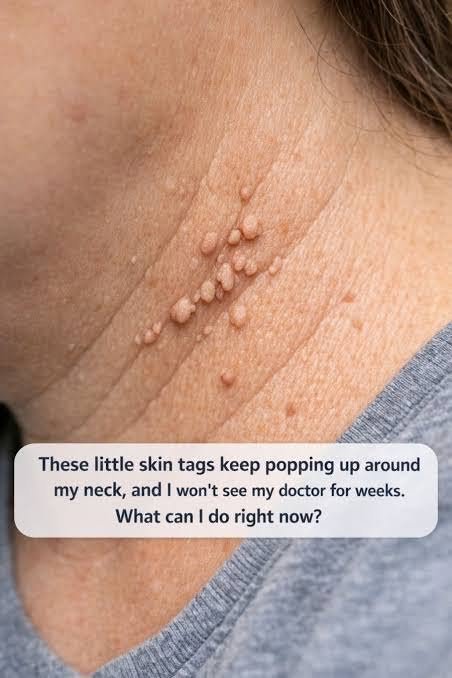
The image presents a highly relatable and often frustrating scenario: a close-up of the neck showing multiple small, fleshy, skin-colored growths, accompanied by the caption, “These little skin tags keep popping up around my neck, and I won’t see my doctor for weeks. What can I do right now?”
For millions of people, particularly those in their 40s, 50s, and beyond, this is not just a cosmetic annoyance; it is a daily source of irritation, self-consciousness, and sometimes, physical discomfort. These small growths, known medically as acrochordons, are incredibly common. They are benign, non-cancerous tumors of the skin that typically look like tiny, soft pieces of hanging tissue. They can be smooth or wrinkled, flesh-colored or slightly darker, and they often grow on a tiny stalk called a peduncle.
While they can appear almost anywhere on the body, the neck is one of the most common locations. Understanding why these skin tags appear, especially as we age, requires a deep dive into the biology of our skin, the mechanical forces of friction, the role of our metabolic system, and the genetic hand we are dealt.
This comprehensive guide will explore the exact reasons why skin tags proliferate on the neck as we get older. We will examine the science behind their formation, differentiate them from other skin conditions, provide a safe, step-by-step guide on what you can do right now while waiting for your doctor’s appointment, and outline the professional treatment options available.
Understanding the Anatomy of a Skin Tag
To understand why a skin tag forms, you must first understand what it is. Despite their somewhat alarming appearance, skin tags are completely harmless. They are composed of the same materials as normal skin.
The Composition of an Acrochordon
A skin tag consists of a core of loose collagen fibers, fat, and sometimes tiny blood vessels and nerve endings, all encased in a normal layer of epidermis (the outer layer of skin). They are generally soft and painless, although they can become painful if they are repeatedly rubbed, twisted, or if a blood clot forms inside them.
The Peduncle
The defining feature of a skin tag is the peduncle—the thin stalk of tissue that connects the main body of the tag to the surrounding skin. Because they hang off the skin, they are highly susceptible to friction and irritation from clothing, jewelry, and even the simple movement of your neck.
The Primary Reason for Age-Related Skin Tags: The Friction Factor
The most significant and universally accepted cause of skin tags is friction. As we age, our skin undergoes significant structural changes. The production of collagen and elastin—the proteins responsible for keeping our skin firm, tight, and elastic—begins to decline.
The Aging Skin and Friction Connection
When we are young, our skin snaps back into place. As we enter our 40s and 50s, the skin on our neck begins to lose that youthful elasticity. It becomes looser and more prone to wrinkling and folding. When a person sleeps, turns their head, or wears a tight shirt collar, the loose skin on the neck folds and rubs against itself.
The body interprets this constant, repetitive friction as a signal of trauma. In a misguided attempt to protect the skin from the constant rubbing, the body’s cells begin to over-proliferate in that specific area. The collagen and blood vessels bunch together and push outward, creating the small, fleshy growth we call a skin tag.
Why the Neck Specifically?
The neck is a primary target for skin tags because it is a high-mobility area that is constantly in motion. Furthermore, it is highly exposed to friction from:
Clothing: Tight shirt collars, stiff fabrics, and the friction of necklaces.
Jewelry: Chains and pendants constantly rubbing against the delicate skin.
Skin Folds: As we age, the neck develops horizontal creases. These creases create natural pockets where skin rubs against skin.
The Hormonal and Metabolic Link
While friction is the primary mechanical cause, the development of skin tags is heavily influenced by internal, systemic factors. As we age, our metabolic and hormonal profiles shift, creating an environment that makes the skin more susceptible to these growths.
Insulin Resistance and Diabetes
One of the strongest and most well-documented associations with skin tags is insulin resistance and type 2 diabetes. Insulin is a hormone that regulates blood sugar. When the body’s cells become resistant to insulin, the pancreas produces more and more of it to compensate.
High levels of circulating insulin act as a growth factor. It stimulates the growth of keratinocytes (skin cells) and fibroblasts (cells that make collagen), leading to the rapid development of skin tags and other skin growths. If you notice a sudden explosion of skin tags on your neck, it is often worth getting your blood sugar and insulin levels checked.
Hormonal Fluctuations
Hormones play a massive role in skin health. It is common for skin tags to appear or multiply during significant hormonal shifts:
Pregnancy: The massive surge in estrogen and progesterone can cause skin tags to erupt, especially on the neck and under the arms.
Menopause: The sharp decline in estrogen affects skin elasticity and moisture, making the skin more prone to friction and the subsequent formation of tags.
Growth Hormone: Some studies suggest a link between elevated levels of human growth hormone (HGH) and the development of acrochordons.
Obesity and Weight Gain
Excess body weight is a major contributing factor to skin tags. This is largely due to two reasons: increased friction and metabolic changes. Weight gain leads to more skin folds, particularly around the neck, armpits, and groin. The increased friction in these areas is a direct trigger for tag formation. Furthermore, obesity is closely tied to insulin resistance, compounding the problem.
Genetics and Skin Type
If you are wondering why your partner or friends do not have skin tags while you do, the answer may lie in your DNA.
The Genetic Predisposition
Skin tags have a strong genetic component. If your parents or grandparents had them, there is a high likelihood that you will develop them as you age. Certain genetic mutations can cause a person’s skin cells to over-proliferate more readily than others.
Skin Type and Pigmentation
While people of all skin types and colors can develop skin tags, those with fair skin and lighter hair color may be slightly more prone to them. Additionally, individuals with dry skin, or skin that is prone to developing fine wrinkles and folds, are more likely to experience the friction necessary to create tags.
Distinguishing Skin Tags from Other Conditions
Before you attempt any at-home treatments or panic about the growths on your neck, it is crucial to ensure that what you are looking at is, in fact, a skin tag. There are several other skin conditions that can mimic the appearance of acrochordons.
1. Skin Tags vs. Warts
Warts are caused by the Human Papillomavirus (HPV). Unlike skin tags, warts tend to have a rougher, cauliflower-like texture and are usually firm to the touch. They do not typically hang off a stalk.
2. Skin Tags vs. Moles (Nevi)
Moles are clusters of pigmented cells. They are usually flat or raised, but they do not typically have a stalk. It is critical to monitor moles using the ABCDE rule (Asymmetry, Border irregularity, Color variation, Diameter larger than a pencil eraser, Evolving). Skin tags are generally uniform in color and shape.
3. Skin Tags vs. Seborrheic Keratoses
Seborrheic keratoses are another common benign growth that appears with age. They are often described as looking “stuck on” to the skin, like a piece of brown wax. While they can be raised, they are usually broader and flatter than the delicate, dangling skin tag.
4. Skin Tags vs. Melanoma
While extremely rare, a melanoma (skin cancer) can sometimes disguise itself as a skin tag or appear on a stalk. If a growth on your neck is bleeding, changing color rapidly, growing quickly, or refusing to heal, you must see a doctor immediately.
What You Can Do Right Now (While Waiting for the Doctor)
The prompt in the image asks, “What can I do right now?” The good news is that skin tags are rarely an emergency. If you have a doctor’s appointment in a few weeks, the most important thing you can do is prevent irritation and infection.
1. Reduce Friction Immediately
The most important step is to stop the friction that is aggravating the tags.
Change Your Wardrobe: Avoid tight collared shirts, turtlenecks, and stiff fabrics. Opt for loose, breathable cotton clothing.
Remove Jewelry: Stop wearing necklaces or chains until the tags are addressed.
Sleeping Position: Try to avoid sleeping in positions that cause the skin of your neck to bunch up and fold.
2. Keep the Area Clean and Dry
Skin tags can become infected if they are constantly moist or dirty.
Wash the neck gently with a mild, fragrance-free cleanser.
Pat the area completely dry with a soft towel.
Avoid heavy moisturizers or perfumes on the neck.
3. Use Barrier Powders
If your neck sweats a lot or the skin folds are causing the tags to rub together, you can use a light dusting of baby powder or an anti-chafing powder (like Zeasorb) to keep the area dry and reduce friction.
4. DO NOT Attempt DIY Removal
There are countless internet tutorials that suggest cutting off skin tags with nail clippers, tying them off with dental floss, or applying apple cider vinegar. Do not do this.
Risk of Infection: The skin is an open wound when a tag is severed. Cutting a tag at home introduces bacteria (like Staph or MRSA) into a highly vascular area.
Scarring: DIY removal often leaves ugly, permanent scars.
Bleeding: Skin tags contain tiny blood vessels. Cutting them can result in prolonged, difficult-to-stop bleeding.
Misdiagnosis: If the growth is actually a mole or a basal cell carcinoma, cutting it off will not cure it and may cause further complications.
5. Over-the-Counter (OTC) Options
There are FDA-approved skin tag removal kits available at pharmacies. These kits usually contain a liquid that freezes the tag (cryotherapy). While generally safe for small, typical tags, they can be painful and may not work for larger tags or tags with thick stalks. Use them with caution and follow the instructions exactly.
Medical Removal: What Your Doctor Will Do
When your appointment arrives, your doctor or dermatologist will likely confirm the diagnosis visually and offer to remove the tags. Removing a skin tag is a quick, relatively painless procedure that is usually done right in the office.
1. Snip Excision
This is the most common method for small to medium-sized tags.
The Procedure: The doctor will swab the area with an antiseptic solution. They may inject a local anesthetic (like lidocaine) to numb the area. Using a pair of surgical scissors or a scalpel, they will quickly snip the tag off at the base.
Recovery: There is usually minimal bleeding, which stops quickly with a little pressure.
2. Cryosurgery (Freezing)
This is a common method for smaller tags.
The Procedure: The doctor applies liquid nitrogen to the skin tag. The extreme cold freezes the tissue, causing a blister to form.
Recovery: The tag will dry up and fall off within a few days to a week. This method is quick, but it can be slightly uncomfortable and may require multiple sessions for larger tags.
3. Electrocautery (Burning)
This is used for slightly larger or deeper tags.
The Procedure: After numbing the area, the doctor uses a tiny electric needle to burn the tissue at the base of the tag.
Recovery: This seals the blood vessels and prevents bleeding. It usually heals well, though it may leave a tiny scar.
4. Ligation
The Procedure: The doctor ties a very tight surgical thread around the base of the tag, cutting off its blood supply.
Recovery: The tag will fall off on its own within a few days. This method is less common in modern dermatology.
Preventing Future Skin Tags
While you cannot change your genetics or stop the aging process, there are proactive steps you can take to reduce the likelihood of new skin tags forming.
1. Manage Your Weight
Since obesity and insulin resistance are major risk factors, maintaining a healthy weight through diet and exercise is one of the most effective ways to prevent skin tags. Losing weight also reduces the number of skin folds and the amount of friction on the neck.
2. Regulate Blood Sugar
If you have insulin resistance, prediabetes, or diabetes, working with your doctor to manage your blood sugar levels can halt the proliferation of skin tags. A diet low in refined carbohydrates and sugars can help stabilize insulin levels.
3. Exfoliate Gently
Regular, gentle exfoliation of the neck can help remove dead skin cells and improve skin texture. However, be careful not to scrub too hard, especially if you already have tags, as this can irritate them.
4. Moisturize
Keeping the skin on your neck well-hydrated with a high-quality moisturizer (perhaps one containing retinol or peptides) helps maintain skin elasticity, reducing the friction caused by dry, crepey skin.
5. Avoid Harsh Chemicals
Keep perfumes, harsh soaps, and strong topical acne treatments away from the neck area, as these can dry out the skin and make it more prone to developing folds and tags.
Conclusion: Finding Relief and Peace of Mind
The appearance of skin tags on the neck as we age is an incredibly common, albeit frustrating, part of the human experience. They are a byproduct of our skin losing elasticity, our bodies battling friction, and our genetic and metabolic make-up. While they are benign and medically harmless, the irritation and cosmetic concerns they cause are very real.
The person in the image is right to wait for their doctor. The most important thing you can do right now is to leave the tags alone, reduce friction, and keep the area clean. Resist the urge to try dangerous at-home removal methods. When you do see your doctor, a quick and safe in-office removal will provide immediate relief. By understanding why they appear, you can take proactive steps to manage your skin health and prevent them from dominating your neckline in the future.
Frequently Asked Questions
What are the little skin tags on my neck?
They are medically known as acrochordons. They are small, benign, fleshy growths of skin that hang from a thin stalk. They are extremely common, especially on the neck, armpits, and groin.
Why do skin tags appear as we get older?
As we age, the skin loses collagen and elastin, becoming looser. This loose skin folds and rubs against itself. The body responds to this constant friction by overproducing skin cells and collagen in that area, creating a skin tag. Hormonal changes and insulin resistance also play a role.
Are skin tags dangerous?
No, skin tags are benign and non-cancerous. However, they can become irritated, bleed, or infected if they are constantly rubbed by clothing or jewelry. If a growth changes color, bleeds, or grows rapidly, it should be checked by a doctor to rule out other conditions.
Can I cut off a skin tag at home?
You should not. Attempting to cut, tie off, or freeze a skin tag at home carries a high risk of infection, excessive bleeding, and permanent scarring. It is always best to have a medical professional remove them safely.
What can I do right now to stop the irritation?
Reduce friction by avoiding tight collars, jewelry, and stiff fabrics. Keep the area clean and dry. You can use a gentle anti-chafing powder to reduce friction, but do not apply harsh chemicals to the tags.
Will skin tags go away on their own?
Skin tags rarely go away on their own. Once a tag has formed, it usually remains unless it is physically removed or falls off due to a loss of blood supply (which can happen if it gets twisted).
Are skin tags a sign of diabetes?
Not necessarily, but they are strongly associated with insulin resistance and type 2 diabetes. If you have a sudden appearance of multiple skin tags, it is a good idea to get your blood sugar levels checked.
What is the best way to remove skin tags?
The best way is to see a dermatologist or primary care physician. They can remove the tags quickly and safely using surgical scissors, cryotherapy (freezing), or electrocautery (burning).
Do skin tags come back after removal?
Yes, it is possible for skin tags to recur, especially if the underlying causes (like friction, weight, or genetics) are still present. However, removing the current tags is a permanent solution for those specific growths.
Can skin tags be prevented?
While you cannot change your genetics or age, you can reduce your risk by maintaining a healthy weight, managing blood sugar levels, reducing friction on the skin by wearing loose clothing, and keeping the skin moisturized and exfoliated.