The Ultimate Guide to Snake Bites: Crucial First Steps to Take Immediately
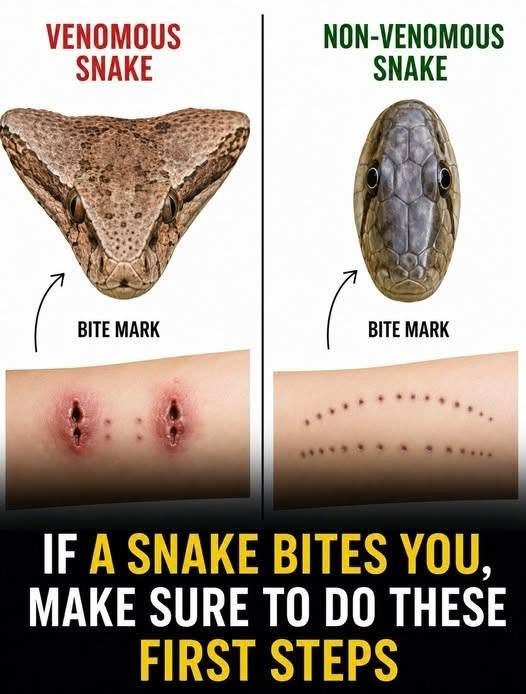
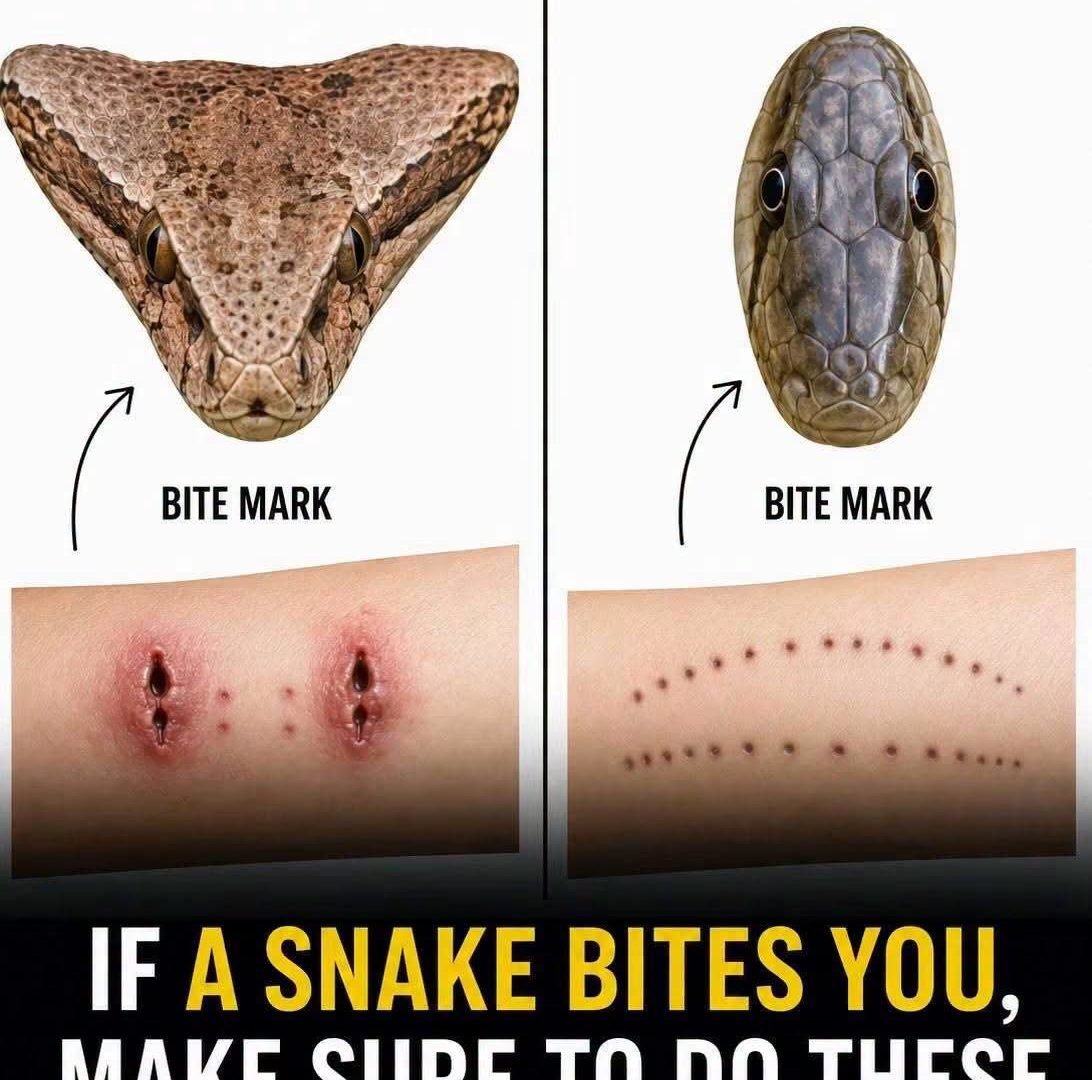
A snake bite is a terrifying, split-second event that can quickly escalate into a life-threatening medical emergency. Whether you are hiking in the wilderness, gardening in your backyard, or simply walking through tall grass, an encounter with a snake can happen when you least expect it. The image provided illustrates a critical visual difference between venomous and non-venomous snake bites, showing the distinct fang marks of a venomous snake contrasted with the U-shaped rows of teeth marks left by a non-venomous snake. But recognizing the bite is only the very first piece of the puzzle. What you do in the minutes and hours following the strike will determine the outcome.
When venom is injected into the body, it begins to attack the tissues, the bloodstream, and the nervous system. The speed at which venom spreads depends on the type of snake, the location of the bite, and the physical state of the victim. Panic and frantic movement will only accelerate the heart rate, pumping the venom through the body faster. Therefore, the absolute most critical first step is to remain as calm as possible and execute a precise, practiced protocol.
This comprehensive guide will walk you through the exact steps you must take immediately after a snake bite. We will explore how to safely assess the situation, how to immobilize the limb, what dangerous myths to avoid, and how to manage the victim’s symptoms while waiting for emergency medical services. By understanding these vital first steps, you can protect yourself or a loved one and significantly improve the chances of a full recovery.
The Golden Hour: Immediate Actions Upon a Snake Bite
The first 60 minutes after a snake bite—often referred to as the “golden hour”—are the most critical for survival and minimizing long-term damage. Your actions during this window must be deliberate, calm, and swift.
1. Move Away and Ensure Safety
The very first thing you must do is move out of the striking distance of the snake. Most snakes can only strike about half to two-thirds of their body length. Step back slowly and calmly. Do not attempt to chase, kill, or capture the snake. A significant number of snake bites occur when people try to handle or attack the snake after the initial strike.
If you can safely observe the snake from a distance, try to memorize its color, pattern, and shape. This information is incredibly helpful for medical professionals to administer the correct antivenom. However, never put yourself at risk to get a closer look.
2. Call Emergency Services Immediately
As soon as you are safe, call for emergency help (911 in the US, 112 in Europe, or your local emergency number). Tell the dispatcher exactly where you are and that you have been bitten by a snake. Time is of the essence. Do not attempt to drive yourself to the hospital if you are the victim, as you may lose consciousness or experience severe symptoms like blurred vision or dizziness while driving.
3. Keep the Victim Calm and Still
This is often the hardest step. The natural reaction to a snake bite is sheer panic and a rush of adrenaline. However, panic increases your heart rate, which circulates the venom through your lymphatic system and bloodstream much faster.
You must force yourself or the victim to remain as calm as possible. Sit down or lie down immediately. Limit all unnecessary movement. The goal is to slow down the circulation of the venom. Keep the bitten limb at or slightly below the level of the heart. Elevating the limb above the heart will cause the venom to drain toward the central organs faster.
Step-by-Step First Aid for Snake Bites
Once emergency services have been called and the victim is sitting or lying down calmly, you can proceed with the following first aid steps.
Step 1: Remove Constrictive Clothing and Jewelry
Snake venom causes rapid, severe swelling at the site of the bite. If you have been bitten on the hand or arm, immediately remove all rings, watches, and bracelets. If the bite is on the foot or leg, remove shoes, socks, and tight clothing. If swelling occurs before these items are removed, they can act as a tourniquet, cutting off blood flow and causing permanent tissue damage.
Step 2: Clean the Wound Gently
If you have a first aid kit available, gently wash the bite site with mild soap and water. Do not scrub the wound vigorously, as this can increase the absorption of the venom and cause further tissue damage. Cover the wound with a clean, dry dressing or a piece of sterile gauze.
Step 3: Immobilize the Bitten Limb
Immobilization is crucial to slowing the spread of venom. You want to treat the bitten limb as if it were a fractured bone.
For Arms: Use a sling to keep the arm still against the body.
For Legs: Use a splint to keep the leg from moving. You can fashion a splint out of a sturdy stick, a rolled-up magazine, or a piece of cardboard. Use bandages or strips of cloth to tie the splint to the leg, but do not tie it too tightly.
The splint should extend beyond the joints above and below the bite to prevent any movement. According to the World Health Organization (WHO), applying a pressure immobilization bandage to the entire limb is recommended for bites from certain neurotoxic snakes (like the Australian elapid). This bandage should be applied snugly, similar to an ankle sprain wrap, starting from the fingers or toes and working upwards. However, for most North American pit viper bites, a simple splint without heavy pressure is generally recommended.
Step 4: Mark the Swelling
If you have a pen or marker, draw a line on the skin at the edge of the swelling around the bite. Write the exact time next to the line. As the swelling progresses, you can draw additional lines every 15 to 30 minutes. This provides emergency medical teams with a clear, visual record of how fast the venom is spreading and helps them determine the severity of the envenomation.
Step 5: Monitor Vital Signs and Symptoms
Keep a close eye on the victim. Look for signs of systemic envenomation, which can include:
Nausea and vomiting
Dizziness and fainting
Blurred vision or drooping eyelids
Sweating and chills
Difficulty breathing
Numbness or tingling in the face or limbs
A metallic taste in the mouth
Rapid heart rate
If the victim stops breathing, be prepared to perform CPR.
The “Do Nots” of Snake Bite First Aid
In the panic of a snake bite, well-meaning bystanders often resort to outdated and highly dangerous methods. These actions can cause more harm than the snake bite itself.
DO NOT Apply a Tourniquet
Unless specifically instructed by a medical professional for a highly specific type of neurotoxic bite, you should never apply a tight tourniquet. Cutting off blood flow entirely can cause the venom to concentrate in the limb, leading to severe tissue necrosis (death of the tissue), gangrene, and the potential need for amputation. When the tourniquet is eventually released, the sudden rush of concentrated venom into the bloodstream can cause a fatal heart attack or stroke.
DO NOT Cut the Wound or Try to Suck Out the Venom
If you cut into the bite site, you are opening more blood vessels, which actually speeds up the absorption of venom. Furthermore, anyone attempting to suck the venom out with their mouth risks exposing themselves to the venom through tiny cuts or ulcers in their own mouth.
DO NOT Apply Ice or Freeze the Wound
Applying ice to a snake bite restricts blood flow, which can worsen tissue damage. It does not slow the spread of venom and can cause frostbite on top of the envenomation.
DO NOT Drink Alcohol or Caffeine
Alcohol and caffeine are vasodilators (they widen blood vessels) and stimulants. Consuming them will increase the heart rate and speed up the circulation of venom throughout the body.
DO NOT Give the Victim Painkillers
Medications like aspirin or ibuprofen can thin the blood and increase the risk of severe bleeding, especially if the snake’s venom contains hemotoxins (toxins that destroy red blood cells and disrupt blood clotting).
Understanding Venomous vs. Non-Venomous Bites
The provided image highlights the difference between the bite marks of venomous and non-venomous snakes. While this is helpful, relying solely on the bite mark is dangerous.
Venomous Snake Bites: Venomous snakes, such as rattlesnakes, copperheads, and cottonmouths, have hollow fangs designed to inject venom. Their bite typically leaves two distinct puncture wounds, spaced relatively far apart. These marks are often surrounded by immediate, severe pain, swelling, and discoloration.
Non-Venomous Snake Bites: Non-venomous snakes, like garter snakes or rat snakes, do not have fangs. Their bite often looks like a series of small, shallow scratches or a U-shaped row of tiny teeth marks. While the bite can still cause pain and bleeding, there is no venom injected.
The Caveat: A “dry bite” can occur when a venomous snake strikes but does not inject venom. In this case, the bite marks will look like a venomous bite, but the symptoms will be mild or absent. Because it is virtually impossible to know immediately if venom was injected, all snake bites should be treated as a medical emergency.
What Happens at the Hospital?
When the victim arrives at the hospital, medical professionals will immediately begin a comprehensive assessment.
Medical History: They will ask about the time of the bite, the location, the symptoms experienced, and any description of the snake.
Physical Examination: They will assess the swelling, the wound, and the victim’s vital signs (blood pressure, heart rate, respiratory rate). They will also check for neurological symptoms.
Blood Tests: Blood tests are crucial to determine if the venom has affected the blood’s ability to clot. This test may be repeated multiple times over several hours.
Antivenom Administration: If the patient is showing signs of severe envenomation, the medical team will administer antivenom. Antivenom is a highly specialized medication that neutralizes the specific venom of the snake species. It is administered intravenously in a hospital setting under close supervision, as it can cause severe allergic reactions.
Preventing Snake Encounters
The best way to survive a snake bite is to avoid being bitten in the first place. Here are essential prevention strategies:
Wear Proper Footwear: Never walk barefoot or in sandals in tall grass or areas known to have snakes. Wear sturdy, closed-toe boots that cover your ankles.
Stay on the Trails: When hiking, stick to well-worn paths. Avoid stepping over rocks or logs where a snake might be hiding.
Use a Flashlight: Snakes are often active at night. Always carry a flashlight when walking in the dark.
Be Aware of Your Surroundings: Never blindly reach into hollow logs, rock crevices, or thick bushes. Use a stick to probe areas before you reach in.
Do Not Handle Dead Snakes: A decapitated snake can still have a bite reflex and inject venom. Keep your distance from all snakes, dead or alive.
Conclusion: Be Prepared, Be Calm, and Act Fast
A snake bite is a test of nerves and preparation. The images of fang marks and teeth marks are a stark reminder of the danger that lurks in the wild—and sometimes in our own backyards. When the unthinkable happens, your focus must shift entirely to survival. By moving away from the snake, calling for help immediately, keeping the victim calm, immobilizing the limb, and avoiding dangerous first aid myths, you can give yourself or your loved one the best possible chance of a full recovery. Remember, time is tissue. Every second you save by acting calmly and correctly is a second that preserves life.
Frequently Asked Questions
What is the very first thing I should do if bitten by a snake?
The very first thing you should do is move away from the snake to avoid a second strike. Then, immediately call emergency services. Keep yourself or the victim calm and as still as possible to slow the spread of venom.
Should I try to suck the venom out of a snake bite?
No. You should never try to suck the venom out with your mouth. This can introduce bacteria into the wound and can expose you to the venom if you have any cuts in your mouth. It is ineffective and dangerous.
Should I apply a tourniquet to a snake bite?
Applying a tight tourniquet is generally not recommended. It can cut off blood flow, leading to severe tissue damage and the potential need for amputation. When the tourniquet is released, the sudden rush of concentrated venom can be fatal.
How can I tell if a snake is venomous by its bite mark?
Venomous snakes typically leave two distinct puncture wounds from their fangs. Non-venomous snakes leave a U-shaped row of small teeth marks. However, you should treat every snake bite as a medical emergency, as some venomous bites can be “dry” (without venom) and non-venomous bites can still cause infection.
Should I elevate the bitten limb above my heart?
No. You should keep the bitten limb at or slightly below the level of the heart. Elevating it can cause the venom to drain more quickly toward your central organs.
How do I immobilize a limb after a snake bite?
Treat the limb like a fracture. Use a splint (a stick or cardboard) and gently wrap it with bandages to prevent movement. Do not wrap it too tightly.
Can I drink alcohol to calm my nerves after a snake bite?
No. Alcohol is a vasodilator and a stimulant. It will increase your heart rate and speed up the circulation of the venom in your bloodstream.
What are the systemic symptoms of envenomation?
Systemic symptoms include nausea, vomiting, dizziness, blurred vision, drooping eyelids, sweating, difficulty breathing, and a rapid heart rate. These symptoms indicate that the venom has spread beyond the bite site and requires immediate medical intervention.