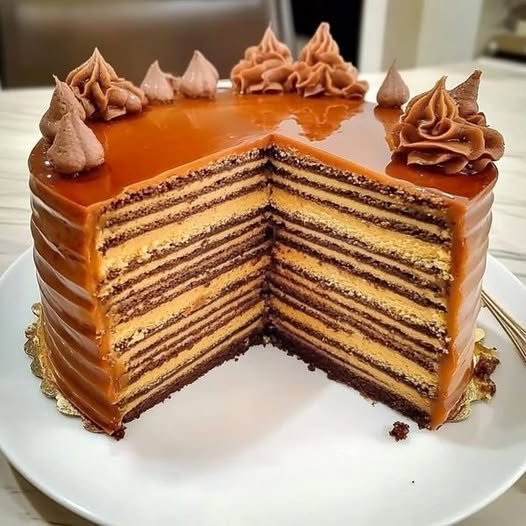
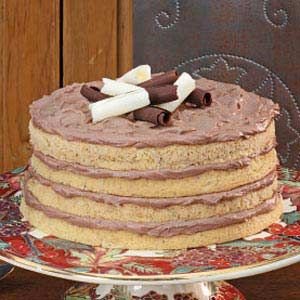
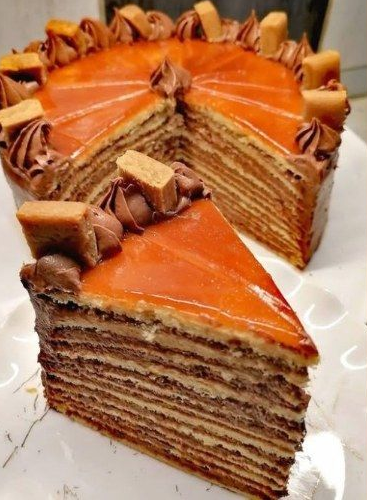
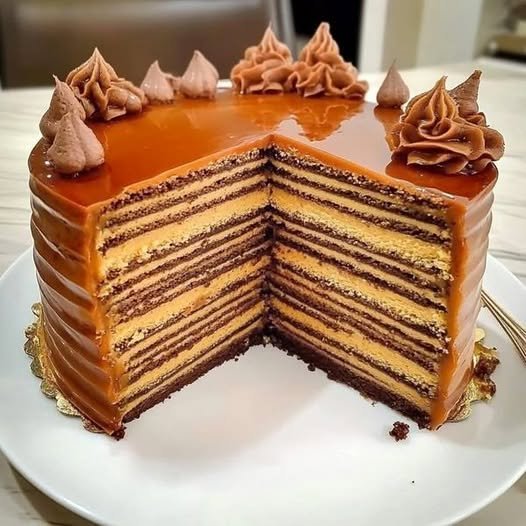
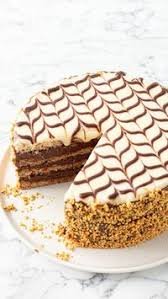
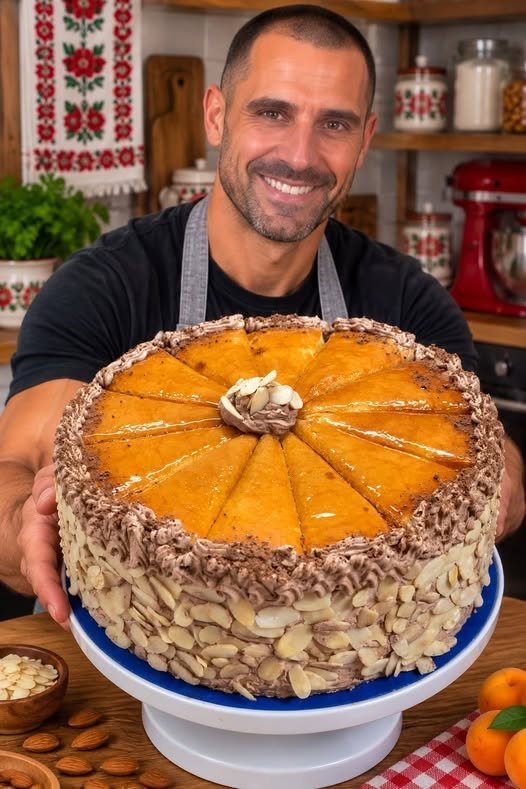
There are desserts, and then there is the Dobos Torte. Known in its native Hungary as Dobostorta, this iconic cake is a masterpiece of Central European baking and a true symbol of Hungarian culinary pride. With its multiple layers of delicate sponge cake, rich chocolate buttercream, and a signature glossy caramel top decorated with crisp caramel wedges, the Dobos Torte is as visually striking as it is delicious.
While the social media caption that inspired this article playfully claims a “5-minute” preparation time that “melts in your mouth,” the reality is quite different. The Dobos Torte is a complex, multi-step baking project that requires patience, precision, and a bit of advanced pastry skill. It is not a quick weeknight dessert; rather, it is a labor of love reserved for special occasions, birthdays, and holiday celebrations.
Invented in 1885 by the renowned Hungarian confectioner József C. Dobos, this cake was revolutionary for its time. Dobos wanted to create a dessert that would withstand travel and remain fresh for days. He achieved this by using a thick layer of chocolate buttercream to bind the thin sponge layers together and, most ingeniously, by pouring a hard caramel glaze over the top to seal the cake and lock in moisture.
This comprehensive guide will walk you through every intricate detail of creating an authentic Dobos Torte in your own kitchen. From mastering the delicate sponge cake layers to achieving the perfect, silky buttercream and the challenging but rewarding caramel topping, we will cover all the techniques, tips, and troubleshooting advice you need to successfully bake this legendary Hungarian dessert.
Recipe Overview
Preparation Time: 1 hour
Cooking Time: 30–40 minutes (including baking and caramel)
Chilling Time: 2–3 hours (for assembling and setting)
Total Time: Approximately 4 to 5 hours
Servings: 12–16 slices
Difficulty Level: Advanced
Cooking Method: Baking, Stovetop (double boiler)
Cuisine: Hungarian
Course: Dessert
Estimated Calories per Serving: Approximately 450–550 kcal per slice (depending on size)
What Is This Hungarian Dish?
The Dobos Torte is arguably the most famous Hungarian cake in the world. It was created by József C. Dobos, a famous Hungarian chef and confectioner, for the National General Exhibition of 1885 in Budapest. At the time, cakes were often heavy and prone to drying out. Dobos’s genius idea was to create a five-layer sponge cake filled with a light, airy chocolate buttercream, and then top it with a layer of caramelized sugar to preserve its freshness.
The cake was an instant sensation, not just in Hungary but across Europe. Dobos personally presented it to Emperor Franz Joseph and Empress Elisabeth (Sisi), and he even exported his invention to other countries.
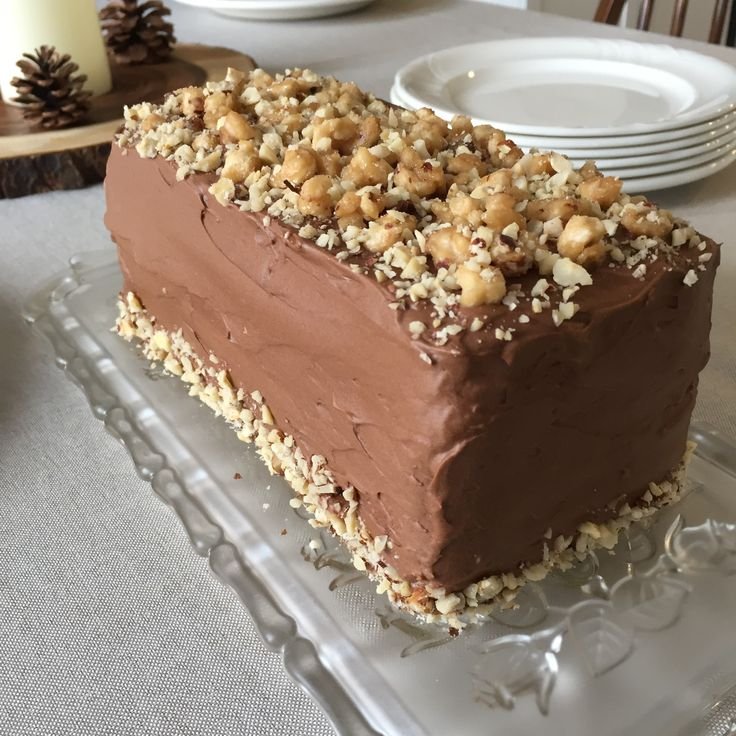
Traditional Dobos Torte features five to six thin sponge cake layers. The filling is a rich chocolate buttercream, traditionally flavored with dark chocolate and sometimes a hint of vanilla or rum. The cake is typically finished on the sides with either more buttercream or a coating of ground nuts (often hazelnuts or walnuts) to hide the edges. The most iconic feature, however, is the top: a thin, glossy layer of hard caramel, cut into wedges shortly after pouring and arranged in a beautiful pattern on top of the cake. The combination of the soft sponge, the creamy buttercream, and the crisp, slightly bitter caramel is a textural and flavor experience like no other.
Ingredients You Will Need
Baking a Dobos Torte requires a careful balance of ingredients, split into three main components: the sponge cake, the chocolate buttercream, and the caramel glaze.
For the Sponge Cake Layers
6 large eggs, separated, at room temperature
150 g (¾ cup) granulated sugar
150 g (1 ¼ cups) all-purpose flour, sifted
30 g (2 tablespoons) unsalted butter, melted and cooled
1 pinch of salt
For the Chocolate Buttercream
4 large eggs
200 g (1 cup) granulated sugar
200 g (7 oz) high-quality dark chocolate (60-70% cocoa), chopped
250 g (1 cup + 2 tablespoons) unsalted butter, softened at room temperature
1 teaspoon vanilla extract
1 tablespoon dark rum (optional)
For the Caramel Glaze
150 g (¾ cup) granulated sugar
2 tablespoons water
1 teaspoon fresh lemon juice (to prevent crystallization)
1 teaspoon unsalted butter (optional, for a smoother texture)
For the Sides (Optional)
100 g (1 cup) ground hazelnuts or walnuts, toasted
Choosing the Best Ingredients
The quality of your ingredients is paramount in a cake with so few components.
The Chocolate: Use a high-quality dark chocolate (between 60% and 70% cocoa). Do not use chocolate chips, as they contain stabilizers that prevent them from melting smoothly into the buttercream. A good baking bar chocolate will yield a much richer and smoother filling.
The Eggs: Use the freshest large eggs you can find. In the sponge cake, the eggs provide the entire structure, so they must be fresh and at room temperature to whip up to their maximum volume.
The Butter: Use unsalted, high-quality butter for both the cake and the buttercream. The butter in the buttercream should be soft but not melted.
The Sugar: Standard granulated sugar is used for the sponge, buttercream, and the caramel. For the caramel, fine granulated sugar dissolves more evenly.
Kitchen Equipment
5 to 6 round cake pans (8 inches / 20 cm diameter) or 2 pans and a lot of patience to bake in batches
Parchment paper
Stand mixer or hand mixer with whisk attachment
Double boiler or a heatproof bowl set over a saucepan
Candy thermometer (essential for the caramel and buttercream)
Offset spatula
Wire cooling racks
Very sharp knife (for cutting the caramel)
Step-by-Step Cooking Instructions
Part 1: Baking the Sponge Cake Layers
Step 1: Prepare the Ovens and Pans Preheat your oven to 400°F (200°C). Trace the bottom of your 8-inch cake pan onto parchment paper and cut out six circles. Grease the pans lightly and line them with the parchment circles.
Step 2: Whip the Egg Whites In a clean, grease-free bowl, add the egg whites and a pinch of salt. Using a stand mixer or hand mixer, whip the egg whites on medium speed until soft peaks form. Gradually add half of the sugar (75g) and continue whipping until stiff, glossy peaks form.
Step 3: Whip the Egg Yolks In a separate large bowl, whip the egg yolks with the remaining sugar (75g) and a drop of vanilla extract until they are pale yellow, thick, and doubled in volume (about 3–5 minutes).
Step 4: Fold the Batter Gently fold one-third of the whipped egg whites into the egg yolk mixture to lighten it. Then, carefully fold in the remaining egg whites. You want to retain as much air as possible, so use a slow, sweeping motion with a spatula.
Step 5: Add the Flour Sift the flour over the egg mixture in two or three additions. Fold gently until just combined. Do not overmix, or the batter will deflate. Finally, fold in the melted, cooled butter.
Step 6: Bake Divide the batter evenly among the prepared pans (about 1/2 cup of batter per pan, depending on how many pans you have). Spread it evenly with an offset spatula. Bake for 8–10 minutes, or until the edges are just golden and the center springs back when touched. Repeat with any remaining batter. Remove from the pans and let cool completely on a wire rack.
Part 2: Making the Chocolate Buttercream
Step 7: Prepare the Custard Base In a heatproof bowl set over a pot of simmering water (double boiler), combine the eggs and sugar. Whisk constantly until the mixture reaches 160°F (71°C) on a candy thermometer, or until it thickens and coats the back of a spoon. Remove from the heat.
Step 8: Melt the Chocolate Add the chopped dark chocolate to the hot egg mixture and stir until completely melted and smooth. Let this mixture cool to room temperature (around 70°F/21°C).
Step 9: Cream the Butter In your stand mixer, beat the softened butter until it is light and fluffy.
Step 10: Combine With the mixer on low, gradually add the cooled chocolate mixture to the butter, a spoonful at a time. Add the vanilla and rum (if using). Beat until the buttercream is smooth, silky, and light. If it looks curdled, it means the chocolate mixture was too warm or too cold. (See Troubleshooting for how to fix this).
Part 3: Assembling the Cake
Step 11: Layer the Cake Place the first sponge cake layer on a serving plate or a cardboard cake round. Spread a generous layer of chocolate buttercream (about 3-4 tablespoons) over the sponge. Place the next sponge layer on top and press down gently. Repeat this process until all the layers are stacked, finishing with a final sponge layer on top.
Step 12: Crumb Coat Spread a thin layer of buttercream over the sides and top of the cake to seal in the crumbs. Refrigerate for 30 minutes to set. Then, apply a thicker, smoother layer of buttercream to the sides (and top, if you are not covering the whole top with caramel). Set the cake in the refrigerator to chill completely before adding the caramel.
Part 4: The Caramel Glaze and Decoration
Step 13: Make the Caramel In a small, heavy-bottomed saucepan, combine the sugar, water, and lemon juice. Heat over medium-high heat without stirring (you can swirl the pan gently). Cook until the sugar turns a deep amber color. Remove from the heat and carefully stir in the butter.
Step 14: Pour and Score Working quickly, pour the hot caramel over the chilled top of the cake, tilting the cake to spread it evenly. Let it set for about 2–3 minutes—just until it is firm but still slightly soft. Using a sharp, lightly oiled knife, score the caramel into 12 or 16 wedges. Do not cut all the way through to the cake. Let it cool completely until the caramel is hard.
Step 15: Create the Caramel Wedges (Optional Decoration) If you want the traditional caramel wedges on top, pour the remaining caramel onto a greased piece of parchment paper. While still slightly warm, cut it into thin triangles with a greased knife. Let them harden, then use a little buttercream to stick them to the top of the cake.
Step 16: Finish the Sides If desired, press the toasted ground hazelnuts or walnuts onto the sides of the cake for a traditional finish.
Step 17: Serve To serve, use a very sharp knife to cut through the scored caramel segments. Let the cake sit at room temperature for about 20 minutes before serving for the best texture.
Important Cooking Tips
Keep the Sponge Light: The key to a good Dobos Torte is the sponge. Fold the ingredients gently and bake them just until set. Overbaking will dry them out.
Temperature Control is Key: Both the buttercream and the caramel require careful temperature management. Use a candy thermometer.
Score the Caramel Early: You must score the caramel while it is still slightly warm. If you wait until it is completely hard, it will shatter when you try to cut it.
Chill Before Caramel: The cake must be completely cold before you pour the caramel on top. If the cake is warm, the caramel will slide right off.
Common Mistakes to Avoid
Deflating the Sponge: Overmixing the batter when folding in the flour or egg whites will result in flat, dense cake layers.
Curdled Buttercream: This happens when the chocolate mixture is too hot or too cold when added to the butter. Always ensure both are at room temperature.
Crystallized Caramel: Stirring the sugar while it melts can cause crystallization. Just swirl the pan.
Shattered Caramel Topping: Trying to slice the cake without scoring the caramel first will result in a mess of shattered sugar.
Variations and Substitutions
Rum Flavoring: Add a tablespoon of dark rum to the buttercream for a richer, more traditional flavor.
Nuts on the Sides: Press toasted ground walnuts or hazelnuts onto the sides of the cake for a classic Hungarian finish.
Orange Zest: Add a teaspoon of orange zest to the sponge or buttercream for a citrus twist.
What to Serve With This Dish
Coffee: A strong cup of espresso or black coffee perfectly cuts through the richness of the chocolate and caramel.
Tokaji Aszú: A glass of sweet Hungarian Tokaji wine is a magnificent pairing for this rich dessert.
How to Store and Reheat Leftovers
Refrigeration: Store the cake in an airtight container in the refrigerator for up to 3 days. Let it come to room temperature for 20 minutes before serving.
Freezing: You can freeze the un-glazed cake layers and buttercream for up to 3 months. Do not freeze the cake once the caramel is applied, as the caramel will become sticky and lose its crunch.
Make-Ahead and Meal-Preparation Tips
Bake Ahead: Bake and freeze the sponge layers up to a month in advance.
Make the Buttercream: The buttercream can be made a day ahead and kept in the fridge. Bring it to room temperature and re-whip before using.
Assemble the Day Of: Assemble the cake the day you plan to serve it for the best texture.
Troubleshooting Guide
Q: My buttercream looks curdled. How do I fix it? A: This happens if the ingredients are at different temperatures. Place the bowl over a pot of warm water and whisk continuously until it comes back together, then continue beating.
Q: My caramel crystallized. What went wrong? A: Sugar crystals formed. Add a splash of water and a little lemon juice, and gently heat until the crystals dissolve.
Q: My sponge layers are too dry. A: You likely overbaked them. Sponges bake very quickly (8-10 minutes). Check them early.
Nutritional Information
Please note: Nutritional values are estimates and will vary based on the specific ingredients used and the size of the slices.
Calories: 450–550 kcal per slice
Protein: 6 g
Carbohydrates: 40 g
Fat: 30 g
Saturated Fat: 15 g
Fiber: 2 g
Sugar: 30 g
Sodium: 50 mg
Frequently Asked Questions (FAQ)
1. Why is it called a Dobos Torte? It is named after its creator, the Hungarian confectioner József C. Dobos, who invented it in 1885.
2. Can I use milk chocolate instead of dark chocolate? Yes, but it will be much sweeter. Dark chocolate is traditional and balances the sweetness of the caramel.
3. How many layers should a Dobos Torte have? Traditionally, it has 5 or 6 layers.
4. Why does the top have caramel? The caramel was originally designed to seal the cake and keep it fresh for longer.
5. Can I make this cake gluten-free? Yes, substitute the all-purpose flour with a 1:1 gluten-free baking blend.
6. Do I have to use a candy thermometer? Highly recommended for both the buttercream and the caramel to ensure success.
7. Can I use a store-bought caramel sauce? No, the traditional Dobos Torte requires a hard caramel glaze, not a soft sauce.
8. How do I cut the cake without breaking the caramel? Score the caramel into wedges while it is still slightly warm, then use a sharp knife to cut through the scores when serving.
Final Recipe Summary
The Dobos Torte is a masterpiece of Hungarian baking, combining delicate sponge, rich chocolate buttercream, and a signature caramel top. While it is a complex recipe, it is a rewarding project that yields a stunning and delicious dessert. With patience and precision, you can create this iconic cake at home.
Printable Recipe Card
Classic Hungarian Dobos Torte (Dobostorta)
A traditional five-layer sponge cake filled with chocolate buttercream and topped with a hard caramel glaze.
Prep Time: 1 hour
Cook Time: 40 minutes
Chill Time: 2 hours
Total Time: 4 hours
Servings: 12-16 slices
Ingredients:
For the Sponge:
6 eggs, separated
150 g sugar
150 g flour
30 g melted butter
For the Buttercream:
4 eggs
200 g sugar
200 g dark chocolate
250 g soft butter
For the Caramel:
150 g sugar
2 tbsp water
1 tsp lemon juice
Instructions:
Bake six thin sponge layers at 400°F (200°C) for 8-10 mins.
Cook eggs and sugar over a double boiler, melt chocolate into it, cool, and whip with butter to make the buttercream.
Stack the sponge layers with buttercream in between. Coat the sides with buttercream and chill.
Pour hot caramel over the chilled top, score into wedges, and let harden.
Topic: Hungarian Apple Pite (Anchor text: “traditional apple pite”)
Topic: Guide to Hungarian Desserts (Anchor text: “iconic Hungarian desserts”)
Topic: How to Make the Perfect Sponge Cake (Anchor text: “tips for perfect sponge cake”)
Topic: Working with Caramel (Anchor text: “mastering caramel glaze”)
External Source Suggestions
Food Safety: For guidance on safe handling of eggs, refer to the USDA Food Safety and Inspection Service (FSIS).
Cultural Context: For historical information about the Dobos Torte and József C. Dobos, refer to culinary history resources or the Hungarian Museum of Trade and Tourism.