Symptoms of Diabetes at Night: Recognizing the Silent Warning Signs
Diabetes is a complex, chronic metabolic condition that affects millions of individuals worldwide. It is characterized by the body’s inability to properly produce or use insulin, leading to elevated levels of glucose (sugar) in the blood. Often referred to as a “silent disease,” diabetes frequently develops gradually, with symptoms that are subtle, easily overlooked, or misattributed to stress, aging, or a busy lifestyle.
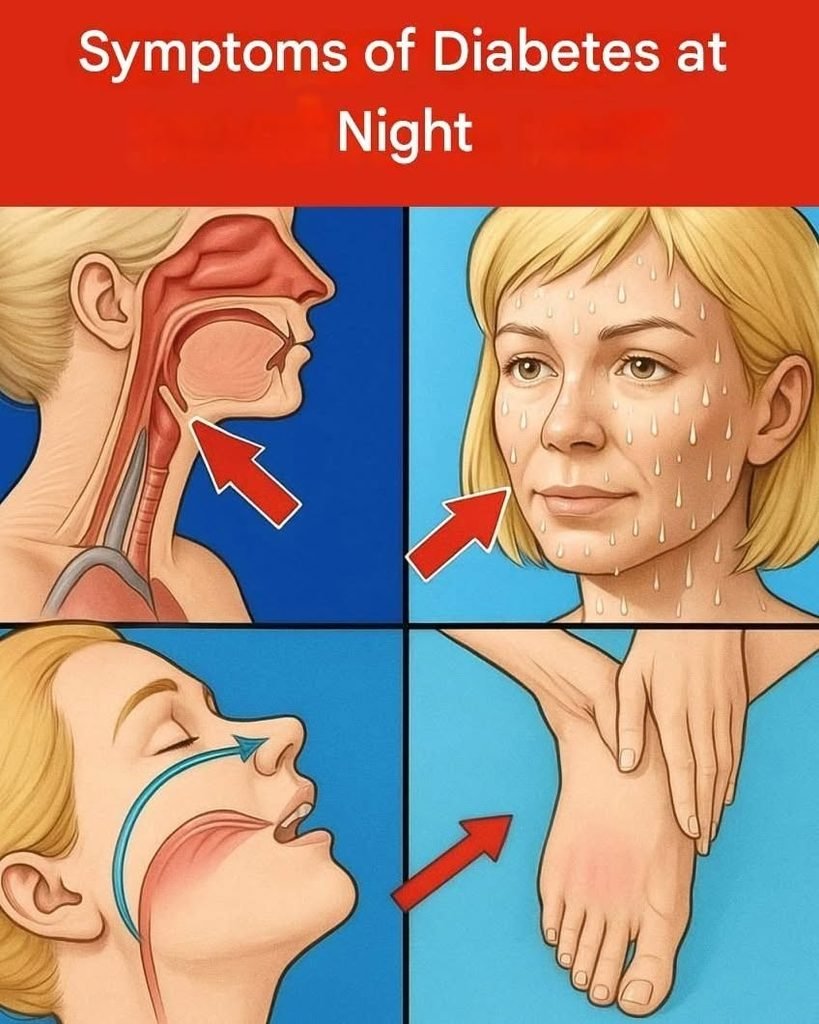
While daytime fatigue and frequent urination are well-known hallmarks of the condition, the nighttime hours can provide some of the most revealing clues about your metabolic health. When the body is at rest, the absence of daytime distractions makes us more attuned to the physiological changes occurring within. The image provided highlights four distinct nighttime symptoms that can indicate underlying blood sugar imbalances: snoring and airway issues, profuse sweating, dry mouth and excessive thirst, and foot discomfort.
Understanding these nighttime warning signs is crucial. Uncontrolled blood sugar does not sleep; it continues to affect the body’s systems around the clock. By recognizing these nocturnal symptoms early, individuals can seek timely medical evaluation, potentially preventing the severe long-term complications associated with diabetes, such as nerve damage, cardiovascular disease, and kidney failure.
This comprehensive guide will explore the science behind these four specific nighttime symptoms, the biological mechanisms that cause them, how they are connected to blood sugar regulation, and the actionable steps you should take to protect your health.
The Science of Sleep and Blood Sugar: Why Nighttime is Different
To understand why diabetes manifests so prominently at night, it is essential to understand the delicate interplay between the body’s circadian rhythm, hormonal regulation, and metabolic processes.
The Circadian Rhythm and Hormones
The human body operates on a 24-hour internal clock known as the circadian rhythm. This clock dictates the release of various hormones, including insulin and cortisol. During the night, the body is designed to rest and repair. However, in the early morning hours (around 3:00 AM to 8:00 AM), the body naturally releases a surge of hormones—including cortisol and growth hormone—to help wake you up and provide energy for the day.
These hormones naturally increase insulin resistance. In a person with a healthy pancreas, the body simply produces more insulin to handle this surge. But in someone with prediabetes or diabetes, the pancreas cannot keep up, leading to a spike in blood sugar, often called the “Dawn Phenomenon.” This early morning spike can trigger or exacerbate the symptoms discussed below.
The Danger of Nocturnal Hypoglycemia
Conversely, some people with diabetes experience nocturnal hypoglycemia (low blood sugar) during the night. This is particularly common in those taking insulin or certain oral medications. If blood sugar drops too low while sleeping, the body panics, releasing a flood of adrenaline and cortisol to save itself. This emergency response is responsible for many of the disruptive nighttime symptoms.
Symptom 1: Snoring and Sleep Apnea (The Airway Connection)
The top-left panel of the image illustrates the human airway, highlighting the potential for obstruction. Snoring is often dismissed as a harmless nuisance, but it can be a significant red flag for both sleep apnea and diabetes.
The Bidirectional Relationship
There is a strong, well-documented link between Obstructive Sleep Apnea (OSA) and Type 2 diabetes.
Diabetes causing Sleep Apnea: Excess weight around the neck and abdomen—a common risk factor for Type 2 diabetes—can physically narrow the airway, leading to snoring and sleep apnea.
Sleep Apnea causing Diabetes: When breathing repeatedly stops during sleep, oxygen levels in the blood drop. This triggers the release of stress hormones (cortisol and adrenaline), which increase insulin resistance and cause blood sugar levels to rise.
What Happens at Night
If you or your partner notices loud, chronic snoring, gasping for air, or pauses in breathing during sleep, it is vital to seek medical attention. Treating underlying sleep apnea with a CPAP machine or other interventions not only improves sleep quality but can also significantly improve insulin sensitivity and blood sugar control.
Symptom 2: Excessive Night Sweats
The top-right panel shows a woman experiencing profuse sweating, a symptom known as nocturnal hyperhidrosis. Waking up drenched in sweat, even when the room is cool, is a classic warning sign of nocturnal blood sugar fluctuations.
The Two Causes of Night Sweats
Nocturnal Hypoglycemia (Low Blood Sugar): This is the most dangerous cause. If your blood sugar drops too low during the night, your body releases adrenaline as an emergency response. This causes a rapid heartbeat, anxiety, and severe sweating.
Autonomic Neuropathy (High Blood Sugar): Prolonged high blood sugar can damage the autonomic nervous system, which controls your sweat glands. This damage can cause the body’s temperature regulation to go haywire, resulting in excessive sweating at night.
If you experience night sweats, keep a blood glucose meter by your bed. If you wake up sweating, test your blood sugar immediately. If it is low, you will need a fast-acting source of sugar (like juice or glucose tablets).
Symptom 3: Dry Mouth and Excessive Thirst
The bottom-left panel illustrates a person sleeping with their mouth open, indicating a dry mouth (xerostomia) and a subsequent feeling of intense thirst (polydipsia).
The Osmotic Diuresis Cycle
This symptom is a direct result of the kidneys’ struggle to handle excess glucose. When blood sugar levels are too high, the kidneys filter some of the excess glucose into the urine. Glucose acts like a sponge, pulling water along with it. This causes a dramatic increase in urine production (polyuria).
The frequent need to urinate during the night (nocturia) leads to significant fluid loss, resulting in dehydration. The body responds by sending out intense signals of thirst. You may wake up in the middle of the night with a parched mouth and a desperate need for water.
If you find yourself waking up multiple times a night to urinate and constantly drinking water without feeling fully hydrated, you should have your blood sugar tested.
Symptom 4: Foot Pain, Numbness, and Cramping
The bottom-right panel focuses on the feet, specifically highlighting the hands holding the foot. This represents peripheral neuropathy, a common and painful complication of prolonged high blood sugar.
Why Symptoms Worsen at Night
Diabetic neuropathy is caused by damage to the delicate nerves in the extremities due to high glucose levels. While the numbness or tingling may be present all day, it frequently becomes much more noticeable at night.
Lack of Distraction: During the day, the brain is busy processing visual stimuli, work, and activities. At night, in the quiet of the bedroom, the brain focuses entirely on the strange sensations in the feet.
Gravity and Fluid: When you lie down, the blood flow to the lower extremities changes. This fluid shift can increase pressure on the nerves, causing burning, throbbing, or tingling sensations.
Nighttime Cramps: Electrolyte imbalances caused by frequent urination can lead to painful muscle cramps in the calves and feet during the night.
If you experience burning, tingling, or a “pins and needles” sensation in your feet at night, along with any of the other symptoms, it is crucial to seek immediate medical care to prevent further nerve damage.
Other Nocturnal Symptoms to Watch For
In addition to the four symptoms highlighted in the image, there are other nighttime indicators of diabetes you should be aware of:
Frequent Urination (Nocturia): As mentioned, the kidneys working overtime to flush out sugar leads to multiple bathroom trips.
Restless Legs Syndrome (RLS): An uncontrollable urge to move the legs, often accompanied by uncomfortable sensations, is frequently linked to iron deficiency and nerve damage associated with diabetes.
Insomnia and Poor Sleep Quality: The combination of pain, frequent urination, and hormonal fluctuations makes it incredibly difficult to achieve deep, restorative sleep.
When to See a Doctor
Because these symptoms overlap with many other conditions (such as stress, thyroid issues, or simply aging), it is easy to dismiss them. However, you should schedule an appointment with a healthcare provider if you experience any of the following:
Persistent nighttime thirst and frequent urination that disrupts your sleep.
Night sweats accompanied by dizziness, confusion, or a racing heart.
Chronic snoring or pauses in breathing during sleep.
Numbness, burning, or tingling in the feet or hands.
Unexplained weight loss or sudden changes in vision.
The Importance of Testing
A simple blood test—such as the Hemoglobin A1c (which measures average blood sugar over three months) or a Fasting Plasma Glucose test—can provide a definitive diagnosis. Early detection is key to managing diabetes and preventing complications.
Managing Nighttime Blood Sugar
If you are diagnosed with diabetes or prediabetes, there are strategies to manage these nighttime symptoms:
Monitor Blood Sugar: Check your levels before bed and, if advised by your doctor, during the night to identify patterns.
Adjust Evening Meals: Avoid heavy, carbohydrate-rich meals close to bedtime. A small, protein-rich snack can help stabilize blood sugar overnight.
Limit Evening Fluids: To prevent nocturia, reduce fluid intake in the two hours before bed, and avoid caffeine and alcohol.
Optimize Sleep Hygiene: Keep your bedroom cool, dark, and quiet to reduce night sweats and improve sleep quality.
Foot Care: Moisturize your feet, wear comfortable socks, and perform daily inspections for any cuts or sores.
Conclusion
The body is a remarkable communicator, often using the quiet hours of the night to signal that something is out of balance. The symptoms highlighted in the image—snoring, night sweats, dry mouth, and foot pain—are not merely random occurrences; they are deeply interconnected physiological responses to blood sugar instability. By paying attention to these nighttime warning signs, individuals can take proactive control of their health, seek early intervention, and improve their quality of life. Do not ignore the silence of the night; listen to what your body is telling you.