he Ultimate Guide to Banana Stages: Which One is Best for Your Health?
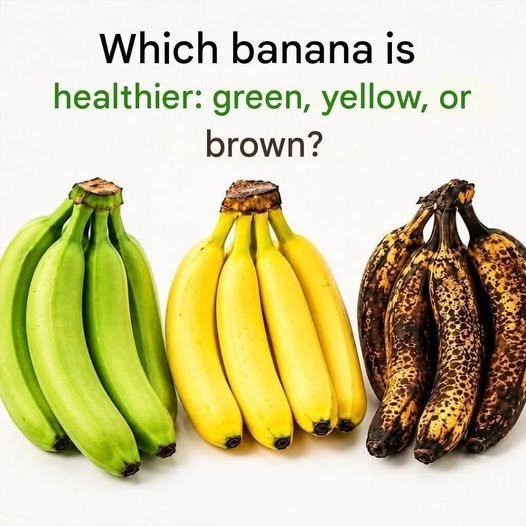
Did you know a green banana offers completely different health benefits than a brown one? Discover the science behind banana stages and learn which one you should be eating for your specific health goals.
Introduction
We all know the drill: you buy a bunch of bananas, and suddenly they go from rock-hard green to mushy brown in the blink of an eye. Most of us have a “favorite” ripeness level—some love them firm and tart, others crave them soft and sweet.
But did you know that as a banana ripens, its entire nutritional profile changes?
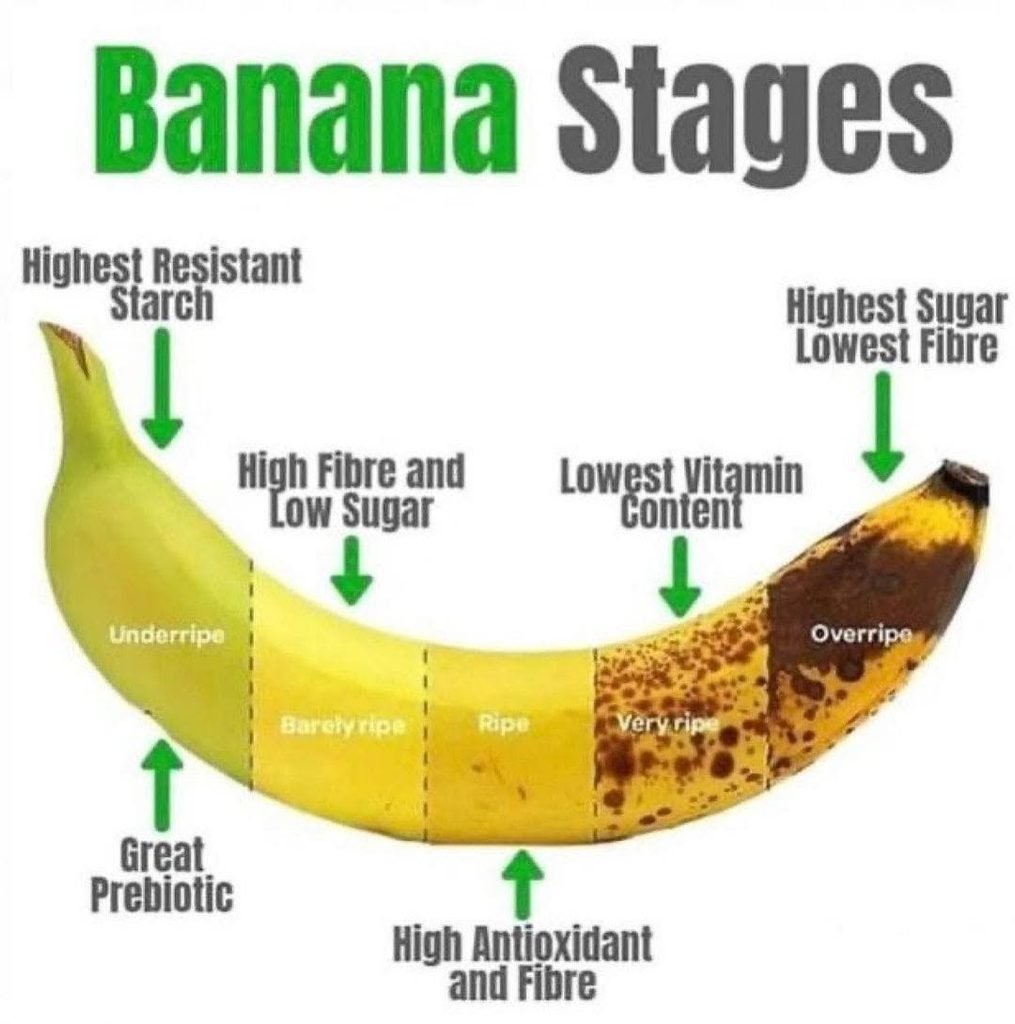
As the infographic above illustrates, a banana isn’t just a banana. It transforms from a starchy, gut-healing prebiotic into a sugary, energy-boosting snack.
If you are managing your blood sugar, trying to lose weight, or looking for an antioxidant boost, the color of your banana matters more than you think. Here is the breakdown of the 5 Stages of a Banana and what they do for your body.
1. The Underripe Banana (Green)
Best for: Gut Health, Diabetics, and Weight Loss.
When a banana is green, it is essentially a “starch bomb.”
Highest Resistant Starch: As the image notes, this stage has the highest amount of resistant starch. This type of starch resists digestion in the small intestine and ferments in the large intestine.
Great Prebiotic: That fermentation process feeds the good bacteria in your gut (probiotics). It’s essentially fertilizer for your microbiome.
Low Sugar: Because the starch hasn’t converted to sugar yet, green bananas have a very low glycemic index. They won’t spike your blood sugar, making them a safer choice for diabetics.
Taste: Firm, slightly chalky, and not very sweet.
2. The Barely Ripe Banana (Pale Yellow)
Best for: Digestion and Blood Sugar Control.
This is the transition phase. The banana has lost its green hue but isn’t fully yellow yet.
High Fibre, Low Sugar: The resistant starch is starting to break down into simple sugars, but there is still plenty of fiber left.
The Balance: This stage offers a great middle ground. You get the digestive benefits of the fiber without the intense sugar spike of a fully ripe fruit. It’s still relatively firm and tart.
3. The Ripe Banana (Bright Yellow)
Best for: General Health and Antioxidants.
This is the classic “banana” look. It’s sweet, soft, and easy to eat.
High Antioxidant and Fibre: As the banana ripens, the starch has largely converted to sugar, but the antioxidant levels begin to rise.
Nutrient Peak: This is often considered the most balanced stage for general nutrition. It’s easy to digest and provides a quick, sustained energy release.
4. The Very Ripe Banana (Yellow with Brown Spots)
Best for: Immunity and Fighting Disease.
Those brown spots (sugar spots) aren’t a sign of rot; they are a sign of chemical changes.
Antioxidant Powerhouse: While the image notes “Lowest Vitamin Content” at this stage (some water-soluble vitamins like Vitamin C can degrade slightly as fruit over-ripens), the antioxidant levels actually peak here.
Tumor Necrosis Factor (TNF): Some studies suggest that highly spotted bananas produce higher levels of TNF, a substance that communicates between cells and can help fight abnormal cell growth.
Taste: Very sweet and soft.
5. The Overripe Banana (Mostly Brown/Black)
Best for: Quick Energy, Baking, and Sensitive Stomachs.
When the skin is mostly black, the transformation is complete.
Highest Sugar, Lowest Fibre: Almost all the resistant starch has converted to simple sugars (glucose and fructose). The fiber structure has broken down significantly.
Easy Digestion: Because the fiber is broken down, this is the easiest stage of banana to digest. It’s great for pre-workout energy or for people with sensitive stomachs who can’t handle rough fiber.
The Downside: It will spike your blood sugar rapidly. Not ideal for diabetics.
Culinary Use: This is the perfect stage for banana bread! The high sugar content means you can use less added sugar in your recipes.
Summary: Which Banana Should You Choose?
Your Goal
Choose This Banana
Why?
Lose Weight / Fix Gut
Green (Underripe)
High resistant starch keeps you full and feeds good bacteria.
Control Blood Sugar
Green / Pale Yellow
Lowest sugar content prevents insulin spikes.
Boost Immunity
Spotted (Very Ripe)
High antioxidant levels fight free radicals.
Pre-Workout Energy
Brown (Overripe)
High sugar provides instant fuel for muscles.
Baking
Black (Overripe)
Maximum sweetness and soft texture.
Conclusion
Next time you look at that fruit bowl, don’t just grab the yellow one. Look at your health goals.
If you want to feed your gut, reach for the green ones. If you need a quick energy boost before the gym, grab the brown, spotted ones. And if you just want a tasty snack? The bright yellow one is always a winner.
Nature has provided a perfect snack for every stage of your day—you just have to know which color to pick!