Apply This 1 Solution to Your Hands and Get Rid of Age Spots, Sun Damage, and Crepey Skin
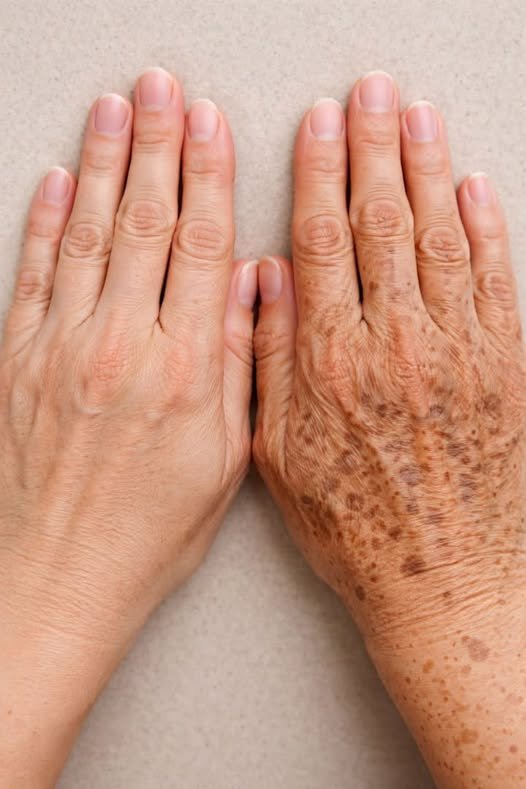
[Insert Image Here: The side-by-side comparison of the young hand and the aged hand with sun spots]
Look closely at the image above. On the left, you see smooth, youthful skin. On the right, you see the reality of time: deep wrinkles, “crepey” texture, and a constellation of brown age spots (solar lentigines).
We spend hours applying serums, creams, and sunscreens to our faces, but we often neglect the one part of our body that gives away our age the fastest: our hands.
Your hands are constantly exposed to the elements. They wash dishes, grip steering wheels, and face the sun while you drive. The skin on the back of your hands is incredibly thin—much thinner than your face—and has very few oil glands. This makes it highly susceptible to photoaging (sun damage) and moisture loss.
But there is hope. You don’t need expensive laser treatments or chemical peels to reverse the clock. There is one gold-standard solution that dermatologists swear by to tackle age spots, sun damage, and crepey skin all at once.
Here is the ultimate guide to the “1 Solution” that will transform your hands.
The “1 Solution”: Retinol (Vitamin A)
If you could only use one ingredient to reverse aging on your hands, it has to be Retinol.
Retinol is a derivative of Vitamin A. It is the only ingredient in skincare that has been scientifically proven to not just hide signs of aging, but actually reverse them at a cellular level. While the face gets all the attention, your hands respond to Retinol just as beautifully.
Why Retinol is the Magic Bullet
Retinol works by communicating with your skin cells, telling them to behave like younger, healthier cells. Here is how it tackles the three specific problems shown in the photo:
1. Fading Age Spots (Hyperpigmentation)
Age spots are caused by an overproduction of melanin in response to UV damage. Retinol accelerates cell turnover. It forces your skin to shed the top layer of dead, pigmented cells faster and replaces them with fresh, new cells. Over time, this “exfoliates” the dark spots away from the inside out.
2. Fixing Crepey Skin
“Crepey” skin looks like thin, crinkled crepe paper. This happens when collagen and elastin—the scaffolding of your skin—break down due to sun exposure. Retinol penetrates deep into the dermis and stimulates fibroblasts to produce new collagen. This thickens the skin, making it plump and firm again, effectively erasing that crinkled texture.
3. Repairing Sun Damage
Sun damage isn’t just surface deep; it damages the DNA of your skin cells. Retinol helps normalize this DNA damage and encourages the growth of new, healthy blood vessels in the hands, restoring a youthful, rosy color to skin that has become pale and translucent.
How to Apply the “Retinol Hand Treatment” (Step-by-Step)
You cannot just slap any face cream on your hands and expect miracles. The skin on your hands is tough but sensitive. Here is the exact protocol to get the results seen in the “young hand” side of the photo.
Step 1: The Nightly Routine
Retinol breaks down in sunlight, so this must be done at night before bed.
Wash and Dry: Wash your hands with a gentle cleanser. Pat them completely dry. Retinol can be irritating if applied to damp skin.
The Application: Take a pea-sized amount of Retinol cream (or your facial Retinol serum) and massage it into the back of both hands.
Pro Tip: Don’t forget the knuckles and the wrists!
The “Sandwich” Method (For Sensitive Skin): If your hands get dry or red, apply a layer of plain moisturizer first, then the Retinol, then another layer of moisturizer. This buffers the intensity without stopping the results.
Cotton Gloves (The Secret Weapon): This is the game-changer. After applying your Retinol and moisturizer, put on a pair of 100% cotton gloves and sleep in them.
Why? This creates an occlusive barrier that forces the product deep into the skin and prevents it from rubbing off on your sheets. It’s like a night mask for your hands.
Step 2: The Morning Defense
Retinol makes your skin sensitive to the sun. If you don’t protect your hands during the day, the sun will undo all the night’s work.
SPF 30+: Every morning, apply sunscreen to the back of your hands.
Reapply: If you are driving or outside, reapply every 2 hours. (Keep a tube of hand cream with SPF in your car).
The Timeline: When Will You See Results?
Patience is key. Skin cycles take about 28 days, and as we age, that cycle slows down to 40-50 days.
Weeks 1-2: Your skin might feel slightly dry or peel. This is the “Retinization” phase. Keep moisturizing!
Weeks 4-6: You will notice the texture changing. The “crepey” look will start to smooth out as collagen builds.
Months 3-6: The age spots will begin to fade significantly. The skin will look thicker and more youthful.
Natural Alternatives to Retinol
If you have sensitive skin or prefer a natural route, there are ingredients that mimic Retinol’s effects, though they take longer to work.
1. Bakuchiol
Derived from the Babchi plant, Bakuchiol is a natural alternative to Retinol. Studies show it stimulates collagen and reduces hyperpigmentation without the irritation or sun sensitivity of Vitamin A. It is safe to use in the morning!
2. Rosehip Seed Oil
Rosehip oil is naturally rich in trans-retinoic acid (a form of Vitamin A) and Vitamin C. It is excellent for fading scars and spots. Massage a few drops into your hands every night.
3. Glycolic Acid (AHA)
If your main concern is the spots and not the wrinkles, Glycolic Acid is your best friend. It dissolves the “glue” holding dead, pigmented skin cells together. Use a Glycolic acid toner on a cotton pad and wipe your hands every other night.
3 Lifestyle Habits That Accelerate Hand Aging
No cream can fix bad habits. To keep your hands looking like the left side of the photo, avoid these three things:
Washing with Hot Water: Hot water strips the natural oils from your hands, leading to immediate dryness and wrinkling. Always use lukewarm water.
Harsh Soaps: Antibacterial soaps and dish detergents are pH-balanced for grease, not skin. Wear rubber gloves when cleaning the house.
Driving Without Protection: The sun coming through your car window is a major cause of age spots on the left hand (for left-hand drive countries). Keep sunscreen in your car or wear driving gloves.
Conclusion
The contrast in the image above is stark, but it is not permanent. The skin is a resilient organ. By committing to one solution—Retinol—and protecting your hands from the sun, you can reverse years of damage.
Start tonight. Apply your Retinol, put on those cotton gloves, and wake up to hands that look ten years younger.
FAQ: Hand Rejuvenation
Q: Can I use my face Retinol on my hands? A: Yes! If you have a Retinol serum or cream for your face that you don’t like (or is too strong), use it on your hands. It’s a great way to reduce waste and treat your hands.
Q: Why are my hands aging faster than my face? A: The skin on the back of the hands is much thinner than facial skin and has fewer sebaceous (oil) glands. It also gets more cumulative sun exposure (driving, walking) without the protection of a hat or hair.
Q: Do age spot creams work? A: Creams containing Hydroquinone or Kojic Acid can fade spots, but they don’t fix the texture (crepey skin). Retinol fixes both, making it the superior “1 solution.”