Signs That Your Body Is About to Have a Stroke and Should Never Ignore
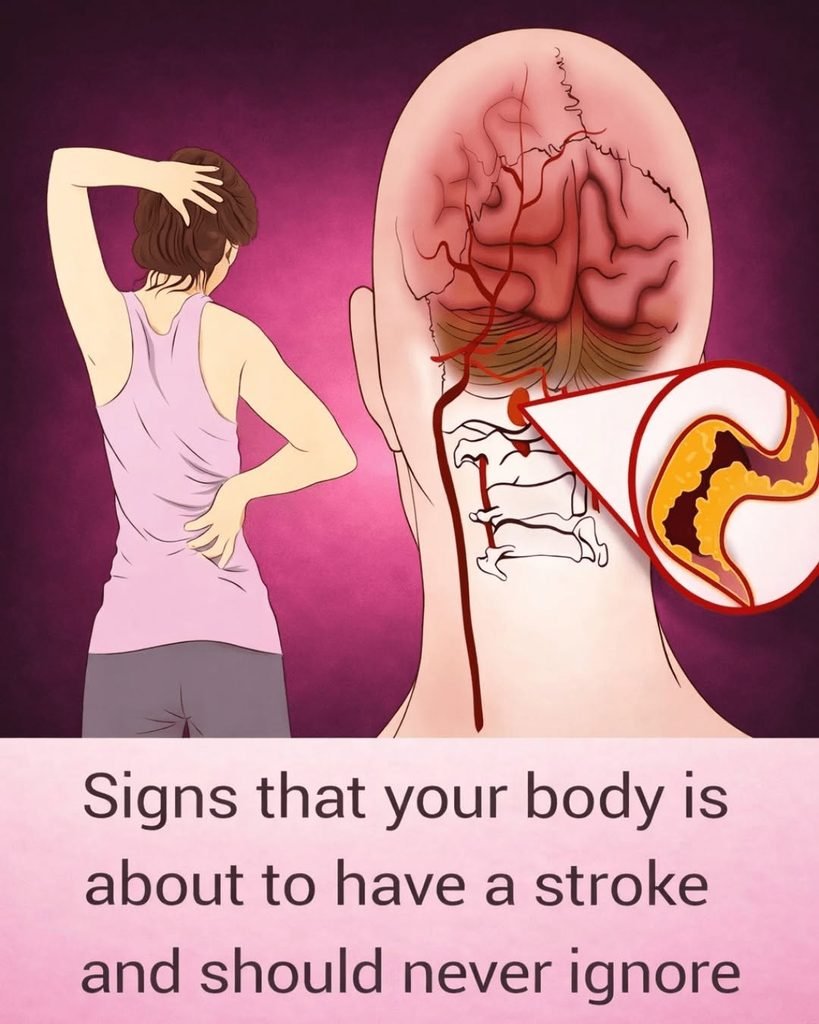
The image above features a woman clutching her neck and back, alongside an anatomical illustration of the brain and the arteries supplying it. A magnified inset shows a cross-section of a narrowed artery, with a caption that reads: “Signs that your body is about to have a stroke and should never ignore.”
A stroke is a medical emergency that occurs when blood flow to part of the brain is interrupted. This can happen due to a blockage (ischemic stroke) or a rupture (hemorrhagic stroke). Recognizing the warning signs early is critical, as prompt treatment can significantly reduce the risk of long-term disability or death.
What Happens During a Stroke?
The illustration in the image highlights the carotid arteries, which supply blood to the brain. When these arteries become narrowed by plaque buildup (atherosclerosis), blood flow can be reduced or blocked. If a clot forms or travels to the brain, it can cut off oxygen and nutrients, causing brain cells to begin dying within minutes.
10 Warning Signs You Should Never Ignore
1. Sudden Weakness or Numbness One of the most common signs is sudden weakness or numbness in the face, arm, or leg, especially on one side of the body. You may notice a drooping face or difficulty lifting one arm.
2. Trouble Speaking or Understanding Slurred speech, difficulty finding words, or trouble understanding what others are saying can indicate a stroke affecting the language centers of the brain.
3. Vision Problems Sudden blurred vision, double vision, or loss of vision in one or both eyes can occur. This may be temporary but should never be ignored.
4. Severe Headaches A sudden, severe headache, sometimes described as the worst headache of your life, can be a warning sign, particularly for hemorrhagic strokes.
5. Dizziness or Loss of Balance Feeling dizzy, unsteady, or having trouble walking can indicate a stroke affecting the brain’s balance centers.
6. Confusion Sudden confusion or disorientation, such as getting lost in familiar places or having trouble following conversations, is a common warning sign.
7. Fatigue Unexplained, extreme fatigue that comes on suddenly can be an early indicator, especially in women.
8. Nausea or Vomiting Some people experience nausea or vomiting in the days leading up to a stroke, often accompanied by other neurological symptoms.
9. Brief Loss of Consciousness A temporary loss of consciousness or fainting spell can occur before a stroke.
10. Transient Ischemic Attacks (TIAs) Often called “mini-strokes,” TIAs produce stroke-like symptoms that resolve within minutes to hours. They are a major warning sign that a full stroke may occur soon.
The Importance of Acting FAST
The acronym FAST is a simple way to remember the most common stroke signs:
Face drooping
Arm weakness
Speech difficulty
Time to call emergency services
If you or someone you know experiences any of these symptoms, call for emergency medical help immediately. Time is critical in stroke treatment.
Prevention and Risk Factors
While some risk factors for stroke, such as age and family history, cannot be changed, others can be managed. These include high blood pressure, diabetes, high cholesterol, smoking, and obesity. Maintaining a healthy lifestyle and following your doctor’s advice can significantly reduce your risk.
Conclusion
Recognizing the warning signs of a stroke can make the difference between recovery and long-term disability. If you notice any of these symptoms, do not wait—seek medical attention immediately.