What Does It Mean When Your Partner Sleeps with Their Back to You?
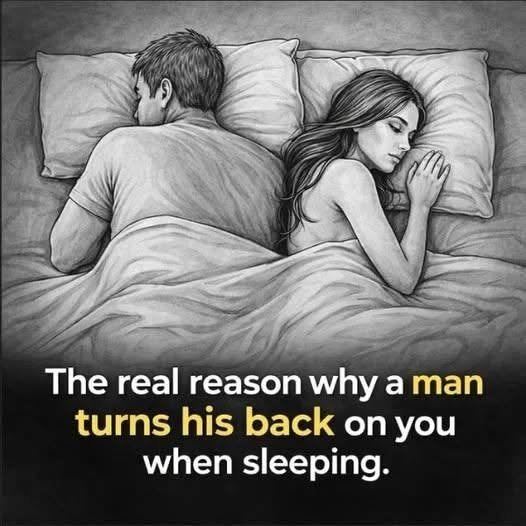
The image above shows a couple sleeping in bed, with the man facing away from his partner. The caption raises a question that many people have wondered about: “The real reason why a man turns his back on you when sleeping.”
In popular culture and social media, this sleeping position is often interpreted as a sign of emotional distance or relationship trouble. However, body language experts and sleep specialists suggest that the reasons are usually far more practical and less concerning than they might appear.
Common Reasons for Sleeping Facing Away
1. Comfort and Sleep Quality The most common reason for sleeping with your back to your partner is simply comfort. Sleeping on your side is one of the most popular and recommended positions for spinal alignment and breathing. If both partners prefer sleeping on their side, facing away from each other is a natural result.
2. Temperature Regulation Sleeping facing away from your partner can help regulate body temperature. When two people sleep close together, body heat can become uncomfortable. Turning away allows for better airflow and a cooler sleeping environment.
3. Personal Space Everyone has different preferences for personal space during sleep. Some people find it difficult to fall asleep or stay asleep when they are in close physical contact. Turning away can provide the sense of space needed for restful sleep.
4. Unconscious Movement People move frequently during sleep. A person may start the night facing their partner and naturally roll over during the night without any conscious thought. This is a normal part of the sleep cycle.
5. Relationship Dynamics While it is true that some couples who are experiencing relationship difficulties may sleep facing away from each other, this is not a reliable indicator on its own. Many happy, healthy couples sleep in this position simply because it is comfortable for them.
What Body Language Experts Say
Body language experts often note that the meaning of a sleeping position depends on the context of the relationship. A couple that is affectionate and connected during the day may sleep facing away from each other at night without any issue. The sleeping position alone does not define the health of a relationship.
What matters more is the overall pattern of interaction, communication, and affection between partners.
When It Might Be Worth a Conversation
If you notice a sudden change in your partner’s sleeping habits—such as consistently moving away from you when they previously slept close—and it is accompanied by other signs of emotional distance, it may be worth having an open and non-confrontational conversation.
However, it is important to avoid jumping to conclusions based on a single behavior. Communication, not assumption, is the best way to understand what is happening in your relationship.
Conclusion
Sleeping with your back to your partner is a common and generally harmless behavior. It is most often driven by comfort, temperature, and personal sleep preferences. While it can sometimes reflect relationship dynamics, it is not a definitive sign of trouble. If you have concerns, a gentle conversation is always better than speculation.