Visual Puzzle: Can You Find the One Difference in This Photo?
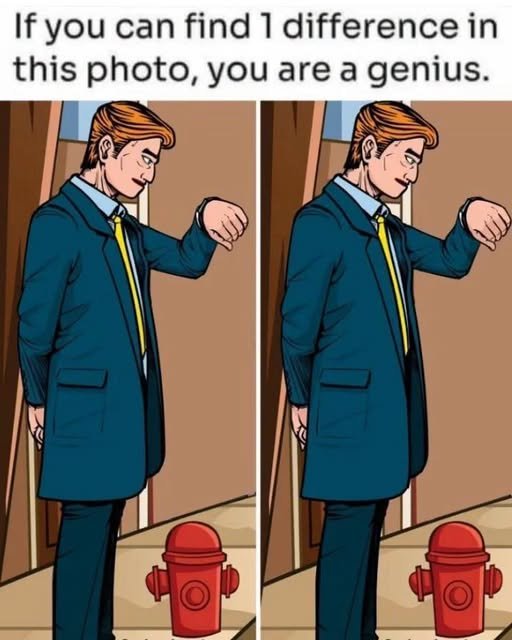
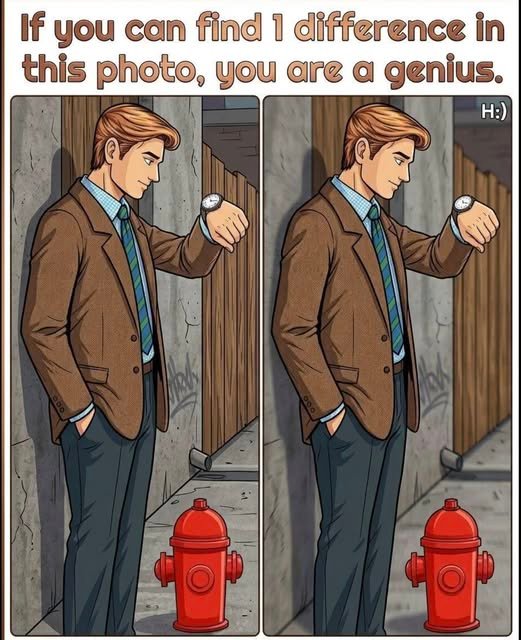
Spot-the-difference puzzles are a classic way to test observation skills and attention to detail. A recent image circulating online challenges viewers to find a single difference between two nearly identical panels. The accompanying text claims that if you can spot the difference, you are a genius. While that may be an exaggeration, these puzzles are a fun and engaging way to exercise visual perception.
Examining the Image
The image features two side-by-side illustrations of a man in a blue suit and yellow tie, standing next to a red fire hydrant. At first glance, the two panels appear to be exact copies of one another. The man’s posture, clothing, and expression seem identical, as does the position of the fire hydrant.
However, upon closer inspection, a subtle difference can be detected. The challenge lies in scanning the entire image systematically rather than focusing on just one area.
Tips for Solving Spot-the-Difference Puzzles
If you are struggling to find the difference, here are a few strategies that can help:
Divide and Conquer: Mentally divide the image into sections—the man’s head, torso, arms, legs, and the background. Compare each section between the two panels one at a time.
Look at the Edges: Differences are often placed near the borders of an image or in areas that are easy to overlook.
Check the Details: Pay attention to small elements like buttons, folds in clothing, shadows, and background objects.
Take a Step Back: Sometimes, looking at the image from a distance or squinting slightly can help the difference stand out.
The Benefits of Visual Puzzles
Engaging with puzzles like this is more than just a pastime. It encourages focused attention, improves visual scanning abilities, and provides a sense of accomplishment when the solution is found. These activities are suitable for people of all ages and can be a pleasant way to pass the time.
Conclusion
Whether you spot the difference immediately or it takes a few minutes of careful observation, this puzzle offers a rewarding challenge. It serves as a reminder that even when things appear identical, there are often subtle details waiting to be discovered.