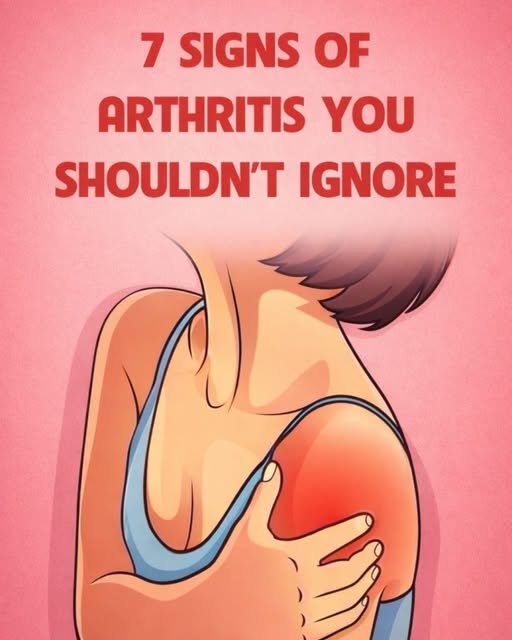
Arthritis is a common condition that causes pain, stiffness, and inflammation in the joints. It affects millions of people worldwide, and while it’s often associated with aging, it can affect people of all ages.
The early signs of arthritis can be subtle, but ignoring them can lead to more serious joint damage down the road. Here are 7 signs you shouldn’t ignore. 👇
Disclaimer: This post is for informational purposes only and is not a substitute for professional medical advice. If you suspect you have arthritis, consult a qualified healthcare provider for a proper diagnosis.
⚠️ 7 Signs of Arthritis You Shouldn’t Ignore
1. Joint Pain Persistent pain in one or more joints, especially after activity or at rest, is one of the most common signs of arthritis.
2. Joint Stiffness Stiffness, especially in the morning or after sitting for a long time, is a classic symptom. It may last for a few minutes or several hours.
3. Swelling and Inflammation Arthritic joints often become swollen, red, and warm to the touch due to inflammation.
4. Reduced Range of Motion If you have difficulty moving a joint through its full range of motion, it could be a sign of arthritis.
5. Grinding or Popping Sensations A grating, grinding, or popping sensation (called crepitus) when you move a joint can indicate cartilage damage.
6. Fatigue Chronic inflammation can drain your energy and cause persistent fatigue.
7. Joint Deformity In advanced cases, arthritis can cause joints to become misshapen or deformed.
Important: These symptoms can also be caused by other conditions. Only a doctor can diagnose arthritis.
❓ Frequently Asked Questions
What are the most common types of arthritis? Osteoarthritis (wear-and-tear) and rheumatoid arthritis (autoimmune) are the most common types.
Can arthritis be cured? There is no cure for most types of arthritis, but treatment can help manage symptoms and slow progression.
When should I see a doctor? If you have persistent joint pain, stiffness, or swelling, see a doctor for an evaluation.
What are the risk factors for arthritis? Age, family history, obesity, previous joint injuries, and certain infections can increase your risk.
Can diet help with arthritis? An anti-inflammatory diet rich in fruits, vegetables, and omega-3 fatty acids can help manage symptoms.
Does exercise help arthritis? Yes — gentle, low-impact exercise can improve joint flexibility and reduce pain.
What treatments are available for arthritis? Medications, physical therapy, lifestyle changes, and in severe cases, surgery.
Can arthritis affect young people? Yes — rheumatoid arthritis and other forms can affect people of all ages, including children.
Is arthritis hereditary? Some types of arthritis have a genetic component, but it’s not solely inherited.
What should I do if I suspect I have arthritis? See a doctor for a proper diagnosis. Early treatment can help prevent joint damage.