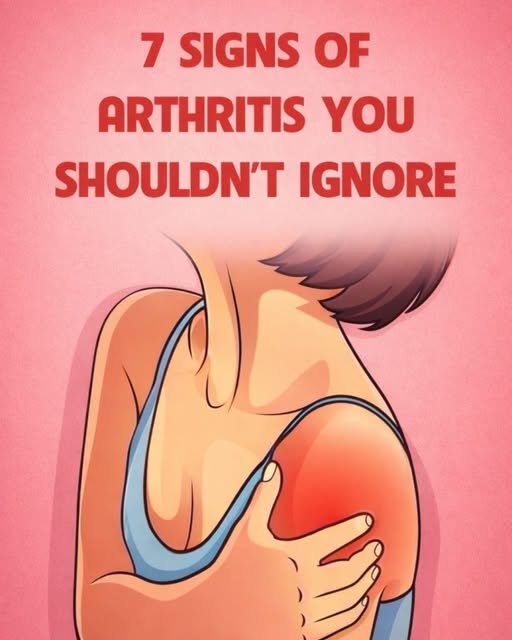
Joint pain isn’t just a normal part of aging. Discover the 7 early warning signs of arthritis you should never ignore, and learn when it’s time to see a doctor.
Introduction
When we think of arthritis, we often picture an elderly person with knobby fingers or a stiff walk. But the truth is, arthritis can strike anyone, at any age. In fact, there are over 100 different types of arthritis, and it is a leading cause of disability worldwide.
Many people dismiss early joint pain as “just getting older” or the result of a tough workout. However, ignoring the early warning signs can lead to permanent joint damage and chronic pain down the road.
As the image above illustrates, arthritis often targets major joints like the shoulders, knees, and hips, causing intense inflammation and discomfort.
Here are the 7 signs of arthritis you should never ignore, and what you should do if you spot them.
1. Persistent Joint Pain
The most obvious sign of arthritis is pain. However, this isn’t the fleeting ache you get after a long run. Arthritis pain is often described as a deep, aching, or throbbing sensation that lingers.
What to watch for: Pain that worsens with activity (common in osteoarthritis) or pain that actually improves slightly with movement but returns after rest. If a specific joint hurts consistently for more than a few weeks, it’s time to pay attention.
2. Morning Stiffness (The “Rusty Hinge” Feeling)
Do you wake up feeling like your joints are “rusty” or locked up? Morning stiffness is a hallmark symptom of arthritis.
Osteoarthritis: Stiffness usually lasts for a short time (under 30 minutes) and loosens up as you get moving.
Rheumatoid Arthritis (RA): Stiffness can be severe and last for hours. If you feel like you need a “warm-up” period every morning just to function, this is a major red flag.
3. Swelling and Tenderness
Inflammation is the root of arthritis (“itis” means inflammation). When a joint is inflamed, it often swells.
What to watch for: The joint may look puffy or larger than the joint on the opposite side of your body. It might also feel tender or painful to the touch. In the hands, you might notice the knuckles looking thick or swollen.
4. Reduced Range of Motion
Arthritis can physically change the structure of a joint, making it harder to move freely.
What to watch for: You might find it difficult to fully straighten your knee, raise your arm above your head (as seen in the image), or make a tight fist. If you feel like your joint is “stuck” or you’ve lost flexibility, it could be due to cartilage breakdown or inflammation.
5. Redness and Warmth
If you touch a joint and it feels hot, or if the skin over the joint looks red, your body is actively fighting inflammation in that area.
What to watch for: This is particularly common in inflammatory types of arthritis like Rheumatoid Arthritis or Gout. A gout attack, for example, often causes the big toe to become incredibly red, hot, and exquisitely painful.
6. Grinding, Popping, or Crunching Sounds (Crepitus)
While occasional joint popping is normal, frequent grinding or crunching sounds accompanied by pain is not.
What to watch for: This sound, medically known as crepitus, happens when the smooth cartilage that cushions your joints wears away. The bones begin to rub against each other or against rough cartilage surfaces, creating that gritty sensation and sound.
7. Unexplained Fatigue
This is the sign people often miss. Arthritis, especially autoimmune types like Rheumatoid Arthritis, is a systemic disease. Your immune system is constantly fighting inflammation, which takes a massive toll on your energy levels.
What to watch for: Feeling exhausted, drained, or “flu-like” even after a full night’s sleep. If your joint pain is accompanied by a general feeling of malaise, fatigue, or even a low-grade fever, see a doctor immediately.
When to See a Doctor
You don’t have to live with joint pain. Early diagnosis and treatment can slow the progression of the disease and preserve your joint function.
Schedule an appointment with your doctor or a rheumatologist if:
Your joint pain lasts for more than 3 days.
You have severe pain that prevents you from doing daily tasks.
Your joint is significantly swollen, red, or hot to the touch.
You have a fever along with your joint pain.
3 Simple Ways to Protect Your Joints Today
While you wait for your appointment, here are three low-risk ways to support your joint health:
Keep Moving: It sounds counterintuitive, but gentle movement (like swimming, walking, or yoga) lubricates the joints and strengthens the muscles that support them.
Maintain a Healthy Weight: Every extra pound of body weight puts about 4 pounds of extra pressure on your knees. Losing even a small amount of weight can drastically reduce joint pain.
Eat an Anti-Inflammatory Diet: Focus on foods rich in Omega-3 fatty acids (like salmon and walnuts), leafy greens, berries, and olive oil to help naturally lower inflammation in your body.
Conclusion
Arthritis is not an inevitable sentence of pain and immobility. By recognizing these 7 early signs, you can take control of your health, get an accurate diagnosis, and start a treatment plan that keeps you moving and living your best life.
Don’t ignore your body’s warning signs. Your joints will thank you!
Disclaimer: This article is for informational and educational purposes only and does not constitute professional medical advice, diagnosis, or treatment. Always seek the advice of your physician or other qualified health provider with any questions you may have regarding a medical condition.