“3 Vitamins Shut Down Enlarged Prostate in 12 Hours”
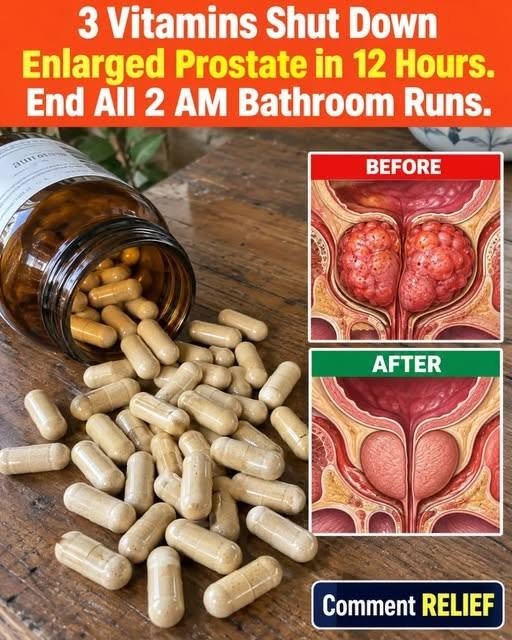
A viral social media post promises a miracle: “3 Vitamins Shut Down Enlarged Prostate in 12 Hours. End All 2 AM Bathroom Runs.” The image, featuring a spilled bottle of capsules and a dramatic “before and after” diagram of a swollen prostate, is designed to offer hope to the millions of men who struggle with the frustrating symptoms of benign prostatic hyperplasia (BPH).
The reality, however, is far less dramatic—and far more nuanced. No combination of vitamins can “shut down” an enlarged prostate in 12 hours. BPH is a chronic, progressive condition involving the non-cancerous growth of prostate tissue, and it is not something that can be reversed overnight with a supplement. In fact, some of the most commonly promoted prostate supplements have been shown in large-scale studies to offer little to no benefit, and others may even carry risks.
Understanding the true nature of BPH, the actual evidence behind dietary supplements, and the treatments that are proven to work is essential for making informed decisions about your health. This article will separate the myths from the science, explaining why the “12-hour” claim is impossible and what genuinely helps manage an enlarged prostate.
BPH is driven by hormonal changes and cellular proliferation within the prostate gland. The condition develops slowly over years, and the prostate gland physically enlarges as tissue grows. A supplement—no matter how potent—cannot shrink this physical mass in a matter of hours.
The “before and after” imagery in viral posts is a classic clickbait tactic. It preys on the desperation of men who are exhausted from nocturia (frequent nighttime urination) and the disruption it causes to their sleep and quality of life. No clinical trial has ever demonstrated that any vitamin or herbal remedy can shrink an enlarged prostate in 12 hours. The most effective prescription medications for BPH, such as 5-alpha reductase inhibitors, can take six months or more to reduce prostate size, and even then, the reduction is modest. The claim of an overnight fix is biologically implausible.
What the Science Actually Says About Prostate Supplements
The supplement industry is largely unregulated, and products marketed for prostate health often contain a mix of herbs, vitamins, and minerals with varying levels of evidence. Here is what the research actually shows about the most common ingredients.
Saw Palmetto: The Disappointing Reality
Saw palmetto is the most common ingredient in prostate supplements. While some smaller studies and meta-analyses have suggested it may offer mild symptom relief comparable to certain medications like tamsulosin, the larger and more rigorous studies have been sobering. According to the Cleveland Clinic, large-scale studies over the past two decades show that saw palmetto has little to no benefit. A 2020 meta-analysis noted it may have comparable efficacy to tamsulosin, but the overall evidence remains mixed and inconclusive.
Vitamin E and Selenium: Potential Risks
The claim that vitamins are the solution is particularly dangerous when it comes to Vitamin E. A landmark 2011 study tracking more than 35,000 healthy men found that taking Vitamin E may actually increase the risk of prostate cancer. Similarly, the same study found no real benefit from selenium, and more recent research has noted a “U-shaped association,” meaning selenium supplements could increase or decrease risk depending on the dosage. High-dose zinc supplements long-term have also been linked in some studies to an increased risk of prostate cancer.
Beta-Sitosterol and Pumpkin Seed Extract: Modest Promise
Some plant-based compounds have shown more promise. Beta-sitosterol (BST), a plant compound found in nuts and vegetable oils, has been shown in placebo-controlled trials to improve urine flow and reduce post-void residual volume (the amount of urine left in the bladder after urination). Pumpkin seed extract has also demonstrated benefits in clinical trials, with one 12-week study reporting a 30% reduction in symptom scores and improvements in nocturia. However, these are modest improvements, not the dramatic “shutdown” promised in viral posts. Furthermore, over-the-counter supplements may not deliver the same doses or formulations used in clinical research.
Stinging Nettle: A Traditional Option
Stinging nettle root extract has some clinical support for mild to moderate BPH. A large trial of 558 men taking 120 mg of nettle root extract daily for six months showed significant improvements in urinary symptoms. However, like other herbal remedies, it is not a cure and its effects are modest.
L-Carnitine and CoQ10: A Specific Combination
A 2024 randomized controlled trial found that supplementing with L-carnitine and Coenzyme Q10 as an adjunct to finasteride led to a significant decrease in prostate volume and an improvement in erectile function compared to a control group. However, there was no significant difference in symptom scores (IPSS) or quality of life between the groups. This suggests these supplements may have a role in supporting prostate health, but they are not a standalone solution.
Vitamin D: An Association, Not a Cure
Vitamin D has received significant attention. A massive prospective cohort study of nearly 195,000 men from the UK Biobank found that lower serum vitamin D levels were associated with an increased risk of BPH. Each standard deviation increase in vitamin D corresponded to a 2% lower risk of BPH. This is an important finding for prevention and overall health, but it does not mean that taking a vitamin D supplement will treat existing BPH symptoms or shrink the prostate.
The Real Risk: Delaying Effective Treatment
The most dangerous aspect of the “12-hour” myth is that it can lead to delayed medical care. BPH is a progressive condition. While it is not cancerous, untreated BPH can lead to serious complications, including:
Urinary retention: The inability to urinate at all, which is a medical emergency.
Bladder stones: Caused by stagnant urine.
Kidney damage: From the back-pressure of urine.
Urinary tract infections (UTIs): Due to incomplete bladder emptying.
If you are experiencing symptoms like a weak stream, frequent urination, urgency, or nocturia, the first step is to see a doctor for a proper diagnosis. They can rule out other conditions, including prostate cancer, and discuss evidence-based treatment options.
What Actually Works for BPH
Instead of chasing miracle supplements, focus on strategies that have been proven to help.
1. Prescription Medications
Several classes of medications are highly effective for BPH:
Alpha-blockers (e.g., tamsulosin, alfuzosin) relax the muscles in the prostate and bladder neck, providing rapid symptom relief—often within days, though not in 12 hours.
5-alpha reductase inhibitors (e.g., finasteride, dutasteride) block the hormone that causes prostate growth. They can shrink the prostate over months, but they take time to work.
2. Minimally Invasive Procedures
For men who do not respond to medication or prefer not to take it, procedures like Transurethral Resection of the Prostate (TURP), laser therapy, or prostatic urethral lift (UroLift) can provide significant relief.
3. Lifestyle Modifications
Simple changes can make a meaningful difference:
Limit fluids before bed: Reduce evening fluid intake to minimize nighttime bathroom trips.
Avoid caffeine and alcohol: These can irritate the bladder and worsen symptoms.
Double voiding: After urinating, wait a moment and try again to empty the bladder more completely.
Exercise and weight management: Regular physical activity and maintaining a healthy weight are associated with fewer BPH symptoms.
Dietary changes: A Mediterranean-style diet rich in fruits, vegetables, and healthy fats may help reduce lower urinary tract symptoms.
Frequently Asked Questions
Q: Can I really shrink my prostate in 12 hours with vitamins? No. The claim that a combination of vitamins can “shut down” an enlarged prostate in 12 hours is scientifically impossible. BPH is a chronic condition caused by tissue growth, and no supplement can reverse this process overnight.
Q: Are prostate supplements safe? Not necessarily. Some ingredients, like high-dose Vitamin E, have been linked to an increased risk of prostate cancer. Others can interact with prescription medications. Always consult your doctor before starting any supplement.
Q: What is the best supplement for BPH? There is no single “best” supplement. Beta-sitosterol and pumpkin seed extract have the most promising evidence for modest symptom relief, but their effects are not comparable to prescription medications. Saw palmetto, despite its popularity, has little to no benefit in large studies.
Q: Does vitamin D help with BPH? Low vitamin D levels are associated with an increased risk of developing BPH. However, taking a vitamin D supplement is not a treatment for existing BPH symptoms. It is important for overall health, but it will not shrink an enlarged prostate.
Q: When should I see a doctor for BPH symptoms? You should see a doctor if you experience a weak urine stream, difficulty starting urination, frequent urination (especially at night), urgency, or a feeling of incomplete bladder emptying. These symptoms can also be signs of other conditions, including prostate cancer, so a proper diagnosis is essential
Instead of relying on unproven supplements, focus on proven strategies: prescription medications, minimally invasive procedures, and lifestyle changes. If you are struggling with the symptoms of an enlarged prostate, the most responsible step is to consult a doctor. They can help you understand your options and find a path to relief that is safe, effective, and grounded in science—not social media hype.