Optical illusions and hidden image puzzles are a fantastic way to test your brain’s processing speed, attention to detail, and visual perception. They force you to look beyond the obvious and scan the details.
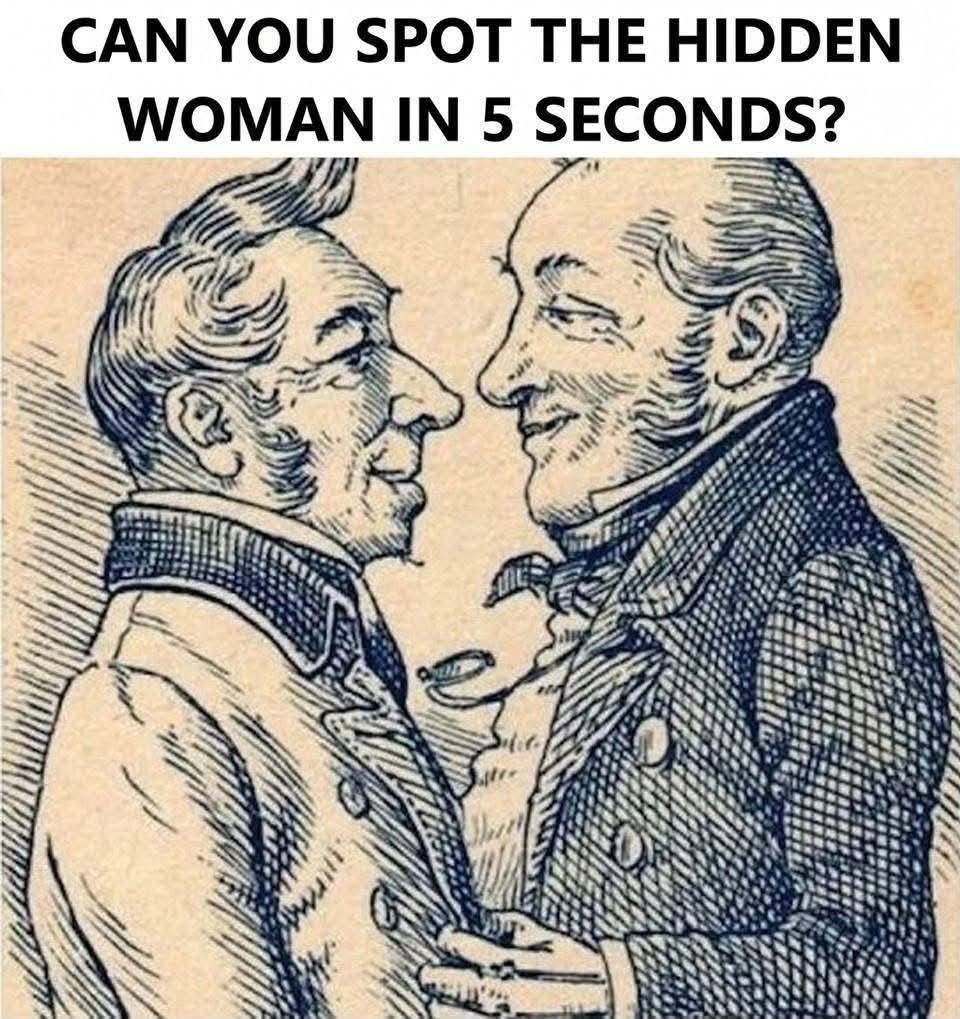
Take a close look at the vintage illustration above. It shows a woman leaning over a stone well, with a tree, a small structure, and some foliage in the background.
But wait — she’s not the only one in the picture. There is a second girl hiding in this image.
Can you find her?
If you’re struggling, don’t worry — she is cleverly hidden within the lines and shadows of the drawing. Here’s a hint: Look closely at the area around the woman’s back and the tree trunk on the left side of the image.
🔍 Did You Find Her?
If you look closely at the woman’s back, you’ll see the profile of a second face.
The lines of her dress and the shadows create the shape of a second woman’s face looking to the right. This is a classic example of a camouflage illusion — an image that hides a second picture within its lines and contours. Your brain sees the main subject (the woman at the well) first, and it takes a slower, more focused look to find the hidden face.
Why this puzzle works: Your brain is wired to quickly scan for familiar shapes, especially faces. But when a face is hidden within a complex texture — like the folds of a dress — it takes a slower, more focused look to find it. If you spotted her quickly, it means your brain is excellent at picking out fine details and patterns.
❓ Frequently Asked Questions
Where is the second girl in the picture? She is hidden in the woman’s back and the folds of her dress. The lines form the profile of a second face looking to the right.
What does finding her say about my brain? It suggests you have strong visual processing skills, good attention to detail, and sharp pattern recognition. These are all signs of a healthy, active brain.
Are these puzzles good for your brain? Yes — visual puzzles and optical illusions are a form of mental exercise. They challenge your brain to process information in new ways and can help improve focus and concentration.
Why is it so hard to see her at first? Your brain is designed to quickly scan for threats and familiar objects. The second face is camouflaged within the complex lines of the drawing, so your brain has to slow down and look more carefully to spot her.
Can these puzzles help prevent cognitive decline? While no single puzzle can prevent cognitive decline, regularly challenging your brain with new and varied tasks is associated with better cognitive health as you age.
Are there other hidden images in the picture? The main hidden image is the second girl. However, some people also notice other shapes in the leaves and stones — it’s all part of the illusion!