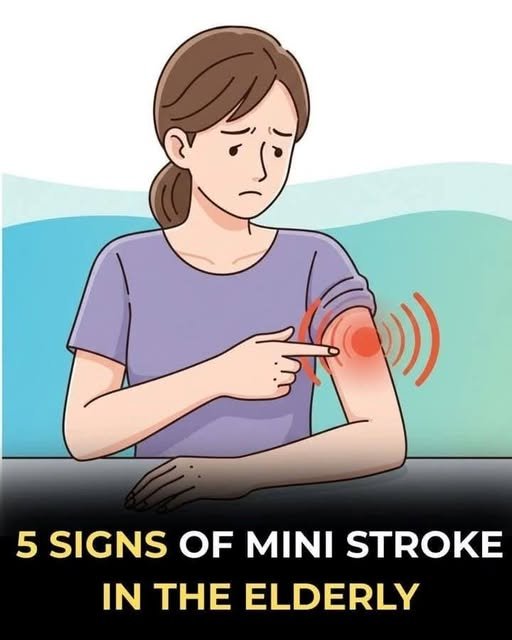
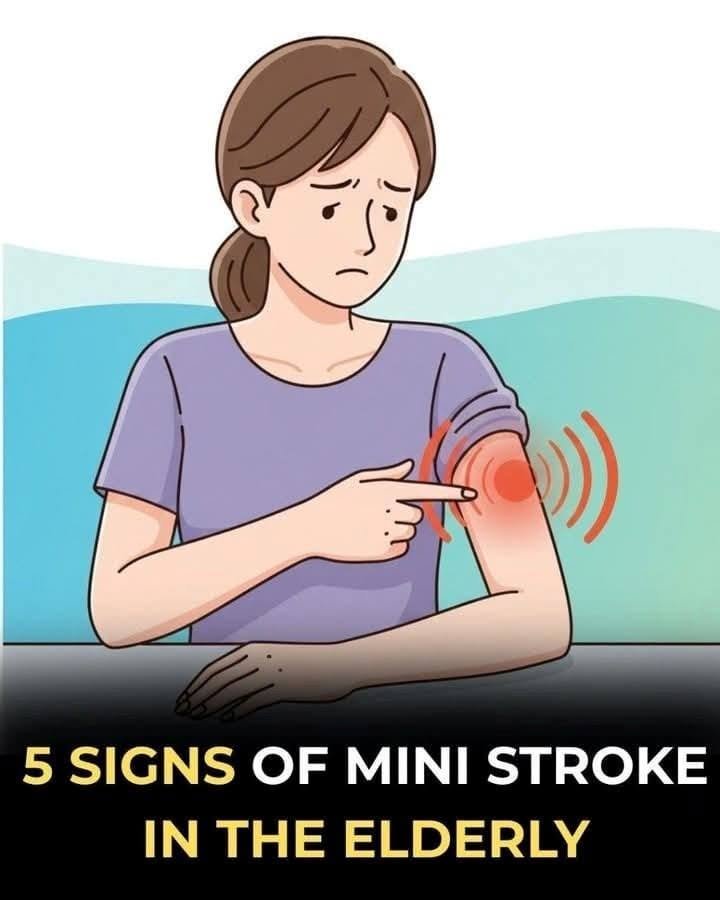
The image presents a simple but concerning scene. A woman with a worried expression points to her upper arm, which is highlighted with a red, radiating circle and wavy lines, indicating pain, weakness, or numbness. The text below is a critical warning: “5 SIGNS OF MINI STROKE IN THE ELDERLY.”
A “mini stroke,” medically known as a Transient Ischemic Attack (TIA), is a temporary disruption of blood flow to a part of the brain. It is often called a “warning stroke” because it is a massive red flag that a major, potentially fatal stroke is imminent. The symptoms of a TIA are similar to those of a full stroke, but they typically resolve within minutes to a few hours. Because the symptoms fade, many people—especially the elderly—dismiss them as a temporary weakness, a pinched nerve, or simply a part of aging. This is a dangerous mistake.
According to the American Stroke Association, up to 1 in 3 people who have a TIA will go on to have a major stroke, often within a year. Recognizing the signs of a mini stroke and seeking immediate medical attention is critical for prevention. This two-part article will explore the five key signs of a mini stroke in the elderly, explain the science behind them, and provide the crucial steps to take if you observe them.
Part 2: Sign #1 and #2 – Sudden Weakness and Numbness