Here’s Why You Get Cramps at Night and How to Avoid Them
Introduction: The Agony of the Midnight Charley Horse
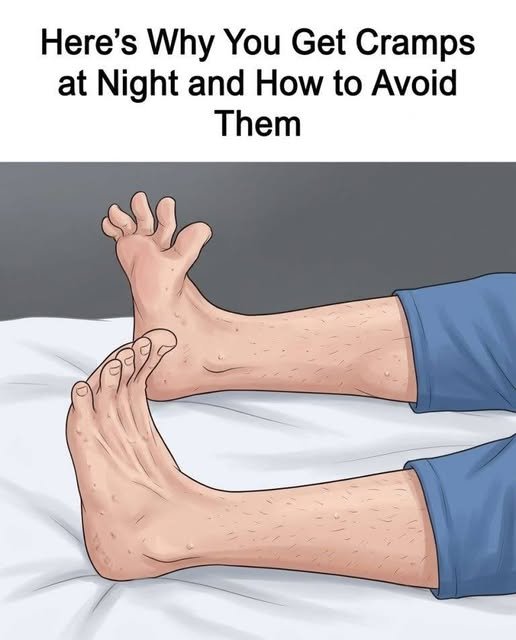
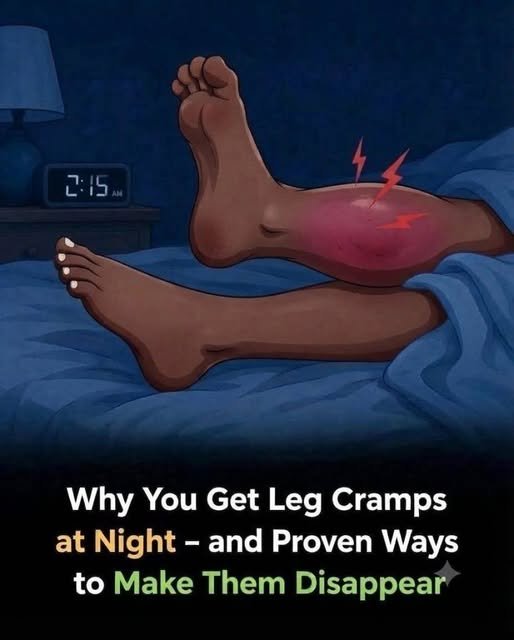
The image is instantly recognizable to anyone who has ever been jolted awake in the middle of the night by a sudden, searing pain. It shows a pair of bare feet under a blanket, with one foot painfully contorted—the toes curled tightly downward, the arch of the foot locked in a severe, involuntary spasm. The text above it asks a question that millions of people search for every single month: “Here’s Why You Get Cramps at Night and How to Avoid Them.”
If you have experienced a nocturnal leg cramp (often called a “charley horse”), you know that the pain is unlike almost anything else. It is a sudden, intense tightening of the muscle that can last anywhere from a few seconds to several agonizing minutes. Even after the muscle finally relaxes, a lingering soreness can remain for hours, making it difficult to fall back asleep and leaving you exhausted the next day.
While they are incredibly common—especially as we age—nighttime leg cramps are not something you simply have to tolerate. They are not a normal part of aging, but rather a signal from your body that something is out of balance. Whether it is a simple electrolyte deficiency, a side effect of medication, or a mechanical issue related to your sleeping posture, there is always an underlying reason.
This comprehensive two-part guide will decode exactly why your muscles seize up in the dark. We will explore the biological mechanisms of muscle contraction, the hidden triggers that cause nighttime spasms, and provide you with a complete, step-by-step protocol to stop a cramp when it hits and prevent it from happening again.