The Secret Purpose of the Red Ball on a Seam Ripper: Unlocking the True Potential of Your Sewing Tools
For anyone who has ever held a needle and thread, the seam ripper is an indispensable companion. It is the tool that patiently undoes our mistakes, unpicks a crooked seam, or opens a stubborn buttonhole. Yet, despite its ubiquity in sewing kits around the world, the seam ripper remains a surprisingly misunderstood tool. Many sewists use it for years without ever fully appreciating its design.
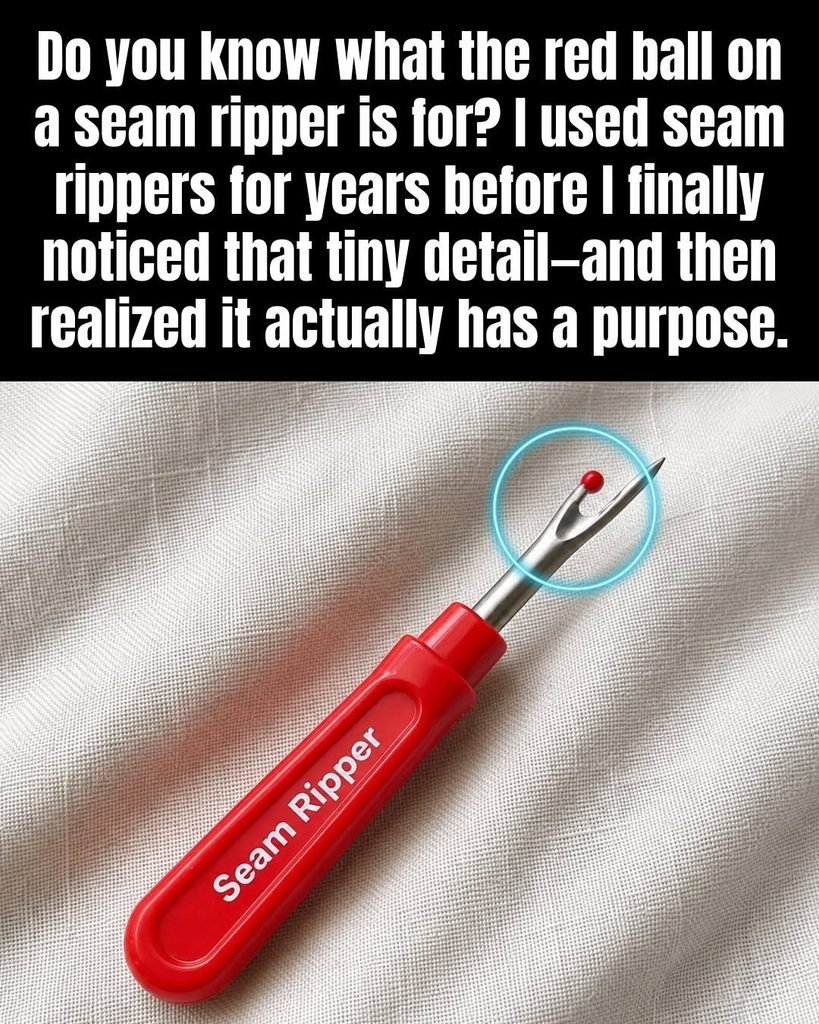
A viral social media post recently brought this hidden design feature into the spotlight. The image shows a standard seam ripper with a bright red, spherical bead situated at the tip of the longer metal prong. The accompanying text reads: “Do you know what the red ball on a seam ripper is for? I used seam rippers for years before I finally noticed that tiny detail—and then realized it actually has a purpose.”
This simple observation taps into a universal experience: the discovery of a hidden function in an everyday object. We have all experienced that moment of revelation when we learn that a tool has been engineered with a specific safety or functional feature that we had previously ignored. For the seam ripper, that little red ball is not a decorative flourish, nor is it a cap to protect the sharp point when not in use. It is a highly deliberate, incredibly useful component that transforms the tool from a simple blade into a precision instrument.
Understanding the true purpose of the red ball is a game-changer for anyone who sews. It changes the way you hold the tool, the way you approach a seam, and the way you protect your fabric. It is a testament to the fact that in the world of textile arts, the smallest details often have the biggest impact.
This comprehensive guide will explore the fascinating history and anatomy of the seam ripper, decode the exact purpose of the red ball, debunk the myths surrounding its design, and provide a masterclass on how to use this tool correctly. Whether you are a novice learning to sew your first seam or a seasoned quilter with decades of experience, there is always more to learn about the humble seam ripper.
The Anatomy of a Seam Ripper: A Deceptively Simple Tool
To understand why the red ball exists, it helps to break down the seam ripper into its individual components. At first glance, it appears to be a simple plastic handle with a piece of bent metal attached to the end. However, every element of its design serves a specific purpose.
The Handle
The handle is typically made of plastic or, in higher-end models, wood or metal. It is designed to be ergonomic, allowing for a comfortable grip during extended periods of unpicking. A good handle provides leverage and control, which is crucial when working with delicate fabrics.
The Cutting Blade
Located in the “valley” or the center of the metal fork is a tiny, razor-sharp blade. This is the functional heart of the tool. When you pull the seam ripper through a stitch, this blade slices the thread, breaking the seam open. The blade is intentionally small to prevent it from cutting the fabric itself.
The Sharp Point (The Long Prong)
One side of the fork extends into a long, sharp, needle-like point. This point is designed to slide easily under a tight stitch, allowing you to lift the thread up and into the blade. Without this point, it would be nearly impossible to unpick tightly sewn seams.
The Red Ball (The Short Prong)
The opposing prong is shorter, thicker, and rounded off with a small ball, which is often colored red for visibility. It is the unsung hero of the seam ripper. While the long point does the precision work, the ball is the tool’s safety mechanism and its anchor.
The True Purpose of the Red Ball: Function Over Form
The red ball is not there to make the tool look cute. It is a highly engineered safety and guidance feature. Its primary purposes can be broken down into three distinct functions.
1. Protecting Delicate Fabrics
When you slide the long, sharp point under a stitch, there is always a risk that you might accidentally pierce the fabric beneath it. This is especially dangerous with delicate materials like silk, chiffon, lace, or fine knits. If the sharp point pierces the weave of the fabric, it can pull a thread, creating a snag or a run that ruins the garment.
The red ball acts as a physical barrier. Because it is rounded and blunt, it cannot pierce the fabric. When you slide the seam ripper into the seam, the ball rests against the fabric, acting as a stopper that prevents the sharp point from going in too deep. It guides the tool along the seam line, ensuring that the blade stays focused on the thread and never damages the material underneath.
2. Preventing Fabric Slippage
When you are unpicking a seam, the fabric can easily slip and slide, making the process frustrating and imprecise. The rounded ball creates a slight amount of friction and serves as an anchor point. By resting the ball against the fabric, you stabilize the material, holding it in place while the sharp point lifts the thread. This is particularly useful when working on curved seams, small corners, or the tight armholes of a garment.
3. User Safety
It may seem obvious, but sewing tools are sharp. The long point of a seam ripper is designed to slide easily under thread, which means it can just as easily slide under your skin. The red ball provides a visual and physical warning point. It makes the end of the tool more visible, helping you keep track of where the tip is, and it prevents the tool from slipping out of your hand and stabbing you if you lose your grip.
Debunking the Myths: What the Red Ball is NOT For
Despite its clear functional purpose, several myths have sprung up around the red ball. Let us put these to rest.
Myth 1: It is a Thread Eraser
Some novice sewists believe the red ball is a “thread eraser” that magically dissolves thread when rubbed against it. This is entirely false. The ball is made of solid plastic. The thread is only broken by the cutting blade in the center of the fork.
Myth 2: It is a Cap for the Point
Unlike the cap on a pen, the red ball is permanently attached to the metal prong. It cannot be removed to cover the sharp point. It is a structural component of the metal fork, not a removable accessory.
Myth 3: It is Just for Branding
While the red color is often used for visibility, the physical ball itself is not a branding element. Even seam rippers with all-metal construction or black handles feature a rounded ball on the short prong. The shape is essential to the tool’s function.
How to Properly Use a Seam Ripper: The “Red Ball” Technique
Now that you understand the purpose of the red ball, let us explore how to use the tool correctly. Many people use a seam ripper incorrectly by simply hacking away at the stitches. This can damage the fabric and stretch the seam. The correct technique harnesses the design of the tool, including the red ball, to achieve a clean, damage-free result.
Step-by-Step Guide to Unpicking a Seam
Prepare the Fabric: Lay the seam flat on a table or ironing board. Ideally, press the seam open or flat with an iron. A flat seam is much easier to unpick than a rumpled one.
Position the Tool: Hold the seam ripper like a pen. Insert the long, sharp point under a single stitch.
Use the Ball as a Guide: As you slide the point under the stitch, allow the red ball to rest against the fabric. The ball should act as a pivot point.
Engage the Blade: Once the thread is lifted into the center of the fork, the blade will slice it. You should feel a slight pop as the stitch breaks.
The “Glide” Method: For long, straight seams, you do not need to break every single stitch individually. You can use the “glide” method. Lift a few stitches with the point, break them with the blade, and then use the red ball to slide along the seam, cutting the threads as you go. The ball prevents the tool from digging into the fabric and keeps you moving smoothly.
Pull the Threads: Once you have broken a series of stitches, use your fingers to gently pull the threads apart. Do not pull the fabric aggressively; let the threads do the work.
Brush Away the Lint: Seams often contain tiny bits of thread and lint. Use a small brush or your fingers to clear them away before re-sewing.
The Different Types of Seam Rippers
While the basic design remains the same, seam rippers come in a variety of shapes and sizes to suit different tasks.
The Standard Plastic Seam Ripper
This is the most common type, found in nearly every basic sewing kit. It features a plastic handle and a metal fork with the red ball. It is inexpensive and works perfectly for general sewing tasks.
The Ergonomic Seam Ripper
These feature thicker, contoured handles, often with rubberized grips. They are designed for people who have arthritis or who spend long hours unpicking seams, as they reduce hand fatigue.
The Surgical Seam Ripper
This style resembles a scalpel. It has a flat, wide blade with a tiny cutting edge instead of a fork. It does not have a red ball; instead, you use the flat edge to slide under the stitches. It offers incredible precision but requires a steady hand and is best used by experienced sewists.
The Tiny Thread Snipper
This is a very small tool, often shaped like a pen, with a tiny fork and a red ball. It is ideal for tight spaces, such as unpicking stitches near a zipper or in the middle of a delicate appliqué.
Beyond Unpicking: Creative Uses for a Seam Ripper
A seam ripper is not just for fixing mistakes. Its precision and sharp point make it useful for a variety of other sewing and crafting tasks.
Opening Buttonholes
Buttonholes are notoriously difficult to open without cutting the stitches. By using the sharp point of a seam ripper and guiding it carefully down the center of the buttonhole, you can open the slit perfectly without damaging the surrounding stitches or the fabric.
Removing Tags
If you buy a garment with an itchy tag, a seam ripper is the safest tool to remove it. The sharp point slides easily under the stitches holding the tag, and the blade slices them cleanly without tearing the fabric of the shirt.
Cleaning Your Sewing Machine
Sewing machines accumulate a surprising amount of lint and dust in hard-to-reach places. The sharp point of a seam ripper is perfect for digging out clogs of lint from the bobbin case and the feed dogs.
Turning Small Fabric Tubes
When making straps or belts, you often need to turn a fabric tube right-side out. The long point of a seam ripper can be used to push the fabric through the tube, and the red ball prevents the point from poking through the fabric end.
Removing Stubborn Dirt
The sharp point of a seam ripper can be used to scrape away stubborn dirt or gum from the crevices of shoes or the edges of furniture, acting as a tiny, precision scraper.
Maintenance and Care for Your Seam Ripper
To ensure your seam ripper lasts for years and performs at its best, follow these simple maintenance tips.
Keep it Sharp: The blade on a seam ripper cannot be sharpened. Once it becomes dull, it is time to replace it. A dull seam ripper will tear your fabric rather than cleanly slicing the thread.
Clean it Regularly: Wipe the metal fork with a damp cloth to remove lint and residue. If the blade becomes sticky, use a tiny amount of rubbing alcohol to clean it.
Store it Safely: Keep your seam ripper in a sewing kit or a dedicated case. Do not leave it loose in a drawer where it can be damaged or cause injury.
Do Not Pry: Never use the seam ripper as a pry bar to force open a seam. It is designed for cutting, not prying. Forcing it can bend the metal fork or snap the point.
The Psychology of the Red Ball: A Lesson in Design
The red ball on a seam ripper is a perfect example of functional design. It is a small, low-cost addition that vastly improves the utility of the tool. It prevents injuries, protects fabrics, and makes the process of unpicking much smoother.
Yet, the fact that so many people use the tool for years without noticing this feature highlights a broader human tendency. We often become so accustomed to the tools we use that we stop seeing them. We learn to use them in a certain way and never question the design. The viral post about the red ball serves as a gentle reminder to pay attention to the details. By taking a moment to examine the tools we use every day, we can often discover hidden features that improve our efficiency and safety.
Conclusion: A Tiny Detail with a Massive Impact
The red ball on a seam ripper is far more than a decorative flourish. It is a carefully engineered safety guard, an anchor, and a guide that transforms a sharp piece of metal into a precision tool. It protects delicate fabrics from being snagged, prevents the tool from slipping, and keeps the user safe from accidental pricks.
By understanding the purpose of this tiny detail, we can change the way we approach our sewing projects. We can use the tool with greater confidence, knowing that the red ball is there to help us glide smoothly along the seam, preserving the integrity of our fabric and the quality of our work. The next time you pick up a seam ripper to fix a mistake, take a moment to appreciate the clever design of the red ball. It is a testament to the fact that in the world of crafting, it is the smallest details that make the biggest difference.
Frequently Asked Questions
What is the red ball on a seam ripper used for?
The red ball serves as a safety guard and a guide. It is rounded and blunt, so it cannot pierce fabric. It prevents the sharp point of the tool from damaging the material underneath the seam and acts as a pivot point to stabilize the fabric while you lift the thread.
Can I remove the red ball to get a sharper point?
You should never attempt to remove the red ball. It is permanently attached to the metal prong as part of the tool’s structural design. Removing it would expose a sharp edge that could easily damage your fabric or injure you.
How do I use the red ball correctly when unpicking a seam?
Slide the long, sharp point under a stitch, and allow the red ball to rest against the fabric. Use the ball as a pivot point to lift the thread into the center cutting blade. For long seams, you can use the ball to glide along the fabric, preventing the tool from digging in too deep.
Does the red ball make the seam ripper less effective?
No, it makes it more effective. The red ball prevents the tool from snagging on delicate fabrics and helps you maintain control. It allows you to work faster and more precisely, reducing the risk of accidentally cutting the fabric itself.
Why is the ball always colored red?
The red color is purely for visibility. Because it is a small part, the bright red color makes it easier to see where the tip of the tool is, especially when working with dark fabrics or in low-light conditions.
Can the red ball be used to push threads through tight spaces?
Yes, the rounded shape of the ball is perfect for gently pushing threads or fabric through tight spaces, such as the corners of a turned garment or a buttonhole.
How often should I replace my seam ripper?
You should replace your seam ripper when the blade becomes dull. A dull blade will tear the thread rather than cut it cleanly, and it will put more strain on the fabric. Most standard seam rippers need to be replaced after several months of regular use.