Understanding Foot Neuropathy: The Meaning Behind Burning, Tingling, and Numbness
Meta Description: Experiencing burning, tingling, or numbness in your feet? These are classic signs of peripheral neuropathy. Learn what causes these nerve symptoms and when to seek medical care.
Introduction
The feet contain a complex network of nerves responsible for sending sensory information to the brain. When these nerves become damaged or dysfunctional, they send incorrect signals, resulting in abnormal sensations.
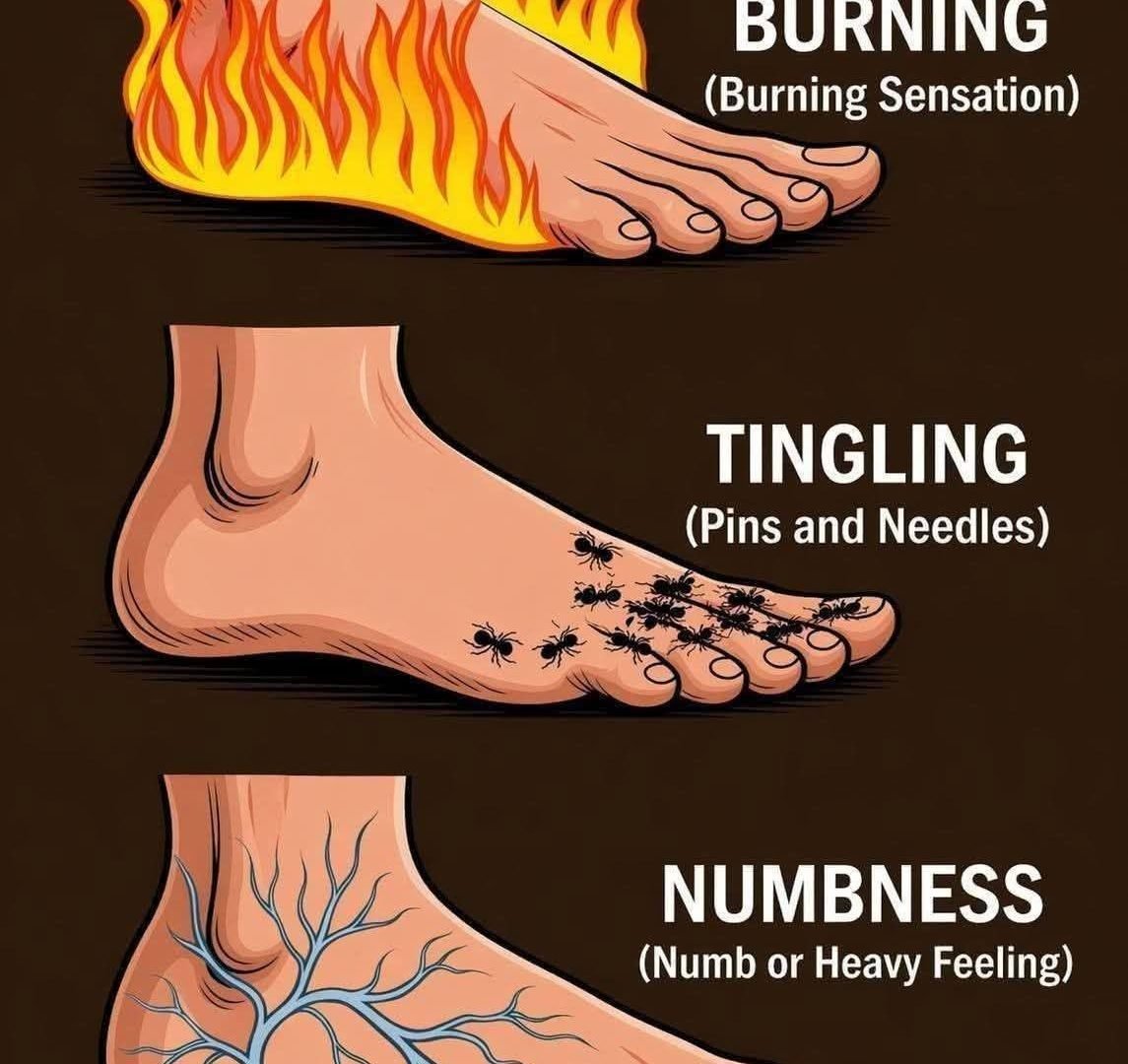
The three symptoms illustrated above—Burning, Tingling, and Numbness—are the hallmark signs of a condition known as Peripheral Neuropathy. This occurs when the peripheral nerves (the nerves outside the brain and spinal cord) are damaged, most commonly affecting the longest nerves that reach the toes and feet.
Here is a breakdown of what each of these specific sensations means and why they occur.
1. Burning Sensation (Neuropathic Pain)
What it feels like: A persistent, often intense feeling of heat or burning on the skin of the feet, even when the feet are cool to the touch. It is often worse at night.
The Science: This is a type of nerve pain called dysesthesia. When sensory nerve fibers are damaged, they can misfire and send pain signals to the brain even when there is no physical stimulus causing pain. The brain interprets these erratic electrical signals as a burning sensation.
2. Tingling (Pins and Needles)
What it feels like: A prickling, “crawling,” or static-like sensation, often described as “pins and needles” (the medical term is paresthesia).
The Science: Tingling occurs when nerves are partially compressed or irritated, or when they are in the early stages of damage. The nerve is still functioning but is struggling to transmit signals correctly. It is the same sensation people feel when a limb “falls asleep” due to temporary pressure on a nerve, but in neuropathy, the sensation is chronic and does not go away when you change positions.
3. Numbness (Numb or Heavy Feeling)
What it feels like: A loss of sensation, making the feet feel “dead,” heavy, or like you are walking on cotton wool or thick socks.
The Science: Numbness indicates a more advanced stage of nerve damage. The sensory nerves have lost their ability to transmit signals to the brain entirely. While numbness might sound preferable to burning pain, it is highly dangerous. Because you cannot feel pain, temperature, or pressure, you are at a much higher risk for unnoticed cuts, blisters, and severe foot infections.
Common Causes of Foot Neuropathy
These three symptoms rarely happen on their own. They are usually secondary to an underlying health condition that damages the nerves over time. The most common causes include:
Diabetes: High blood sugar levels damage the small blood vessels that supply oxygen and nutrients to the nerves. Diabetic neuropathy is the leading cause of these symptoms.
Vitamin Deficiencies: Specifically Vitamin B12, which is crucial for maintaining the protective myelin sheath around nerves.
Alcohol Use Disorder: Chronic, excessive alcohol consumption is toxic to nerve tissue.
Nerve Compression: Conditions like sciatica or tarsal tunnel syndrome can compress nerves, causing localized tingling and numbness.
When to See a Doctor
If you are experiencing persistent burning, tingling, or numbness in your feet, you should schedule an evaluation with a healthcare provider. Early diagnosis of the underlying cause (such as controlling blood sugar or supplementing vitamins) can prevent further nerve damage and manage the symptoms effectively.
💬 Share Your Experience
Have you ever experienced tingling or numbness in your feet? How did you manage it? Let us know in the comments below.
Disclaimer: This article is for informational and educational purposes only and does not constitute professional medical advice. If you are experiencing severe or sudden loss of sensation, or if you have diabetes and notice foot symptoms, please consult a healthcare provider immediately.