WARNING: Never Put These Items in Your Freezer (The “38 Stitches” Incident Explained)
Meta Description: A viral warning shows a destroyed refrigerator and a boy who needed 38 stitches. Discover the hidden dangers of your freezer and the common household items you must never freeze.
Introduction
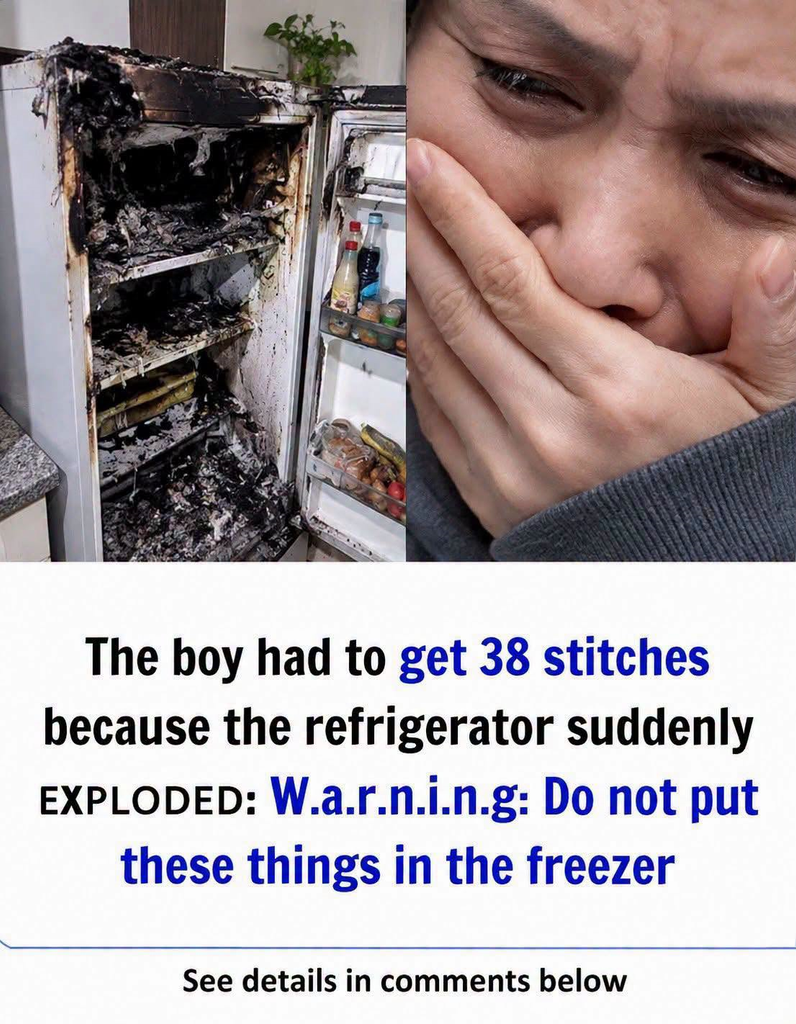
We all use our freezers to preserve food, make ice, or cool down drinks quickly. It seems like the safest place in the kitchen. But as the shocking image above reveals, your freezer can actually be a ticking time bomb if you aren’t careful.
The viral caption tells a terrifying story: “The boy had to get 38 stitches because the refrigerator suddenly EXPLODED.”
While the image shows a refrigerator that looks like it suffered a massive fire or catastrophic failure, the text warns us about a specific, silent danger: putting the wrong things in the freezer.
It sounds impossible—how can a freezer explode? But the laws of physics are unforgiving. Here is the science behind why this happens and the list of items you must never put in your freezer.
The “38 Stitches” Mystery: What Actually Exploded?
When stories like this circulate, they usually refer to glass bottles or carbonated beverages.
Here is the science of the “Freezer Explosion”:
Water Expands: Unlike most substances, water expands when it freezes (by about 9%).
Pressure Builds: If you put a sealed glass bottle of water, soda, or beer in the freezer, the liquid turns to ice and expands. Since the glass is rigid, the pressure inside skyrockets.
The Shatter: Eventually, the glass cannot hold the pressure and shatters violently.
The Injury: If you open the freezer door and the sudden change in temperature causes the pressurized bottle to burst, or if you reach in and touch a fractured bottle, flying glass shards can cause severe lacerations—hence the “38 stitches.”
The “Do Not Freeze” List
To keep your family safe and your appliance intact, never put these items in the freezer:
1. Glass Bottles (Liquids)
The Danger: As explained above, water expands. Glass breaks. The Exception: Some thick glass jars (like Mason jars) are “freezer safe” if you leave headspace (room at the top) for expansion. But standard soda or beer bottles? Never.
2. Canned Goods
The Danger: Just like glass, metal cans can burst if the contents freeze and expand. This creates a sticky, frozen mess that is hard to clean and can damage the freezer liner. The Fix: If you want to freeze soup or fruit from a can, transfer it to a plastic freezer-safe container first.
3. Carbonated Drinks (Even in Plastic)
The Danger: Carbonation adds gas pressure to the liquid pressure. Even plastic bottles can bulge, deform, or burst open the moment you open the cap, spraying sticky soda everywhere (or hitting you in the face).
4. Hot Food
The Danger: Putting a hot pot of soup directly into the freezer raises the internal temperature of the appliance.
Risk 1: It can partially thaw the food surrounding it, leading to bacterial growth.
Risk 2: It forces the freezer motor to work overtime, potentially burning it out (which might explain the burnt smell in some horror stories!).
Risk 3: Condensation forms ice crystals, leading to freezer burn.
5. Eggs in the Shell
The Danger: The liquid inside the egg expands, cracking the shell. While not an “explosion,” it creates a messy, bacteria-prone leak. The Fix: Crack the eggs into a tray or container before freezing.
6. Aerosol Cans
The Danger: Whipped cream cans or cooking sprays are under pressure. Freezing them can cause the canister to rupture.
The “Burnt Fridge” Phenomenon
The image above shows a refrigerator interior that looks charred and blackened. While the text mentions an “explosion,” this specific visual often circulates with stories of electrical fires.
How does a fridge catch fire?
Compressor Overheating: If the fridge is overworked (e.g., by putting hot food in it constantly), the compressor can overheat and catch fire.
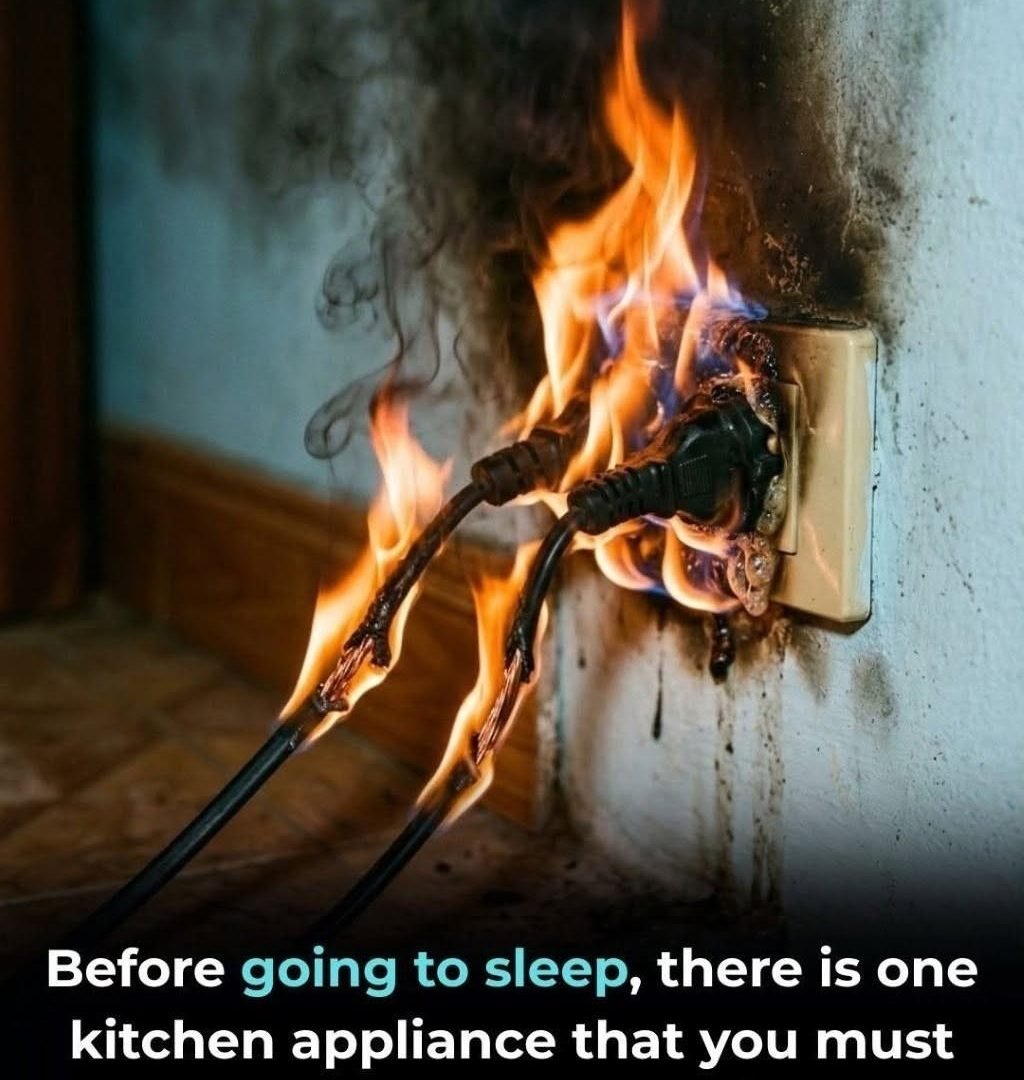
Electrical Faults: Old wiring or a damaged power cord can spark.
Dust Buildup: Dust on the condenser coils can ignite if the motor gets too hot.
Safety Tip: Vacuum the coils at the back or bottom of your fridge once a year to prevent fires!
Conclusion
The story of the boy needing 38 stitches is a grim reminder that appliances are powerful machines. Whether it’s a glass bottle shattering from ice pressure or a motor overheating from hot food, the freezer demands respect.
Check your freezer today. If you see a forgotten glass bottle of water or a can of soda pushed to the back, remove it carefully (wrap it in a towel just in case!) before it turns into a projectile.