3 Genius Hacks When Your Key Fob Stops Working (Mechanic Secrets Revealed)
Is your car key fob acting up? Don’t call a tow truck yet! Discover the simple “mechanic tricks” to unlock your car and start the engine when your fob battery dies or the signal fails.
Introduction
We’ve all been there. You’re standing in a rainy parking lot, pressing the unlock button on your key fob, and… nothing. No lights flash, no doors unlock. Panic sets in. Is the battery dead? Is the car broken?
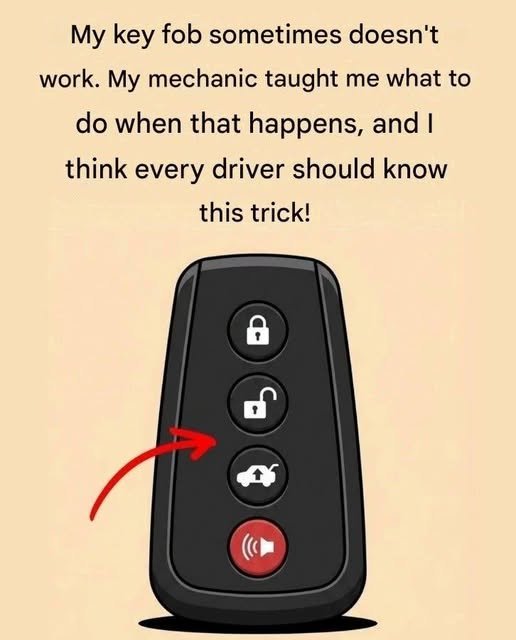
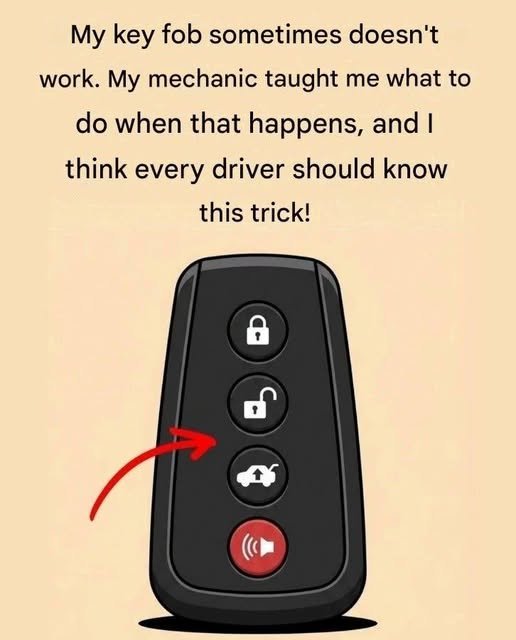
As the image above suggests, there are secret tricks that mechanics use to bypass these issues. You don’t always need a new battery or a trip to the dealership.
Here are the top hacks every driver should know when their key fob stops working.
Hack #1: The “Head Trick” (Signal Amplifier)
This is likely the specific “trick” the mechanic in the viral post was referring to.
If your key fob battery is weak (but not totally dead), the signal might not be strong enough to reach the car’s receiver from a distance.
The Trick: Hold the key fob directly against your head (specifically your chin or temple) and press the button.
Why it works: Your body is mostly water, which makes it a great conductor for radio waves. By holding the fob to your head, your body acts as an antenna, amplifying the signal and extending the range of the key fob significantly. It sounds like an urban legend, but it is scientifically proven to work for many older or weaker fobs!
Hack #2: The “Start Button” Bypass (For Push-to-Start Cars)
If your fob battery is completely dead, your car’s computer might not detect it wirelessly. However, almost all push-to-start cars have a backup plan.
The Trick: Take the key fob and physically touch it directly against the Start/Stop button. Then, press the button with the fob still touching it (or use your foot on the brake and push the button with the fob).
Why it works: Inside the Start button (or sometimes in the cup holder/armrest), there is an RFID reader (Near Field Communication). Even if the fob battery is dead, the car’s system can induce a small charge in the fob’s chip to read it, allowing you to start the engine.
Hack #3: The Hidden Physical Key
Many people don’t realize that almost every modern key fob contains a traditional metal key inside it for emergencies.
The Trick:
Look for a small sliding latch or button on the side or back of the fob.
Slide it to release the metal key blade.
Look at your car’s door handle. There is often a small plastic cap covering the keyhole.
Use the metal key (or a flathead screwdriver) to pop off that cap.
Insert the key and turn to unlock the door.
Note: Once inside, the alarm might start blaring. Just put the fob near the start button (as in Hack #2) and start the car to silence it.
Hack #4: Check for “Signal Jamming”
Sometimes your fob isn’t broken; it’s being blocked. Thieves sometimes use “signal jammers” in parking lots to prevent you from locking your car so they can steal it later.
The Trick: If you press the lock button and the car doesn’t beep or flash, look around. Are there suspicious people nearby? Try moving closer to the car or checking if the doors actually locked by pulling the handle. If you suspect jamming, lock the car manually with the physical key.
When to Replace the Battery
If these tricks stop working, it’s time for a new battery.
The Battery: Most fobs use a standard 3-volt lithium coin battery (usually a CR2032).
The Cost: You can buy these at any grocery store or pharmacy for $3-$5.
The Fix: Pop the fob open (usually with a flathead screwdriver in the seam), swap the old battery for the new one, and snap it back together.
Conclusion
Don’t let a dead key fob ruin your day. Next time the buttons don’t respond, try holding it to your chin to boost the signal, or touch it directly to the start button. These simple mechanic secrets can save you a costly tow truck ride!
Disclaimer: These tips are for general informational purposes. Consult your vehicle’s owner manual for specific instructions regarding your key fob and emergency entry methods.