If a Snake Bites You, Make Sure to Do These First Steps
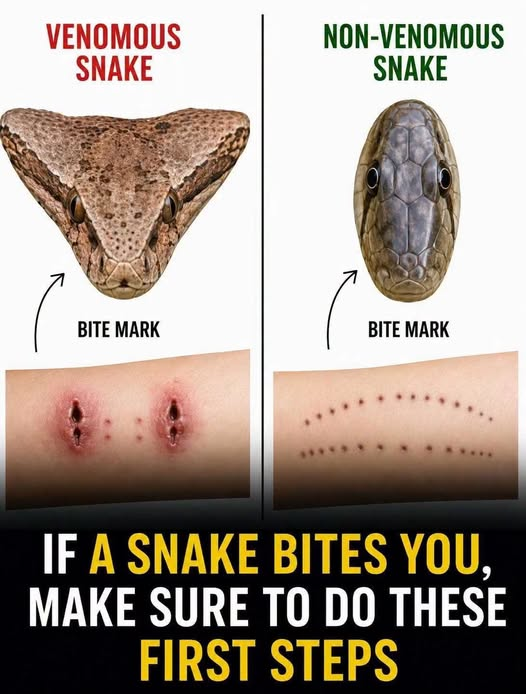
A snake bite is a terrifying experience that can happen to anyone, whether you are hiking in the woods or working in your garden. Knowing what to do in those first few moments can mean the difference between a full recovery and a life-threatening emergency. The image in your post shows the difference between a venomous and a non-venomous snake bite, and it highlights the critical first steps you must take if you are bitten.
How to Identify a Venomous Snake Bite
The most important thing to do immediately after a bite is to look at the wound. A venomous snake bite typically leaves two distinct puncture wounds from the fangs . These marks may be surrounded by redness, swelling, and bruising. In contrast, a non-venomous snake bite usually leaves a series of small, shallow teeth marks that form a curved or horseshoe-shaped pattern . However, it is important to remember that you cannot always rely on the bite pattern alone to determine if a snake is venomous.
The First Steps to Take Immediately
If you or someone you are with is bitten by a snake, follow these critical steps:
Stay Calm and Do Not Panic: Panic increases your heart rate, which can cause venom to spread more quickly through your body . Try to stay as calm as possible.
Call for Help Immediately: Call emergency services or have someone drive you to the nearest hospital. Every minute counts when dealing with a venomous bite .
Keep the Bitten Area Still and Below Heart Level: Immobilize the affected limb and keep it positioned below the level of your heart. This helps slow the spread of venom .
Remove Tight Clothing and Jewelry: Swelling can occur rapidly. Remove any rings, watches, or tight clothing near the bite before swelling makes it impossible to remove them .
Do Not Cut, Suck, or Use a Tourniquet: Do not try to cut the wound, suck out the venom, or apply a tourniquet. These outdated methods can cause more harm than good and are not recommended .
What You Should Never Do
There are many myths about snake bite treatment that can actually make things worse. Never apply ice or heat to the bite. Do not drink alcohol or caffeine, as these can speed up your heart rate. And do not try to catch or kill the snake, as this puts you at risk of being bitten again.
When to Seek Emergency Care
If there is any doubt about whether the snake was venomous, treat it as a medical emergency. Symptoms of envenomation include severe pain, swelling, nausea, vomiting, difficulty breathing, and blurred vision. Even if you feel fine at first, symptoms can develop quickly. It is always better to be evaluated by a doctor and be told you are safe than to wait until it is too late.