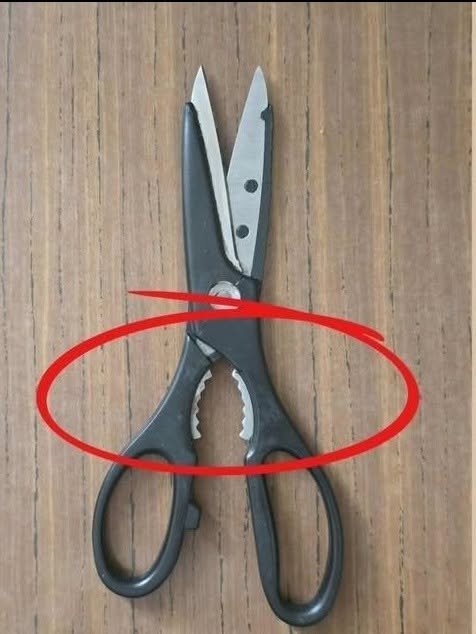
✂️ What Are These Metal Teeth Between the Blades of My Kitchen Scissors? The Answer Will Surprise You
You’re using your kitchen scissors, and you notice them — those strange metal teeth nestled between the blades. They look like a tiny saw or a comb. You’ve accidentally cut yourself on them twice, and you have no idea what they’re for.
It’s frustrating. But the answer is simpler than you think. Those teeth are not a manufacturing defect. They are a built-in bottle opener and jar gripper. Here’s how it works. 👇
Disclaimer: This post is for informational purposes only. Always handle sharp kitchen tools with care.
🔬 What Are Those Metal Teeth For?
1. They’re a Bottle Opener The jagged teeth are designed to grip and pry off metal bottle caps. You place the cap between the teeth and the blade, then squeeze the handles to pop it off. It’s a convenient feature for opening a cold drink without hunting for a separate opener.
2. They’re a Jar Gripper The teeth also provide extra grip for unscrewing stubborn jar lids. The serrated edge bites into the lid, giving you more leverage.
3. They’re a Nutcracker Some kitchen scissors with this feature also function as a lightweight nutcracker. You can place a nut between the teeth and gently squeeze to crack the shell.
4. They’re a Wire Cutter On some models, the teeth are designed to cut through thin wire or twine. This is handy for kitchen tasks like trussing a chicken or tying up herbs.
5. They’re a Safety Feature The teeth are positioned between the blades so they don’t interfere with normal cutting. They’re only used when you intentionally place an object between them.
The Verdict: Those metal teeth are a multi-purpose tool built into your kitchen scissors. They’re designed to make your life easier — not to cut your fingers. Be careful when reaching for them.
❓ Frequently Asked Questions
What are the metal teeth on kitchen scissors for? They’re a built-in bottle opener, jar gripper, nutcracker, and wire cutter.
How do I use them to open a bottle? Place the bottle cap between the teeth and the blade, then squeeze the handles to pry it off.
Can I use them to open a jar? Yes — the serrated teeth grip the lid and give you extra leverage.
Why do I keep cutting my fingers on them? Because they’re sharp and positioned between the blades. Always handle kitchen scissors carefully.
Are they a safety feature? Not exactly — they’re a multi-tool feature. They can be dangerous if you’re not careful.
Do all kitchen scissors have these teeth? No — only some models have this feature. It’s common on multi-purpose kitchen shears.
Can I sharpen them? The teeth are not meant to be sharpened. If they become dull, replace the scissors.
What should I do if the teeth are damaged? If the teeth are bent or broken, the scissors may not function properly. Consider replacing them.
Are they dishwasher safe? Most kitchen scissors are not dishwasher safe. Hand wash and dry them to prevent rust.
How do I clean them? Wash with warm, soapy water and dry immediately. Use a small brush to clean between the teeth.
💬 Did you know what those teeth were for? Share your experience in the comments! ✂️