Atorvastatin: Potential Dangers? What You Need to Know About This Common Cholesterol Medication
Atorvastatin is one of the most widely prescribed medications in the world. It belongs to a class of drugs known as statins, which are primarily used to manage cholesterol levels and reduce cardiovascular risk.
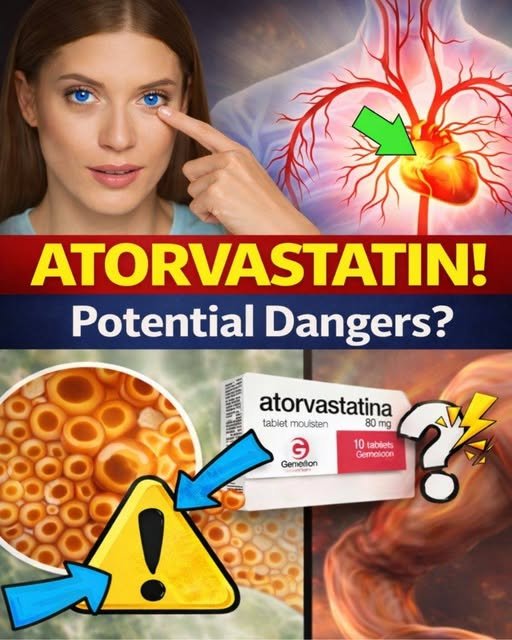
You’ve probably seen the viral posts warning about “potential dangers” and “hidden side effects” — the image above is one of many. But what does the science actually say? Here’s a breakdown of what atorvastatin is, how it works, and what you need to know about taking it. 👇
Disclaimer: This post is for informational purposes only and is not a substitute for professional medical advice. Always consult your healthcare provider before starting or changing any medication.
🔬 What Is Atorvastatin?
Atorvastatin is a statin medication used to lower cholesterol levels — specifically LDL (“bad”) cholesterol and triglycerides — while slightly increasing HDL (“good”) cholesterol. It is also prescribed to reduce the risk of cardiovascular disease (CVD), including heart attacks and strokes, in people who are at high risk.
Common Brand Name: Lipitor.
Common Dosages: 10 mg, 20 mg, 40 mg, and 80 mg tablets.
🔬 How Atorvastatin Works
Atorvastatin works by blocking an enzyme in the liver called HMG-CoA reductase. This enzyme is responsible for producing cholesterol. By blocking it, the liver produces less cholesterol and also removes more LDL cholesterol from the blood.
⚠️ What You Should Know About Side Effects
Like all medications, atorvastatin can cause side effects. The most common include muscle pain, digestive issues, and mild liver enzyme changes. Serious side effects are rare but can include liver damage and muscle breakdown.
Important: If you experience unexplained muscle pain, weakness, or dark urine, contact your doctor immediately. These can be signs of a rare but serious condition called rhabdomyolysis.
❓ Frequently Asked Questions
What is atorvastatin used for? It is used to lower cholesterol and reduce the risk of heart attack, stroke, and other cardiovascular events in people at high risk.
How does atorvastatin work? It blocks an enzyme in the liver that produces cholesterol, which helps lower LDL (“bad”) cholesterol levels in the blood.
What are the common side effects of atorvastatin? Common side effects include muscle pain, digestive issues, and mild liver enzyme changes. Serious side effects are rare but can include liver damage and muscle breakdown.
Can atorvastatin cause memory loss? Some people report cognitive changes, including memory loss, while taking statins. The evidence is mixed, but if you experience this, talk to your doctor.
Can I stop taking atorvastatin if I feel fine? No — never stop taking a prescribed medication without talking to your doctor first. Doing so can increase your risk of cardiovascular events.
Is atorvastatin the same as other statins? All statins work similarly, but they differ in potency and dosage. Atorvastatin is one of the more potent statins.
Who should not take atorvastatin? People with active liver disease, pregnant women, and nursing mothers should generally avoid it. Always consult your doctor.
What should I do if I miss a dose? Take it as soon as you remember, unless it’s almost time for your next dose. Do not double up.