My Neighbor Taught Me This Trick to Clean Green Algae Off Siding with 0 Effort – Here’s How It Works
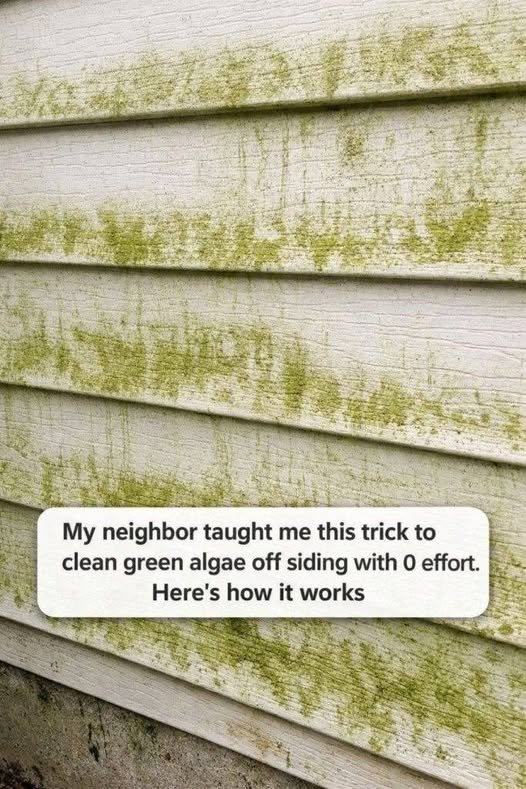
Green algae, mold, and mildew on your home’s siding can make even the nicest house look old and neglected. Scrubbing it off by hand is exhausting, time-consuming, and sometimes dangerous if you’re working on a ladder.
But what if there was a way to clean it with zero effort? A neighbor’s simple trick uses a common household item to do the work for you — no scrubbing required. Here’s how it works. 👇
Disclaimer: This post is for informational purposes only. Always test on a small, hidden area first. Wear protective gear and follow manufacturer instructions for any cleaning products.
🔬 The “Zero Effort” Method
What you need:
Oxygen bleach (also known as sodium percarbonate) 🧼
A garden sprayer or pump sprayer
Warm water 💧
Optional: a few drops of dish soap
How it works: Oxygen bleach is a powerful cleaner that releases oxygen bubbles when mixed with water. Unlike chlorine bleach, it’s gentler on plants, siding, and the environment. When sprayed onto green algae, it breaks down the organic matter and kills the spores — without the need for scrubbing.
The “zero effort” part: You simply spray it on, let it sit, and let the rain or a gentle rinse wash it away. The algae dies and dries up, often disappearing within a few days. No scrubbing, no pressure washing, no ladder gymnastics.
👩🍳 Instructions
Mix the solution: In a garden sprayer, combine 1 cup of oxygen bleach with 1 gallon of warm water. Add a few drops of dish soap to help it stick to the siding.
Spray the affected areas: Apply generously to the green algae, covering the entire surface.
Let it sit: Allow the solution to work for 10–15 minutes. You’ll see it start to bubble and break down the algae.
Rinse or let the rain do the work: For a faster result, rinse with a garden hose. Or, simply let the rain wash it away over the next few days.
Repeat if needed: For heavy growth, you may need to apply a second treatment.
Pro Tip: For the best results, apply on a dry, overcast day when rain isn’t expected for at least 24 hours. This gives the solution time to work.
❓ Frequently Asked Questions
What is oxygen bleach? Oxygen bleach (sodium percarbonate) is a powdered cleaning agent that releases oxygen when mixed with water. It’s a safer alternative to chlorine bleach.
Is oxygen bleach safe for siding? Yes — it’s generally safe for vinyl, wood, and fiber cement siding. Always test on a small area first.
Will this kill plants? Oxygen bleach is gentler than chlorine bleach, but it can still harm plants if sprayed directly. Rinse nearby plants with water before and after application.
How long does it take to work? You’ll see results within a few hours to a few days, depending on the weather and the severity of the algae.
Do I need a pressure washer? No — the whole point of this method is to avoid pressure washing, which can damage siding and force water behind the walls.
Can I use this on a roof? Yes — oxygen bleach is commonly used for roof cleaning. However, be cautious on steep roofs and consider hiring a professional.
What if the algae comes back? It may return over time, especially in shady, damp areas. Regular application (once or twice a year) can keep it under control.
Is this method safe for pets? Once the solution has dried and been rinsed, it’s generally safe for pets. Keep them away during application.
How much does it cost? Oxygen bleach is inexpensive — a small tub can cost less than $10 and make multiple batches.
Can I use vinegar or bleach instead? Vinegar can help with mild algae, but it’s not as effective. Chlorine bleach works but can damage plants and siding. Oxygen bleach is the safest, most effective option.