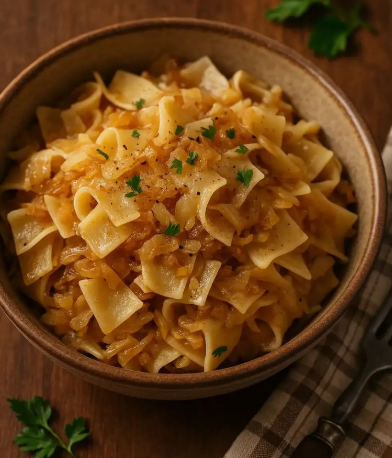
Prep time: 10 mins | Cook time: 25 mins | Serves: 4-6
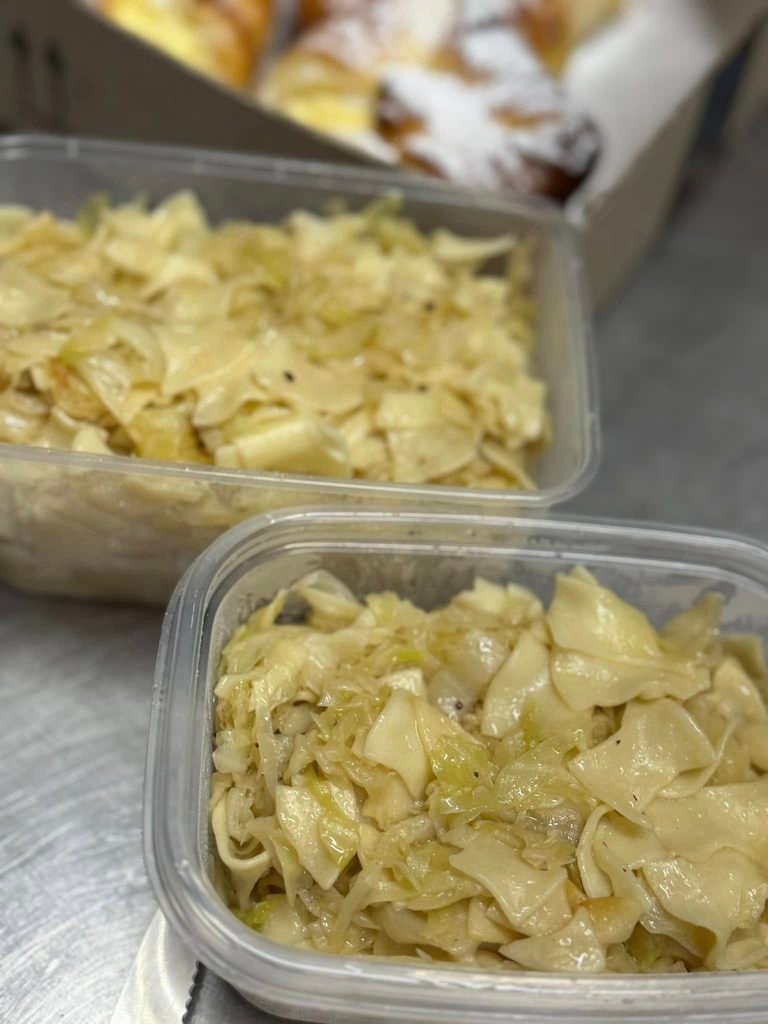
If you are looking for a dish that proves comfort food doesn’t need to be complicated, look no further than Káposztás Tészta. This humble Hungarian classic combines tender egg noodles with caramelized cabbage, crispy bacon, and a hint of caraway.
Despite its simplicity, it delivers an explosion of flavor that truly melts in your mouth at the first bite. It’s a beloved peasant dish that has graced Hungarian tables for generations, often served as a main course or a hearty side. Best of all? From chopping to plating, it comes together in under 30 minutes!
Ready to taste authentic Hungary? Here is the full recipe!
12 oz (350g) wide egg noodles (or homemade csigatészta)
2-3 tbsp sour cream (tejföl), for serving
Fresh parsley or dill, chopped (optional garnish)
Instructions
Step 1: Render the Bacon
In a large, deep skillet or Dutch oven over medium heat, cook the diced bacon until crispy and the fat has rendered. Remove the bacon bits with a slotted spoon and set aside, leaving the fat in the pan.
Step 2: Sauté the Aromatics
Add the lard or butter to the bacon fat. Once melted, add the chopped onion and sauté for 3-4 minutes until soft and translucent. Stir in the crushed caraway seeds and cook for another 30 seconds until fragrant.
Step 3: Caramelize the Cabbage
Add the shredded cabbage to the pot. Toss well to coat in the fat and aromatics. Season with salt, pepper, and sugar (if using). Cook for 5 minutes, stirring occasionally, until the cabbage begins to wilt.
Pour in the water or broth, cover the pot, and reduce heat to medium-low. Simmer for 15-20 minutes, stirring every few minutes, until the cabbage is very tender, golden-brown, and caramelized. If it gets too dry, add a splash more water.
Step 4: Cook the Noodles
While the cabbage simmers, bring a large pot of salted water to a boil. Cook the egg noodles according to package directions until al dente. Drain well, reserving ¼ cup of pasta water.
Step 5: Combine & Serve
Add the cooked noodles and reserved crispy bacon to the cabbage mixture. Toss everything together over low heat for 1-2 minutes to combine flavors. If the mixture seems dry, add a splash of reserved pasta water.
Serve immediately in warm bowls, topped with a generous dollop of cold sour cream and fresh herbs.
💡 Pro Tips for Authentic Flavor
Patience is Key: Don’t rush the cabbage! True káposztás tészta relies on slowly caramelizing the cabbage until it turns golden and sweet. Rushing this step results in boiled, bland cabbage.
Caraway is Non-Negotiable: Caraway seeds are the signature spice of Hungarian cabbage dishes. They cut through the richness and aid digestion. Don’t skip them!
Use Wide Noodles: Traditional Hungarian egg noodles are wider than standard fettuccine. Their broad surface area holds the cabbage and fat better.
Cold Sour Cream Contrast: Always serve the sour cream cold. The temperature contrast between hot noodles/cabbage and cool cream is essential to the experience.
Serving Suggestions
As a Main Course: Perfect alongside a simple green salad or pickled vegetables.
With Meat: Traditionally served with roasted pork, fried chicken, or sausage.
Leftovers: Reheats beautifully in a skillet with a little extra butter. The flavors deepen overnight!
Wine Pairing: A crisp Hungarian white wine like Olaszrizling or Furmint cuts through the richness perfectly.